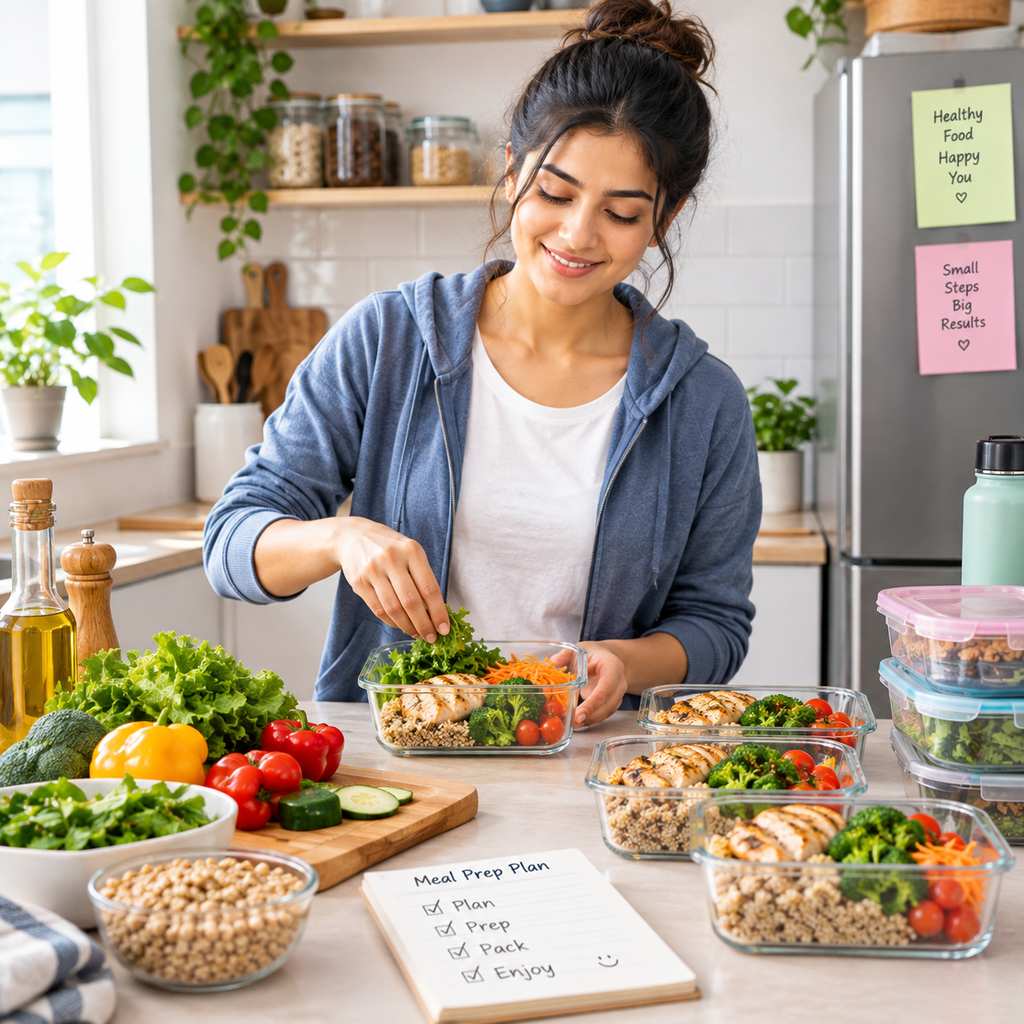
Weekday evenings often go the same way. You come home tired, hungry and short on time, and the easiest option is to order food or eat something quick but not particularly nourishing. Over weeks, this pattern can affect your health, your wallet and your mood. Meal prep offers a practical solution. It does not mean living on the same boring dabba every day or spending your entire Sunday in the kitchen. A thoughtful meal prep guide can help you eat better, save money and reduce daily decision fatigue, while still enjoying variety and flavour.
This article explains what meal prep really means, its benefits, how to plan a week of meals, batch cooking basics suited to Indian kitchens, storage and food safety tips, sample meal prep ideas, and how to keep the habit going without burning out. This is general wellness information, not personalised nutrition advice, so consult a doctor or dietitian for specific dietary needs.
What Is Meal Prep?
Meal prep is the practice of preparing food in advance so that putting together meals during the week takes less time and effort. It can take several forms, and you can mix approaches based on your lifestyle.
- Full meal prep: Cooking complete meals in advance and storing them in portions.
- Batch cooking: Making large quantities of a few base dishes, such as dal, rice and a vegetable, that can be combined in different ways.
- Ingredient prep: Washing, chopping and portioning vegetables, soaking grains or marinating proteins ahead of time, then cooking fresh each day.
- Grab-and-go prep: Preparing snacks, cut fruits or breakfast items for quick mornings.
You do not need to choose only one style. Many people combine batch-cooked staples with some ingredient prep and a little fresh cooking each day.
Why Meal Prep Is Worth Trying
Saves time on busy days. Chopping, marinating and cooking basics in advance means less work during rushed mornings or tired evenings.
Supports healthier eating. When nutritious food is ready, you are less likely to reach for packaged snacks or order food impulsively.
Reduces food waste. Planning meals around what you already have prevents vegetables from spoiling unused in the fridge.
Saves money. Home-cooked meals are usually cheaper than repeated takeout or delivery orders.
Reduces daily decision fatigue. Deciding what to eat every single day is tiring. A plan removes that burden.
Supports portion awareness. Preparing meals in advance can help you notice portion sizes more easily.
Step 1: Start With a Realistic Plan
Meal prep does not have to be elaborate. Choose a level that matches your schedule and cooking comfort.
Beginner approach: Prep two or three days’ worth of one main dish, plus chopped vegetables for the rest of the week.
Moderate approach: Cook a batch of dal or curry, a grain, and a couple of vegetable dishes to mix and match for most weekday lunches or dinners.
Advanced approach: Prepare a full week of breakfasts, lunches and dinners in labelled containers.
Start small. Trying to prep every single meal in your first week often leads to burnout. Pick one or two meals a day to prep, and build from there.
Step 2: Plan Your Menu Before Shopping
A little planning avoids wasted trips and wasted food.
- Check your calendar. Note busy days, days you will eat out, and days you have more time to cook.
- Choose 3 to 5 base recipes for the week, such as one dal, one dry vegetable, one gravy-based curry, a batch of rice or roti, and a protein source like paneer, eggs, chicken or chickpeas.
- Think about variety. Rotate vegetables, spices and protein sources through the week to avoid monotony, and reduce food waste from produce sitting too long.
- Write a grocery list organised by section: vegetables, grains and pulses, dairy, spices, and any packaged items.
- Check your pantry first so you do not buy duplicates.
Step 3: Choose a Prep Day and Time Block
Most people find it easiest to prep once or twice a week.
- One big session: A few hours on a weekend day for most of the week’s staples.
- Two shorter sessions: For example, Sunday for the first half of the week and Wednesday for the rest, which keeps food fresher.
- Daily ingredient prep: Fifteen minutes each evening to chop vegetables or soak grains for the next day.
Choose whichever rhythm fits your life. Consistency matters more than doing it a specific way.
Step 4: Batch Cook Smart Staples
Certain dishes are especially good for batch cooking because they store and reheat well.
Dals and legumes: Toor dal, moong dal, chana, rajma and lobia can be cooked in bulk and frozen or refrigerated in portions.
Grains: Rice, quinoa, millets like jowar or bajra, and brown rice can be cooked ahead and reheated or used cold in salads.
Roti and paratha: Make a batch, cool completely, stack with parchment or baking paper between them, and refrigerate or freeze. Reheat on a tawa.
Roasted or steamed vegetables: Bhindi, beans, cauliflower and other sturdy vegetables can be prepped ahead, though very watery vegetables are best cooked fresh.
Proteins: Boiled eggs, marinated paneer, grilled chicken or roasted chickpeas can be made in advance and added to different meals through the week.
Chutneys and pastes: Ginger-garlic paste, coriander chutney and tomato-onion base gravies can be prepared in bulk and refrigerated or frozen, saving daily cooking time.
Soups and one-pot dishes: Khichdi, vegetable soup and simple curries freeze and reheat well.
Step 5: Prep Ingredients Even If You Cook Fresh Daily
If you prefer freshly cooked meals but want to save time, ingredient prep alone can help enormously.
- Wash and chop vegetables for the week and store them in airtight containers.
- Soak dals, rice or grains the night before to reduce cooking time.
- Marinate proteins in advance so they are ready to cook quickly.
- Pre-measure spices for a specific recipe into small bowls or bags if you cook the same dish often.
- Grate or prep onions, garlic and ginger in bulk and freeze in small portions.
This “mise en place” approach, meaning “everything in its place,” can cut daily cooking time significantly.
Step 6: Build Balanced Plates
A helpful way to think about each meal is to include a mix of food groups.
- Half the plate: Vegetables, salad or fruit for fibre and vitamins.
- A quarter of the plate: Whole grains such as roti, brown rice, millets or quinoa for energy.
- A quarter of the plate: Protein such as dal, paneer, eggs, chicken, fish, tofu or legumes for muscle repair and fullness.
- A little healthy fat: A drizzle of ghee, a few nuts, or oil used in cooking.
This is a general guide, not a strict rule, and can be adjusted for your health needs, appetite and cultural preferences. If you have diabetes, kidney issues or other conditions, follow guidance from your doctor or dietitian.
Step 7: Use the Right Containers
Good storage keeps food fresh, safe and appealing.
- Airtight glass or BPA-free plastic containers in a few standard sizes stack well and are freezer safe.
- Divided containers help portion balanced meals and prevent sauces from mixing into everything.
- Small jars are useful for chutneys, dressings and pickles.
- Freezer bags save space for items like cooked dal or gravies, laid flat to freeze quickly and thaw evenly.
- Labels with dates help you use older items first and avoid food waste.
Step 8: Follow Food Safety Basics
Safe storage keeps your meal prep both convenient and healthy.
- Cool food before refrigerating. Do not put steaming hot food directly into the fridge with the lid tightly closed; let it cool slightly first, but do not leave it out at room temperature for more than about two hours.
- Refrigerate promptly and store at a proper cold temperature.
- Use refrigerated cooked food within three to four days for best quality and safety; if unsure, when in doubt, throw it out.
- Freeze for longer storage. Most cooked dals, curries, rice and rotis freeze well for a month or more, though texture may change slightly on thawing.
- Label with dates so you always know how long something has been stored.
- Reheat thoroughly until steaming hot all the way through, and only reheat what you will eat rather than repeatedly reheating the same portion.
- Keep raw and cooked food separate during storage and preparation to avoid cross-contamination.
- Wash hands, utensils and containers well before and after handling food.
Sample One-Week Meal Prep Plan
This is an example you can adapt to your taste, region and dietary needs.
Batch cook on prep day:
- One pot of dal (toor or moong)
- One dry vegetable sabzi (such as beans or bhindi)
- One gravy-based curry (such as paneer or chana masala)
- A batch of brown rice or millet
- Boiled eggs or roasted chickpeas
- Chopped salad vegetables stored separately
- A batch of roti or paratha
Sample daily combinations:
- Monday: Dal, rice, a spoon of ghee, salad
- Tuesday: Chana masala, roti, cucumber salad
- Wednesday: Paneer curry, rice, sautéed greens
- Thursday: Dal with a boiled egg, roti, salad
- Friday: Leftover curry reinvented as a wrap with fresh vegetables
- Weekend: Fresh cooking or trying a new recipe
Rotate spices and add fresh garnishes like coriander, lemon or curd to keep meals feeling new, even when the base ingredients repeat.
Breakfast and Snack Prep Ideas
Mornings often feel the most rushed, so a little breakfast prep helps a lot.
- Overnight soaked oats with milk or curd, fruit and nuts, prepared the night before.
- Boiled eggs kept ready for a quick protein boost.
- Pre-cut fruit stored in airtight containers.
- Homemade granola or roasted makhana for a quick snack.
- Idli or dosa batter prepared in bulk and refrigerated for a few days.
- Sprouted moong or chana kept ready to season quickly.
- Small portions of roasted nuts and seeds in a jar for grab-and-go snacking.
Tips for Vegetarians, Vegans and Non-Vegetarians
Vegetarian and vegan meal prep: Focus on dals, legumes, paneer or tofu, whole grains, a variety of vegetables and nuts and seeds for protein and healthy fats. Fortified plant milks and adequate vitamin B12 sources are worth discussing with a doctor or dietitian for long-term vegan diets.
Non-vegetarian meal prep: Marinate and portion chicken, fish or eggs in advance. Cook proteins separately from vegetables so you can mix and match, and ensure proper storage temperatures for raw and cooked meat.
How to Avoid Meal Prep Boredom
Eating the same food repeatedly can feel tiresome. Keep things interesting with these tricks:
- Change the sauce or seasoning on the same base ingredients.
- Use different grains through the week, such as rice one day and millets another.
- Add fresh toppings like coriander, lemon juice, roasted peanuts or fresh curd just before eating.
- Turn leftovers into new dishes, such as using dal to make a soup or a curry as a filling for a wrap or paratha.
- Try one new recipe each week to keep learning and enjoying cooking.
- Involve family members in choosing menus so everyone feels included.
Meal Prep on a Budget
- Buy seasonal vegetables, which are usually cheaper and fresher.
- Buy dals, grains and spices in bulk from trusted sources and store properly.
- Reduce waste by planning portions and using vegetable scraps in stock or chutneys where suitable.
- Cook simple, affordable staples like dal, rice, seasonal sabzi and curd rather than expensive specialty ingredients.
- Compare prices at local markets versus supermarkets.
- Repurpose containers you already have instead of buying new ones immediately.
Common Meal Prep Mistakes to Avoid
- Prepping too much food at once, leading to waste or boredom.
- Choosing complicated recipes that take too long and discourage consistency.
- Ignoring variety, which makes healthy eating feel like a chore.
- Storing food improperly, risking spoilage or food safety issues.
- Not labelling containers, leading to forgotten food at the back of the fridge.
- Skipping the planning step and buying random ingredients.
- Trying to prep every single meal as a beginner instead of starting small.
- Forgetting to adjust seasoning after reheating, since flavours can mellow in storage.
Building the Meal Prep Habit Long Term
- Start with just one meal type, such as lunches for work, and expand later.
- Keep a small list of go-to recipes that you know work well for prepping.
- Review what worked and what did not each week and adjust.
- Keep your kitchen organised so batch cooking is easier.
- Be flexible. Some weeks will be busier than others; adjust your prep level accordingly.
- Remember the goal is support, not perfection. A partial prep is still valuable.
Frequently Asked Questions
How long can meal-prepped food stay in the fridge?
Most cooked dishes are best eaten within three to four days when stored properly in airtight containers at a safe refrigerator temperature.
Can I freeze Indian dishes like dal and curry?
Yes. Dals, curries, rice and even rotis freeze well. Cool completely before freezing and thaw in the refrigerator before reheating thoroughly.
Is meal prep only for weight loss?
No. Meal prep supports many goals, including saving time, reducing stress, eating more balanced meals and managing a budget, regardless of body goals.
How do I meal prep if I live alone?
Cook smaller batches, portion into single servings, freeze extra portions for later, and mix and match a few base dishes to create variety.
What if I do not like eating the same food repeatedly?
Change sauces, spices, grains and toppings through the week, and rotate two or three different base recipes rather than repeating just one.
Do I need special equipment for meal prep?
No. A good set of pots, a few airtight containers and basic kitchen tools are enough. Optional tools like a pressure cooker or slow cooker can help but are not essential.
Final Thoughts
A good meal prep guide is not about rigid rules or spending your whole weekend in the kitchen. It is about a little planning that gives your busy weekdays more ease, better nutrition and less last-minute stress. Start small, choose two or three staples to batch cook, store food safely and build variety with simple changes in seasoning and sides.
Pick one meal to prep this week, whether it is your lunches, your breakfasts or just a batch of dal and rice. Notice how much calmer your evenings feel, and build the habit gradually from there. Over time, meal prep can become one of the simplest tools for eating well and living a little more peacefully.
Disclaimer: This article is for general information only and is not personalised nutrition or medical advice. Consult a doctor or registered dietitian for guidance specific to your health needs.