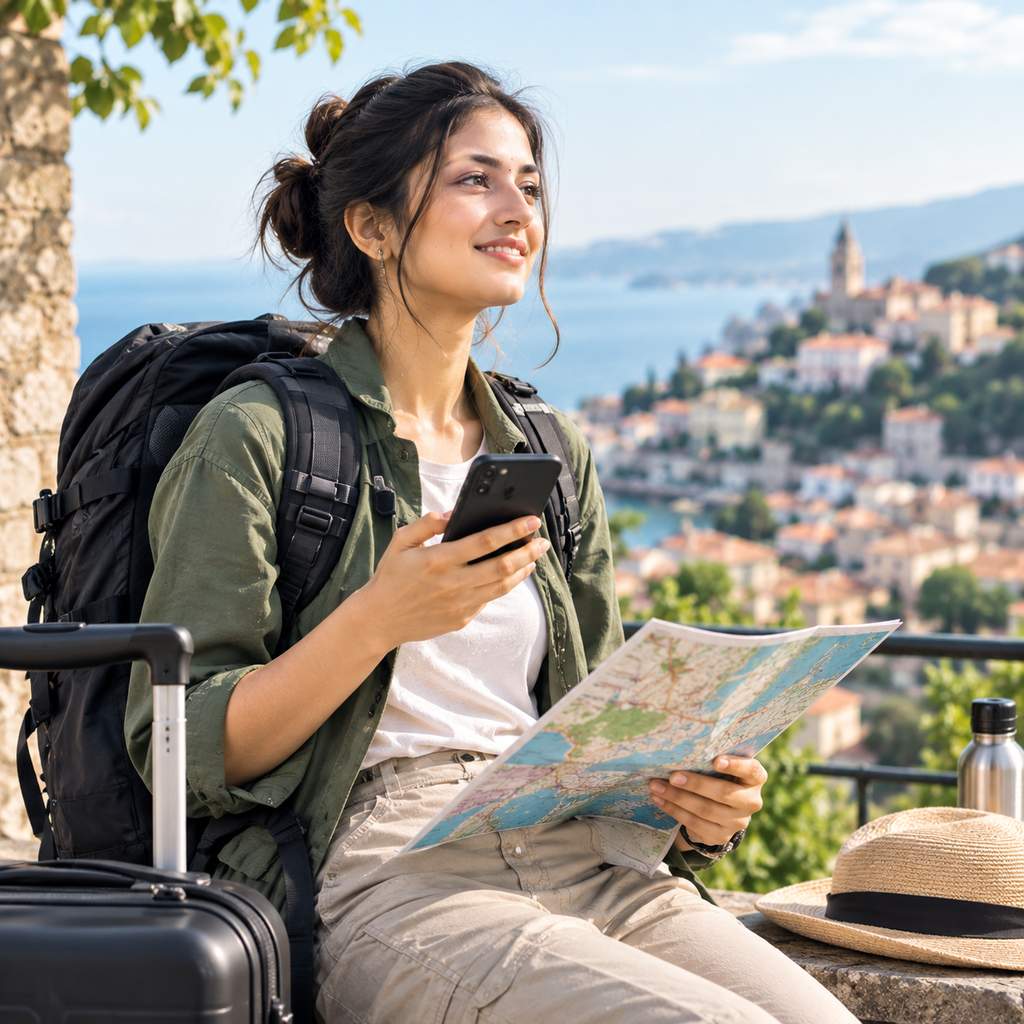
Travelling alone can be one of the most rewarding experiences in life. It offers freedom, self-discovery and the chance to move entirely at your own pace. It can also feel a little daunting, especially when it comes to choosing where to stay in an unfamiliar place. Questions naturally arise: Is this neighbourhood safe? Will the hotel staff be trustworthy? What do I do if something goes wrong at night? These solo travel safety tips focus specifically on choosing and using accommodation wisely, so you can travel with more confidence, whether you are exploring a new city, a hill station or a destination abroad.
This guide covers how to research and choose safe accommodation, what to check before booking, how to stay secure during check-in and your stay, safety habits for solo travellers, and what to do in an emergency. While much of this advice is broadly useful for any solo traveller, some specific tips are aimed at women, who often think about safety differently while travelling alone.
Why Accommodation Choice Matters So Much for Solo Travellers
When you travel with others, there is some built-in support: someone to watch your bags, share a room, or simply be present. Travelling alone means you are your own safety net, which makes your choice of accommodation especially important. The right stay offers not just comfort, but also security, a helpful staff presence and a location that feels manageable to navigate confidently, especially after dark.
Step 1: Research the Neighbourhood, Not Just the Hotel
A beautiful hotel in an unsafe or poorly connected area is not a safe choice.
- Check the area on a map and see how central it is relative to public transport, restaurants and attractions.
- Search for recent travel blogs or forums about the neighbourhood’s safety, particularly for solo travellers.
- Look at street-level images if available, to get a sense of lighting, activity and general upkeep.
- Consider proximity to your arrival point. Landing very late at night in an unfamiliar, quiet area can feel riskier than arriving during the day or staying somewhere central and well-connected.
- Check distance to essential services like pharmacies, hospitals and ATMs.
Step 2: Read Reviews With Solo Travellers in Mind
Reviews are one of your best tools, but read them with your specific needs in focus.
- Search reviews for mentions of “solo,” “alone” or “safety.” Many travellers specifically comment on their experience staying alone.
- Look for comments about staff helpfulness, especially regarding late check-in, luggage assistance, or arranging safe transport.
- Note any red flags, such as complaints about unlocked doors, unclear entrances, poorly lit corridors or unhelpful staff during emergencies.
- Check recency. Recent reviews reflect current management and conditions better than old ones.
- Cross-check across multiple platforms for a fuller picture.
Step 3: Choose Accommodation With Strong Security Features
Look specifically for these features when comparing options:
- 24-hour front desk or reception. This ensures help is available at any hour.
- CCTV in common areas such as entrances, corridors and parking.
- Secure locks, ideally including a deadbolt or chain lock inside the room.
- Well-lit entrances, hallways and parking areas.
- Key card access rather than easily duplicated keys, where possible.
- A private, working peephole in the room door.
- Verified identification requirements at check-in, which is standard in most reputable properties and adds a layer of accountability.
If a listing does not mention these details, consider messaging the property directly to confirm before booking.
Step 4: Consider Room Location Within the Property
Where your specific room is located can matter for comfort and security.
- Rooms on higher floors are often considered slightly more secure against opportunistic break-ins through windows, though this varies by property.
- Avoid rooms right next to fire exits or stairwells that are used by many people, if you have a choice, simply for more privacy and quiet.
- Rooms near the elevator or reception may offer quicker access to help if needed, though they can be noisier.
- Request your room preference at booking or check-in and most hotels will try to accommodate reasonable requests.
Step 5: Plan Your Arrival Carefully
How and when you arrive significantly affects your safety experience.
- Arrive during daylight hours when possible, especially in a new destination you have not visited before.
- Arrange transport in advance through the hotel or a trusted service rather than picking an unknown option upon arrival, particularly late at night.
- Share your accommodation details and expected arrival time with a friend or family member before you travel.
- Keep your accommodation address written down or saved offline, in case your phone loses signal or battery.
- If arriving late, confirm with the property in advance that someone will be available to check you in.
Step 6: Check In Smartly
- Confirm details at the desk: room number privacy (avoid saying your room number loudly where others can hear), Wi-Fi password and emergency contact information.
- Ask about the nearest hospital, pharmacy and police station, simply as a precaution.
- Note the location of fire exits and stairwells as you settle in.
- Test the door lock, window locks and peephole before unpacking.
- Store your travel documents securely, using an in-room safe if available, and keep copies (physical or digital) separately.
Step 7: Build Daily Safety Habits During Your Stay
Keep your accommodation details private with strangers. Casual conversations with fellow travellers are wonderful, but avoid sharing your exact room number or the fact that you are travelling completely alone with people you have just met.
Use the “do not disturb” sign strategically, especially when you are out, to suggest the room is occupied.
Keep valuables secure. Use the in-room safe for passports, extra cash, and important documents. Carry only what you need for the day.
Let the property know your general plans if you are heading somewhere remote, such as a trek or a long day trip, particularly in less touristy areas.
Check in with someone back home regularly, even with a simple daily message, so someone always knows your general status and location.
Trust your instincts. If a place or a situation feels wrong, even without a clear reason, it is completely reasonable to leave, ask for help or request a room or property change.
Keep emergency numbers saved, including local emergency services, your country’s embassy or consulate if travelling internationally, and the hotel’s front desk number.
Step 8: Special Considerations for Women Travelling Solo
While all solo travellers benefit from safety awareness, many women take some extra precautions.
- Look specifically for women-friendly reviews or properties known for hosting solo female travellers comfortably.
- Consider properties with female staff at reception or housekeeping if this makes you more comfortable, and some destinations offer women-only floors or dormitories in hostels.
- Dress with local cultural norms in mind, which can help you feel more comfortable and blend in more easily in certain regions.
- Avoid displaying expensive jewellery or gadgets prominently while walking to and from your accommodation.
- Consider joining verified solo female travel communities or groups for advice specific to your destination.
- Trust community-sourced information, such as forums and groups where women share honest, specific safety experiences about particular cities or properties.
Step 9: Choosing Between Hotels, Hostels and Homestays for Solo Safety
Hotels often provide the most structured security, with 24-hour reception, consistent staff presence and standardised procedures, making them a comfortable default for many solo travellers, especially in unfamiliar cities.
Hostels can be excellent for solo travellers wanting to meet others, and reputable ones often have lockers, key card access and a social, watchful community atmosphere. Choose ones with strong reviews specifically mentioning safety and cleanliness, and consider female-only dorms if available and preferred.
Homestays can offer warmth and local connection but vary significantly in security setup. Confirm details like private entrances, locks and the host’s responsiveness before booking, and lean toward homestays with many detailed, positive reviews from solo travellers.
There is no single best category. The right choice depends on the specific property, destination and your personal comfort level.
Step 10: Prepare for Emergencies
Even with careful planning, it helps to be prepared.
- Save local emergency numbers for police, medical services and fire services at your destination.
- Know your country’s embassy or consulate location if travelling internationally.
- Carry a basic first-aid kit for minor issues.
- Keep a copy of your ID, passport, visa and travel insurance details stored separately from the originals, both physically and digitally (such as in a secure cloud folder or email draft).
- Consider travel insurance that covers medical emergencies, trip cancellations and lost belongings.
- Identify the nearest hospital to your accommodation upon arrival.
- If something feels unsafe with your accommodation, most booking platforms have customer support you can contact for a room change or alternative arrangement.
Digital Safety While Travelling Alone
- Avoid publicly posting your exact live location on social media while you are still there; share travel photos after you have left a location if you prefer extra caution.
- Use secure Wi-Fi and avoid accessing sensitive accounts like banking on unsecured public networks. A trusted VPN can add a layer of protection.
- Keep your phone charged and carry a portable power bank.
- Screenshot or save important information offline, such as your hotel address, key bookings and emergency contacts, in case of poor connectivity.
Red Flags to Watch for When Booking Accommodation
- No clear address or exact location shown on the map
- Very few or suspiciously uniform reviews
- Reviews mentioning safety concerns, unhelpful staff during issues, or a poorly secured entrance
- No verifiable contact number or unclear communication when you reach out with questions
- Prices dramatically lower than similar properties nearby without explanation
When in doubt, choose a well-reviewed, established option over an unverified, unusually cheap one.
A Quick Pre-Trip Accommodation Safety Checklist
Before you book and travel, confirm you have:
- Researched the neighbourhood, not just the property
- Read recent reviews with safety and solo-travel comments in mind
- Confirmed 24-hour reception or clear emergency contact availability
- Checked for secure locks and CCTV in common areas
- Planned a safe, ideally daytime, arrival
- Shared your itinerary and accommodation details with someone at home
- Saved local emergency numbers and your accommodation’s address offline
- Kept a backup of important documents
Frequently Asked Questions
Is it safe to travel solo and stay in hotels?
Many solo travellers stay safely in hotels every day by choosing reputable properties, researching neighbourhoods and following basic safety habits like those outlined above.
Should I tell hotel staff that I am travelling alone?
This is a personal choice. Many solo travellers prefer not to broadcast it to strangers or casual acquaintances but may mention it to trusted staff, such as the reception, if it helps them receive appropriate assistance.
Are hostels safe for solo travellers?
Reputable hostels with strong reviews, secure lockers and key card access can be quite safe, and many attract a community of solo travellers looking out for one another. Always check reviews specific to safety.
What is the best way to research if a neighbourhood is safe?
Combine map research, recent travel blogs, forum discussions and reviews mentioning safety, and cross-check information across a few different sources.
Should women avoid travelling solo?
Millions of women travel solo safely every year by planning carefully, choosing accommodation thoughtfully and staying alert. Preparation and awareness, not avoidance, are generally the most empowering approach.
What should I do if I feel unsafe at my accommodation?
Contact the front desk or property owner immediately, and if needed, reach out to the booking platform’s customer support for assistance with a room change, refund or alternative accommodation. In an emergency, contact local emergency services.
Final Thoughts
Solo travel can be deeply enriching, and thoughtful planning around solo travel safety tips allows you to enjoy that freedom with greater peace of mind. Research neighbourhoods carefully, read reviews with a safety lens, choose properties with strong security features, plan your arrival wisely and build simple daily habits that keep you aware and prepared throughout your trip.
Safety and adventure are not opposites. With good preparation, you can explore new places confidently, meet interesting people, and create memories that are entirely your own. The world has so much to offer, and travelling alone, safely and thoughtfully, is one of the most empowering ways to experience it.