Healthy, shiny hair is one of the most admired beauty goals, and also one of the most misunderstood. Walk into any store and you will find shelves of shampoos, serums, masks and oils, each promising dramatic results in days. The truth is simpler. Hair health depends mostly on consistent, gentle habits, a balanced diet and protecting hair from avoidable damage. A well-planned natural hair care routine can improve softness, shine and strength without requiring a huge product collection.
In this detailed guide, we will cover how to understand your hair type, wash and condition correctly, oil in a safe way, use simple kitchen-based treatments, protect hair from damage, eat for hair health and know when to see a doctor. Everything is practical and beginner friendly.
Understanding How Hair Works
Each strand of hair grows from a follicle in the scalp. The part you see is made of a protein called keratin. Once hair grows out, it is technically not alive, which means products cannot truly “repair” damaged strands permanently. They can smooth the surface, add moisture and reduce breakage, but real improvement comes from growing healthier hair from the scalp and protecting what you already have.
Hair typically grows around half an inch to one centimetre per month, although this varies from person to person. Genetics, age, hormones, nutrition, stress and health conditions all affect growth. This is why patience is essential. Any routine needs at least two to three months before you can judge results.
Step 1: Identify Your Hair and Scalp Type
Choosing the right routine begins with knowing your hair.
Hair Texture
- Straight: Oils travel easily along the hair, so it can look greasy faster but is often shiny.
- Wavy: Sits between straight and curly, prone to frizz in humidity.
- Curly: Naturally drier, because oils have a harder time travelling along the curls.
- Coily: Very dry and fragile, needing deep moisture and gentle handling.
Scalp Type
- Oily scalp: Hair looks greasy within a day or two.
- Dry scalp: Tight, flaky or itchy feeling.
- Normal scalp: Comfortable with moderate oil.
- Sensitive scalp: Reacts easily to products with redness or irritation.
Hair Condition
Also consider whether your hair is coloured, chemically treated, thin, thick or heat-styled. Treated hair needs extra moisture and gentler products.
Step 2: Wash Your Hair Correctly
Washing sounds simple, but small mistakes can cause dryness, oiliness or breakage.
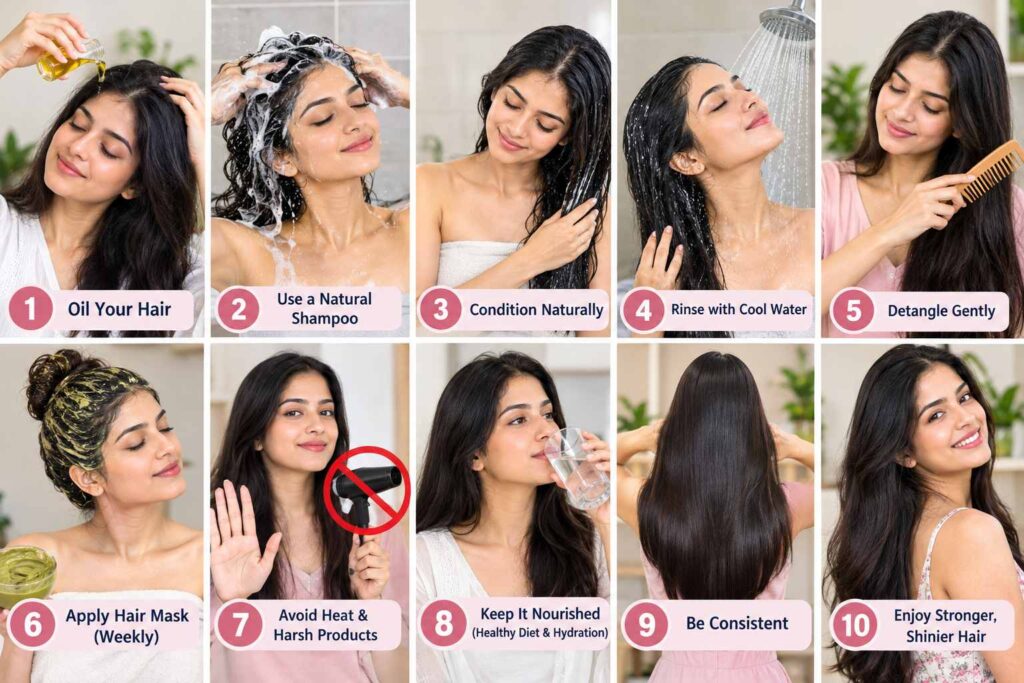
- Choose the right frequency. Most people do well washing two to three times a week. Oily scalps may need more frequent washing, while curly or dry hair often needs less.
- Brush before washing. Gently remove tangles from dry hair to reduce breakage in the shower.
- Wet thoroughly. Use lukewarm water. Very hot water can dry out the scalp and strip natural oils.
- Use a small amount of shampoo. A coin-sized amount is enough for most people.
- Focus on the scalp. Massage with fingertips, not nails, for one to two minutes. The lengths get cleaned as the foam rinses through.
- Rinse well. Leftover shampoo can cause itching and dullness.
- Finish with a cooler rinse if comfortable. Many people feel it helps hair look smoother.
Choose a mild shampoo suited to your scalp type. Sulphate-free formulas are often gentler for dry, curly or coloured hair. Oily scalps may benefit from clarifying shampoos used occasionally, about once every two to three weeks.
Step 3: Never Skip Conditioner
Conditioner smooths the hair surface, reduces tangles and adds moisture. Apply it from mid-length to the ends, avoiding the roots if your scalp is oily. Leave it on for two to three minutes and rinse well.
For very dry or damaged hair, use a deep conditioning mask once a week. Leave it on for ten to twenty minutes as directed. A wide-tooth comb can help distribute conditioner evenly.
Step 4: Oiling the Right Way
Hair oiling is a beloved tradition in many Indian homes, and when done sensibly it can be soothing and beneficial for the hair lengths and for relaxation.
Popular Oils
- Coconut oil: Traditionally used and helps reduce protein loss in some hair types.
- Almond oil: Light and nourishing.
- Castor oil: Thick and sticky, best mixed with a lighter oil.
- Olive oil: Moisturising for dry hair.
- Amla or bhringraj infused oils: Popular in traditional hair care.
How to Oil
- Warm the oil slightly, without overheating.
- Part hair into sections.
- Apply to the scalp with fingertips and massage in gentle circles for five to ten minutes.
- Run remaining oil through lengths and ends.
- Leave for one to two hours before washing.
Overnight oiling is not necessary for everyone. If you have an oily or acne-prone scalp, or live in a humid area, long oiling may cause buildup, dandruff-like flakes or breakouts. Oiling once or twice a week is enough for most people.
Step 5: Simple Home Treatments You Can Try
Kitchen ingredients can support your routine, but always do a patch test on your inner arm before applying anything new to your scalp or hair, especially if you have sensitive skin or allergies.
Yogurt and Honey Mask
Mix three tablespoons of plain yogurt with one tablespoon of honey. Apply to hair lengths, leave for twenty to thirty minutes and rinse. This can leave dry hair feeling softer.
Aloe Vera Gel
Fresh aloe vera gel is soothing for the scalp and can add light moisture. Apply for twenty minutes, then rinse.
Banana and Coconut Milk Mask
Mash a ripe banana until smooth, mix with coconut milk and apply to the lengths. It may help dry hair feel soft and manageable. Blend well to avoid leftover chunks.
Rice Water Rinse
Soak or boil rice, strain the water and use it as a final rinse. Many people enjoy the smoothness it gives. Use it occasionally and rinse well, since overuse may make some hair types feel stiff.
Onion Juice or Fenugreek Pastes
These are popular home remedies, though scientific evidence is limited and they can smell strong or irritate the scalp. Try cautiously and stop if you notice discomfort.
Hibiscus and Curry Leaf Oil
Simmering hibiscus flowers and curry leaves in coconut oil is a traditional practice. Cool, strain and use as a regular hair oil.
Step 6: Protect Your Hair from Daily Damage
Even the best products cannot compensate for habits that harm hair.
- Limit heat styling. Straighteners, curling irons and hot blow dryers weaken hair with repeated use. Use a heat protectant and the lowest effective temperature.
- Avoid tight hairstyles. Constant pulling from tight ponytails or braids can cause tension and hair loss around the hairline.
- Detangle gently. Start from the ends and work upward with a wide-tooth comb.
- Do not brush wet hair aggressively. Wet hair is more fragile.
- Use soft hair accessories. Fabric scrunchies and spiral hair ties reduce breakage compared with thin elastic bands.
- Sleep on cotton or satin. A smoother pillowcase reduces friction.
- Protect from sun and pollution. Cover your hair with a scarf or hat during strong sun and wash off dust regularly.
- Be careful with chemicals. Colouring, bleaching, smoothing and perming treatments should be done by professionals with proper aftercare.
Step 7: Trim Regularly
Split ends cannot be repaired. They travel up the hair shaft and cause more breakage. Trimming every two to three months removes damaged ends and keeps hair looking healthy. Trimming does not make hair grow faster, but it prevents breakage that can make growth appear stalled.
Step 8: Eat for Healthy Hair
Hair needs steady nutrition. A diet lacking protein, iron, vitamins or healthy fats can show up as thin, dull or shedding hair.
- Protein: Eggs, dal, paneer, fish, chicken, tofu, sprouts and nuts.
- Iron: Spinach, beetroot, dates, lentils, jaggery and lean meat.
- Vitamin C: Amla, oranges, guava, lemon and capsicum, which help iron absorption.
- Omega-3 fats: Walnuts, flaxseeds, chia seeds and fatty fish.
- Zinc: Pumpkin seeds, chickpeas, cashews and whole grains.
- Biotin and B vitamins: Eggs, nuts, legumes and whole grains.
- Water: Adequate hydration supports overall health.
Crash dieting and skipping meals can trigger temporary hair shedding. Before taking supplements, consult a doctor or dietitian, since excessive doses can be harmful and unnecessary if you are not deficient.
Step 9: Manage Stress and Sleep
Stress, illness and poor sleep can push many hairs into a resting phase, causing noticeable shedding a few months later. This condition is common and often temporary. Regular sleep, exercise, meditation and time for hobbies support both hair and general health.
A Sample Weekly Natural Hair Care Routine
- Sunday: Warm oil scalp massage for ten minutes, leave for an hour, then shampoo and condition.
- Monday to Tuesday: Loose hairstyle or gentle braid, no heat.
- Wednesday: Optional light wash if your scalp is oily. Apply a small amount of leave-in conditioner or serum on ends.
- Thursday: Yogurt or aloe mask if hair feels dry.
- Friday: Comb with a wide-tooth comb and protect hair during outings.
- Saturday: Shampoo, conditioner and air-dry.
Adjust the routine to your schedule and hair needs.
Routines for Specific Hair Concerns
Dry and Frizzy Hair
Use moisturising shampoo, a weekly deep conditioner and a leave-in cream. Avoid frequent hot water and heat tools.
Oily Scalp
Wash more often with a mild clarifying shampoo, avoid heavy oils on the scalp and condition only the ends.
Dandruff
Flakes may be caused by dryness, oil buildup or a scalp condition. Try washing regularly and using a suitable anti-dandruff shampoo. If it persists, consult a dermatologist.
Thin or Fine Hair
Use lightweight products, avoid heavy oils and handle hair gently. Volumising shampoos and good nutrition help.
Curly Hair
Prefer sulphate-free shampoos, detangle with conditioner and use leave-in products. Air-dry or diffuse gently.
Coloured Hair
Choose colour-safe products, limit washing frequency and use a weekly hydrating mask.
Common Hair Care Myths
- “Cutting hair makes it grow faster.” It does not, though it prevents split ends.
- “Washing daily causes hair fall.” Normal shedding is natural, and gentle daily washing is fine for some people.
- “Expensive shampoo is always better.” The right formula for your scalp matters more than price.
- “Oil alone fixes everything.” Oil helps, but nutrition, health and gentle handling matter as much.
- “Hair can be permanently repaired.” Damaged lengths can be improved cosmetically but usually need to be trimmed over time.
When to See a Doctor
Some hair problems need medical attention. Consult a dermatologist or doctor if you notice:
- Sudden or heavy hair fall lasting more than a few weeks
- Bald patches or noticeable thinning
- Persistent scalp pain, redness, swelling or sores
- Severe itching or flaking that does not improve
- Hair loss along with fatigue, weight change or irregular periods
Conditions such as thyroid imbalance, iron deficiency, hormonal disorders and scalp infections can affect hair and require proper treatment.
Frequently Asked Questions
How often should I oil my hair?
Once or twice a week is enough for most people. Adjust based on your scalp type and comfort.
Can natural remedies stop hair fall completely?
They can support scalp and hair health, but hair fall has many causes. Persistent or severe shedding should be checked by a doctor.
How long does it take to see results from a new routine?
Improvements in softness and shine may appear within a few weeks, while stronger new growth often takes three to six months.
Is it okay to use shampoo every day?
If you use a mild shampoo and your scalp gets oily or dusty, it can be fine. Dry or curly hair generally prefers less frequent washing.
Do hair vitamins work?
They may help if you have a deficiency. For most people with a balanced diet, food is the best source. Speak with a doctor before starting supplements.
What is the best way to dry hair?
Gently squeeze water out with a soft towel or T-shirt and air-dry when possible. If you use a dryer, keep it on a low or medium setting.
Final Thoughts
Healthy hair is a long-term project built on gentle care, not shortcuts. A dependable natural hair care routine includes mild washing, regular conditioning, sensible oiling, simple home treatments, minimal heat, regular trims and good nutrition. Listen to your hair, adjust your routine with seasons and be patient with the process.
Start with two or three habits this week, such as switching to gentler washing, trimming split ends and adding a weekly mask. Over time, you will notice smoother texture, more shine and stronger strands, and you will enjoy your hair more.