Our hands do everything for us. They cook, type, clean, carry, wash and greet. Yet nails and hands are often the last part of our beauty routine. Many of us only think about them when a nail breaks, a cuticle cracks or a wedding is around the corner. Salon manicures are lovely, but they can be costly and are not always convenient. The good news is that beautiful, healthy nails begin with simple habits you can follow at home. This guide to at-home nail care covers how nails grow, a basic weekly routine, a step-by-step home manicure, how to apply and remove polish safely, what to eat, how to fix common nail problems and mistakes to avoid.
Please remember that this article is for general information only. Changes in nail colour, shape or texture can sometimes signal a health issue, so consult a doctor or dermatologist if you are worried.
Understanding Your Nails
Nails are made of keratin, the same protein found in hair and skin. The visible part is called the nail plate. It grows from the nail matrix, hidden under the skin at the base of the nail. The cuticle is the thin layer of tissue that seals the area between the nail and the skin, protecting it from germs.
Fingernails typically grow around three millimetres per month, and toenails grow more slowly. Growth varies with age, health, season, diet and genetics. Because nails grow slowly, damage can take months to grow out, which is why prevention and gentle care matter.
Healthy nails usually look:
- Smooth or with very minor ridges
- Pale pink in colour underneath
- Firm but slightly flexible
- Free from spots, deep grooves and persistent pain
What Damages Nails
Knowing what harms nails helps you protect them.
- Water exposure: Frequent washing softens nails, which can then peel or tear.
- Harsh chemicals: Cleaning liquids, detergents and strong nail polish removers dry out nails.
- Biting or picking: This damages the nail and skin and can cause infection.
- Using nails as tools: Opening cans, scraping stickers and prying open things cause breakage.
- Aggressive filing: Sawing back and forth can cause splitting.
- Cutting cuticles: This can open the skin to infection.
- Poor nutrition: A lack of protein, iron, zinc or vitamins may cause weak nails.
- Overuse of gel and acrylic: Repeated application and harsh removal can thin nails.
- Dry weather: Low humidity leads to brittle nails.
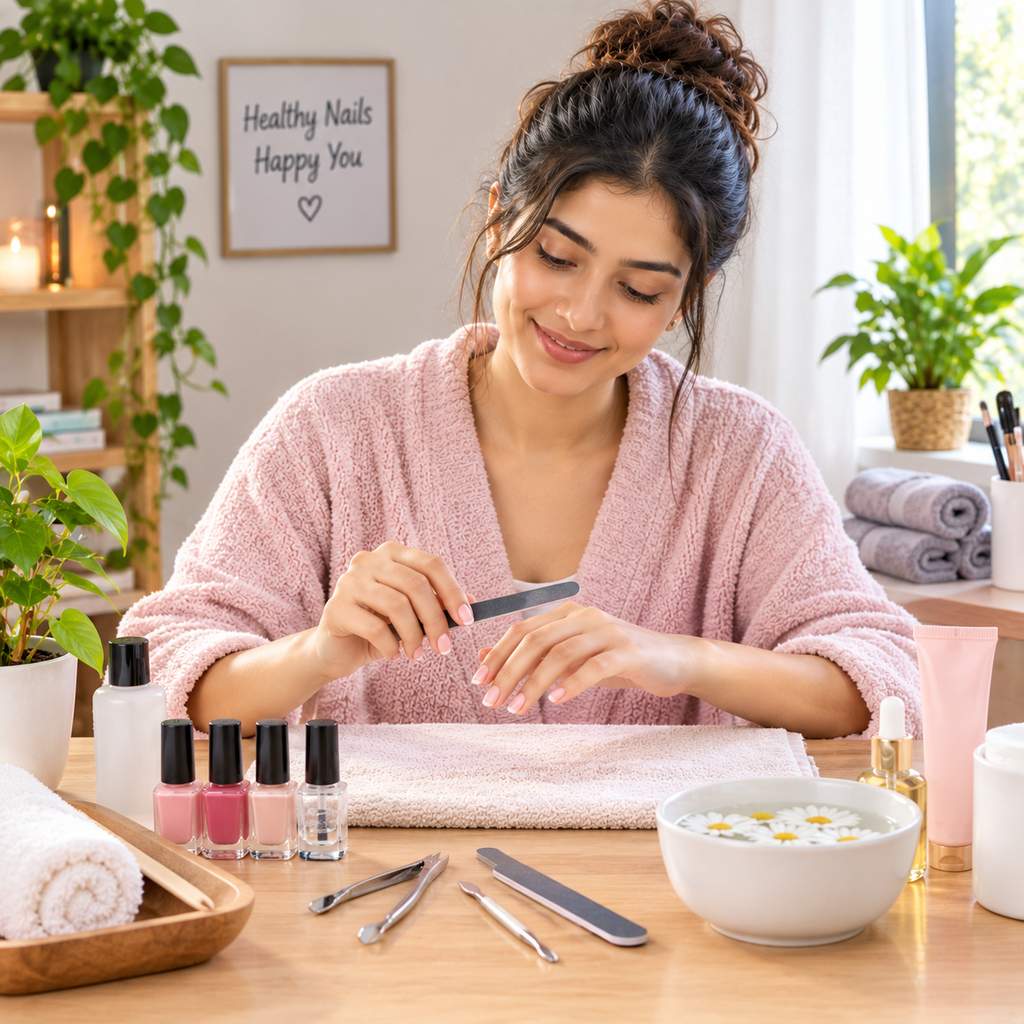
Tools You Need for a Home Manicure
You do not need an expensive kit. Basic tools are enough.
- Nail clippers or scissors
- A fine-grit nail file (180 to 240 grit is gentle) or glass file
- A soft buffer (use rarely)
- Cuticle pusher (orange wood stick or rubber-tipped)
- Cuticle oil or a natural oil
- Hand cream
- Mild nail polish remover (preferably acetone-free for regular use)
- Cotton pads
- Base coat, colour polish and top coat
- A small bowl and warm water
- A soft towel
Clean and sanitise your tools before and after each use with rubbing alcohol. Never share nail tools with others.
Step-by-Step Home Manicure
Set aside thirty to forty-five minutes and make it a relaxing ritual.
Step 1: Remove Old Polish
Soak a cotton pad in remover, press it on the nail for a few seconds, then wipe from the base to the tip. Avoid rubbing harshly. Wash hands afterwards, since removers are drying.
Step 2: Trim and Shape
Trim nails straight across with clippers or scissors, leaving a little white edge. Then file gently in one direction, from the side toward the centre, not in a sawing motion. Choose a shape that suits your lifestyle and hand:
- Round: Strong and practical for everyday use.
- Squoval (square with rounded corners): Very durable and easy to maintain.
- Oval: Elegant and elongating.
- Square: Classic but corners can catch and break.
- Almond: Stylish but needs more length and care.
Shorter nails are less likely to break and easier to keep clean.
Step 3: Soak Your Hands
Soak fingertips in warm (not hot) water with a few drops of gentle soap or a spoon of oil for three to five minutes. This softens the cuticles. Do not soak for too long, since over-soaking can weaken nails.
Step 4: Care for the Cuticles
Apply cuticle oil or a drop of coconut, almond or olive oil. Gently push back the softened cuticle with a rubber tool or orange stick. Do not cut the cuticle unless trained, and only trim tiny loose hangnails with clean tools. Avoid tearing or pulling skin.
Step 5: Buff (Optional)
If you want a natural shine or to smooth ridges, lightly buff the surface once or twice a month. Frequent buffing thins the nail.
Step 6: Moisturise
Massage hand cream or oil into hands, fingers and nails for a minute or two. This improves circulation and softens skin. Wipe any oil from the nail surface before applying polish so it adheres.
Step 7: Apply Base Coat
A base coat prevents staining, evens the surface and helps polish last. Apply one thin layer.
Step 8: Apply Polish
Use thin coats. Start with a stripe down the centre of the nail, then one on each side. Avoid touching the cuticle or skin. Allow the first coat to dry for a couple of minutes, then apply a second coat.
Step 9: Apply Top Coat
A top coat adds shine and protects colour. Seal the free edge of the nail by running the brush along the tip. Reapply every two or three days to extend wear.
Step 10: Clean Up
Dip a small brush or cotton bud in remover to clean edges. Let nails dry completely, which can take up to thirty minutes even if they feel dry.
Daily Nail Care Habits
- Moisturise hands after every wash and before bed.
- Apply cuticle oil once or twice a day.
- Wear gloves for dishwashing, cleaning, gardening and using chemicals.
- Use a hand-friendly soap and dry hands thoroughly.
- Avoid using nails as tools.
- Keep nails clean by scrubbing gently with a soft brush.
- Wear sunscreen on hands since they are exposed to the sun daily.
- Do not bite or pick. If you bite your nails, try keeping them short, applying bitter-tasting products or seeking help for the habit.
A Simple Weekly Nail Routine
- Sunday: Full manicure: remove polish, trim, file, soak, oil, moisturise and apply polish.
- Monday to Thursday: Cuticle oil morning and night, hand cream after washing.
- Wednesday: Refresh top coat.
- Friday: Check for chips, tidy edges with a file.
- Saturday: Give nails a break with an oil massage and a hydrating hand mask.
Give nails a polish-free break of a few days every so often, especially if you use dark colours that may stain.
Foods That Support Healthy Nails
Nails reflect overall nutrition, so eat a balanced diet.
- Protein: Eggs, dal, paneer, curd, fish, chicken, tofu, sprouts and nuts. Nails are made of protein, so adequate intake matters.
- Iron: Spinach, methi, beetroot, dates, jaggery, legumes and lean meat.
- Zinc: Pumpkin seeds, chickpeas, cashews and whole grains.
- Biotin and B vitamins: Eggs, nuts, seeds, legumes and whole grains.
- Vitamin C: Amla, citrus fruits, guava and capsicum, which help collagen and iron absorption.
- Healthy fats: Walnuts, flaxseeds, chia seeds and fish for moisture.
- Water: Keep hydrated.
Supplements are not always necessary. Do not take high-dose biotin or other supplements without medical advice, since they can interfere with certain lab tests and are not helpful for everyone.
Common Nail Problems and What to Do
Brittle or Splitting Nails
Possible causes: Frequent water exposure, harsh products, dry air or nutrient deficiency.
What helps: Wear gloves, moisturise, keep nails short, use a gentle file, avoid acetone frequently and use a nail-strengthening base coat. If it persists, see a doctor.
Peeling Nails
Possible causes: Picking off polish, harsh removers, over-filing.
What helps: Do not peel polish off. Soak remover on the nail gently. Use a hydrating base and oil.
Ridges
Vertical ridges are common and often increase with age. Horizontal ridges or deep grooves may indicate an injury or illness and deserve medical attention.
Yellow Nails
Possible causes: Dark polish stains, smoking, or fungal infection.
What helps: Use a base coat under polish. Give nails a break. Gently buff. If nails are thick, crumbly or misshapen, see a doctor for possible infection.
White Spots
These are usually harmless and often result from minor injury. They grow out with time.
Hangnails
Do not tear them. Soften with oil and trim carefully with clean clippers.
Ingrown Nails
Soak the area in warm water and keep it clean. If there is pain, swelling or pus, consult a doctor.
Nail Fungus
Signs include thickened, discoloured, brittle or distorted nails. This needs medical evaluation and treatment. Avoid covering it with polish, and keep feet dry and clean.
Slow-Growing Nails
Growth depends on genetics, age and general health. Be gentle, eat well and give it time.
Polish Tips and Nail Safety
- Choose good-quality polish. Look for reputable brands and check ingredient lists if you have sensitivities.
- Shake gently or roll the bottle between your palms to avoid bubbles.
- Apply thin coats. Thick coats take longer to dry and chip easily.
- Store polish upright in a cool, dark place.
- Discard old, gooey or smelly polish.
- Do not use nail thinner as a shortcut. Special thinners are available for restoring consistency, but old polish is best replaced.
- Ventilate the room when using polish and remover.
- Keep products away from children and flames, since many are flammable.
- Stop using a product if you experience itching, redness or swelling.
Gel, Acrylic and Press-On Nails
Enhancements can look beautiful, but they need care.
- Gel polish: Lasts for weeks but should be removed properly by soaking off, not peeled. Give your nails breaks between applications, and use sunscreen on hands during UV curing.
- Acrylic and extensions: Should be applied and removed by trained professionals using clean tools. Over-filing can thin nails.
- Press-on nails: A gentler option for occasional wear. Follow removal instructions carefully.
If your nails hurt, feel hot under the lamp or lift from the nail bed, stop and consult the technician or a doctor.
Salon Hygiene Tips
If you visit a salon:
- Choose a place that sterilises or uses fresh disposable tools.
- Ensure footbaths and basins are cleaned between customers.
- Do not allow aggressive cuticle cutting.
- Avoid the salon if you have a cut, infection or skin rash.
- Bring your own tools if you prefer.
Natural Home Remedies for Nail Health
While they will not replace medical treatment, some simple habits may help nails feel better:
- Warm oil massage: Coconut, almond or olive oil massaged into nails and cuticles.
- Lemon and oil: A tiny bit of lemon juice mixed with oil may lighten stains, but lemon can dry the skin, so use sparingly and moisturise afterwards.
- Aloe vera gel: Soothes dry skin around nails.
- Hydrating hand masks: Use overnight with cotton gloves after applying a thick cream.
Do a patch test and stop if irritation occurs.
Common Nail Care Mistakes
- Cutting or aggressively pushing cuticles
- Using metal tools that can damage the nail bed
- Filing back and forth
- Using nails as tools
- Peeling off polish
- Skipping base coat
- Applying thick layers of polish
- Over-soaking in water
- Using acetone every day
- Ignoring signs of infection
- Sharing tools without cleaning
Frequently Asked Questions
How often should I do a manicure at home?
A full manicure once a week or every two weeks is enough for most people, with daily oiling and moisturising in between.
Is it okay to cut cuticles?
It is best not to. Cuticles protect against infection. Softening and gently pushing them back is safer. Only trim loose hangnails.
Does nail polish damage nails?
Polish itself is usually safe when applied and removed properly. Damage often comes from peeling, harsh removers and skipping breaks. A base coat helps.
How can I make my nails grow longer?
Keep nails moisturised, protect them from breakage, eat a balanced diet and be patient. There is no guaranteed method to speed growth.
Are nail-strengthening products effective?
Some may temporarily harden the nail or reduce breakage, but overuse can make nails brittle. Follow product instructions.
What should I do if my nails suddenly change colour or shape?
Consult a doctor or dermatologist, since nail changes can occasionally signal health issues or infections.
Final Thoughts
Beautiful nails are the result of consistent, gentle care. With a few simple tools, a weekly manicure routine, protection from harsh chemicals and a balanced diet, at-home nail care can leave your hands looking neat and healthy without frequent salon visits.
Start this weekend by trimming, shaping, oiling and moisturising. Pay attention to how your nails respond over the next few weeks, and adjust your routine. With patience and kindness to your hands, your nails will grow stronger and your manicures will look better every time.
Disclaimer: This article is for general information only and is not medical advice. Consult a healthcare professional about persistent nail or skin problems.