Walk down any skincare aisle and you will find shelves packed with products promising to turn back the clock: serums claiming to erase wrinkles overnight, creams promising to lift sagging skin, and treatments marketed as miracle cures for aging. The reality of effective anti-aging skincare tips is both simpler and more encouraging than most marketing suggests. A handful of well-researched practices, applied consistently over years, can genuinely support healthier, more resilient skin as you age, without requiring an overwhelming or expensive routine.
This guide covers the science-backed fundamentals of anti-aging skincare, how to introduce active ingredients safely, lifestyle factors that influence skin aging, realistic expectations for what skincare can and cannot achieve, and how to build a routine suited to your specific skin and budget. This article is for general information and does not replace personalized advice from a dermatologist.
Understanding How Skin Actually Ages
Skin aging happens through two main pathways, and understanding both helps clarify why certain interventions are more effective than others.
Intrinsic aging refers to the natural, genetically programmed aging process that happens regardless of external factors. This includes gradual collagen loss, reduced cell turnover, and decreased oil production, all of which happen to everyone over time.
Extrinsic aging refers to aging caused by external factors, particularly cumulative sun exposure, but also including pollution, smoking, and repetitive facial movements. Research consistently shows that extrinsic factors, especially UV exposure, account for a significant majority of visible skin aging, which is actually good news, since this means much of what we perceive as aging is preventable or at least significantly slowable through consistent protective habits.
The Single Most Important Anti-Aging Step: Sunscreen
If you take away only one piece of advice from this entire guide, let it be this: daily, consistent sunscreen use is overwhelmingly considered the most effective anti-aging intervention available, more impactful than any specific serum or cream.
- Use a broad-spectrum sunscreen with at least SPF 30, ideally SPF 50 for extended outdoor exposure, applied every single day regardless of weather or season.
- Reapply every two hours when spending extended time outdoors, and after swimming or heavy sweating.
- Apply sunscreen to your neck, chest, and hands as well as your face, since these areas are frequently exposed and often show visible aging just as prominently as facial skin.
- Do not skip sunscreen on cloudy days or when staying mostly indoors, since UVA rays can penetrate clouds and window glass, contributing to cumulative damage over time.
- Wear protective clothing and sunglasses as an additional layer of defense, particularly a wide-brimmed hat for extended outdoor time.
No other single product or treatment comes close to the long-term anti-aging value of consistent, diligent sun protection.
Retinoids: The Gold Standard Active Ingredient
Retinoids, which include over-the-counter retinol and prescription-strength tretinoin, have the most substantial body of scientific research behind them for improving skin texture, supporting collagen production, and reducing the appearance of fine lines and wrinkles over time.
How retinoids work: They increase cell turnover and stimulate collagen production, which can improve skin texture, tone, and firmness with consistent use over months.
How to introduce retinoids safely:
- Start with a lower concentration and use it only two to three times per week initially, gradually increasing frequency as your skin builds tolerance.
- Apply only at night, since retinoids can increase sun sensitivity, and always follow with diligent sunscreen the next morning.
- Use a pea-sized amount for the entire face, applied after cleansing and before moisturizer, or mixed with moisturizer if you have sensitive skin.
- Expect some initial adjustment, including possible dryness, redness, or mild peeling during the first few weeks, which typically subsides as your skin adapts.
- Be patient. Visible improvements in texture and fine lines typically take at least twelve weeks of consistent use to become noticeable.
- Avoid combining with other strong actives like exfoliating acids on the same night initially, to reduce the risk of irritation while your skin adjusts.
Who should be cautious: Pregnant or breastfeeding individuals should avoid retinoids and consult their doctor about safe alternatives, since certain forms are not recommended during this time. Anyone with very sensitive skin or conditions like rosacea should introduce retinoids especially slowly and may benefit from guidance from a dermatologist.
Antioxidants: Vitamin C and Beyond
Antioxidant ingredients help protect skin from environmental damage caused by free radicals, which contribute to the breakdown of collagen and accelerated aging over time.
Vitamin C is among the most well-researched antioxidants for skin, with evidence supporting its role in brightening skin tone, supporting collagen synthesis, and providing some protection against environmental damage when used alongside sunscreen.
Other antioxidants worth considering include vitamin E, niacinamide, and various plant-derived extracts, which can offer complementary benefits, though vitamin C remains the most extensively studied option for topical use.
How to use antioxidants effectively: Apply vitamin C serum in the morning, before sunscreen, allowing it to absorb fully. Store vitamin C products properly, since they can degrade with exposure to light and air, reducing their effectiveness over time.
Hydration and Barrier Support
A healthy, well-hydrated skin barrier is essential for skin to look and function at its best, and this becomes increasingly important as skin’s natural oil production tends to decrease with age.
- Hyaluronic acid is a popular hydrating ingredient that can hold significant amounts of water, helping to plump and smooth the skin’s appearance temporarily.
- Ceramides help support and repair the skin’s natural barrier, which can become more fragile with age and with the use of active ingredients like retinoids.
- Choose a moisturizer suited to your skin type, whether that is a lightweight lotion for oilier skin or a richer cream for drier skin, and apply it consistently both morning and night.
Exfoliation: Supporting Cell Turnover
As skin ages, natural cell turnover slows down, which can contribute to a duller appearance and rougher texture. Gentle, regular exfoliation can help support this process.
- Chemical exfoliants containing alpha hydroxy acids or beta hydroxy acids are generally preferred over harsh physical scrubs, since they tend to be gentler and more evenly effective.
- Limit exfoliation to two to three times per week for most people, since over-exfoliating can damage the skin barrier and ironically accelerate signs of sensitivity and irritation.
- Avoid combining strong exfoliants with retinoids on the same night initially, to reduce the risk of irritation.
Peptides and Emerging Ingredients
Peptides are short chains of amino acids that are increasingly included in anti-aging formulations, with some research suggesting they may support collagen production and improve skin firmness over time. While the research base is generally less extensive than for retinoids or sunscreen, many people find peptide-containing products to be a gentle addition to their routine, particularly if they cannot tolerate retinoids.
Building a Realistic Anti-Aging Routine
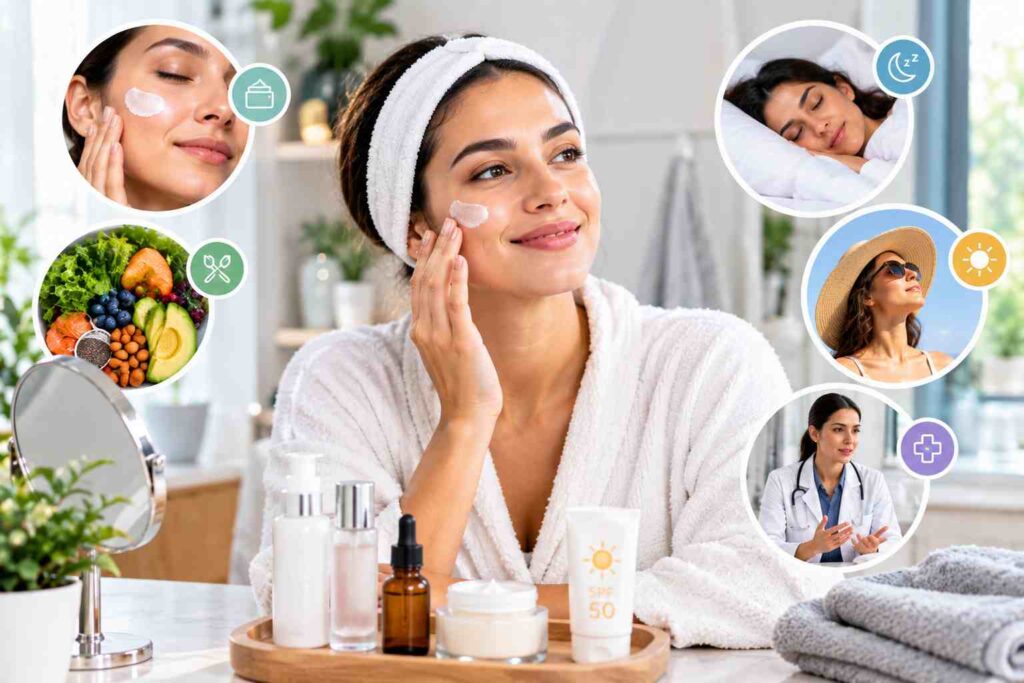
Morning routine:
- Gentle cleanser or simple water rinse
- Vitamin C serum (optional but popular)
- Moisturizer suited to your skin type
- Broad-spectrum sunscreen, SPF 30 or higher
Evening routine:
- Thorough cleansing, double cleansing if wearing makeup or sunscreen
- Exfoliation two to three times per week (not on retinoid nights)
- Retinoid, starting gradually and increasing frequency over time
- Moisturizer to support the skin barrier, especially important when using retinoids
This straightforward routine, built around sunscreen and retinoids as the core pillars, is supported by substantially more evidence than elaborate multi-step routines involving numerous specialty products.
Lifestyle Factors That Influence Skin Aging
Topical products address only part of the picture. Several lifestyle factors meaningfully influence how skin ages over time.
Avoid Smoking
Smoking is strongly associated with premature skin aging, including increased wrinkling and a duller, less even complexion, due to its effects on blood flow and collagen breakdown.
Limit Alcohol Consumption
Excessive alcohol intake can contribute to dehydration and inflammation, both of which can affect skin’s appearance and resilience over time.
Prioritize Sleep
Adequate sleep supports the body’s natural repair processes, including skin cell turnover and collagen production, while chronic sleep deprivation has been associated with more visible signs of aging in some research.
Manage Stress
Chronic stress can contribute to inflammation and may accelerate certain aspects of skin aging, making stress management a worthwhile, if less direct, component of an anti-aging approach.
Maintain a Balanced Diet
A diet rich in antioxidants, found in fruits, vegetables, and healthy fats, along with adequate protein for collagen production, supports overall skin health, though diet alone cannot replace topical sun protection and targeted skincare.
Stay Hydrated
Adequate water intake supports overall skin function, though it works alongside, rather than as a replacement for, proper topical moisturization.
Exercise Regularly
Regular physical activity supports healthy circulation, which may benefit skin’s appearance and overall health over time.
Professional Treatments Worth Understanding
For those interested in more intensive interventions beyond a home skincare routine, several professional treatments have reasonable evidence supporting their effectiveness when performed by qualified practitioners.
- Chemical peels can improve texture and tone through controlled exfoliation.
- Laser treatments can target specific concerns like pigmentation, texture, or collagen stimulation, depending on the specific device and technique used.
- Microneedling may stimulate collagen production through controlled micro-injury to the skin.
- Injectable treatments, such as neuromodulators and dermal fillers, address specific concerns like dynamic wrinkles or volume loss, though these require consultation with a qualified, licensed professional.
Always research practitioners carefully and consult with a board-certified dermatologist before pursuing professional treatments, since appropriate options depend heavily on your specific skin, concerns, and medical history.
Setting Realistic Expectations
- No product can fully reverse aging or replicate the results of more intensive professional treatments or procedures.
- Consistency matters more than any single product, since most effective anti-aging ingredients require weeks to months of regular use before showing meaningful results.
- Genetics play a significant role in how your skin ages, meaning comparing your results to someone else’s, even with an identical routine, is not entirely fair or useful.
- Prevention is generally more effective than correction, which is why starting good sun protection and skincare habits as early as possible tends to yield better long-term results than trying to reverse significant existing damage.
Common Anti-Aging Skincare Mistakes
- Skipping sunscreen, which undermines the effectiveness of virtually every other anti-aging effort.
- Introducing too many active ingredients at once, overwhelming the skin and increasing the risk of irritation.
- Expecting overnight results, when genuine improvement typically requires months of consistent use.
- Over-exfoliating, which can damage the skin barrier and paradoxically accelerate visible signs of sensitivity and irritation.
- Neglecting the neck, chest, and hands, which are frequently exposed to the sun and often show visible aging alongside the face.
- Following trends without evidence, investing in expensive, heavily marketed products with limited scientific support while neglecting foundational, well-researched steps like sunscreen and retinoids.
Frequently Asked Questions
At what age should I start using anti-aging skincare?
Sunscreen should be a daily habit from a young age, regardless of visible signs of aging, since prevention is more effective than correction. Many dermatologists suggest introducing retinoids in your late twenties to early thirties, though individual timing can vary based on your skin and concerns.
Is retinol or prescription tretinoin more effective?
Prescription tretinoin is generally more potent and has a longer track record of clinical research, but over-the-counter retinol can still offer meaningful benefits with consistent use and is a reasonable starting point, particularly for those with sensitive skin.
Can diet alone prevent skin aging?
A healthy diet supports overall skin health but cannot replace the protective effects of sunscreen or the collagen-supporting benefits of retinoids. Diet works best as a complement to, not a replacement for, a solid topical routine.
How long before I see results from anti-aging skincare?
Most active ingredients, including retinoids and vitamin C, typically require at least twelve weeks of consistent use before visible improvements in texture and tone become noticeable.
Do expensive anti-aging products work better than affordable ones?
Effectiveness depends more on the specific active ingredients, their concentration, and proper formulation than on price point. Many affordable products contain the same well-researched ingredients, like retinol and vitamin C, found in significantly more expensive alternatives.
Is it too late to start an anti-aging routine if I already have visible signs of aging?
It is never too late to benefit from good skincare habits. While existing damage cannot be fully reversed through topical products alone, consistent sunscreen use and appropriate active ingredients can still improve skin texture and slow further visible aging, regardless of your starting point.
Final Thoughts
Effective anti-aging skincare tips are refreshingly straightforward once you look past the marketing noise: consistent daily sunscreen, gradual introduction of retinoids, antioxidant support through ingredients like vitamin C, proper hydration, and supportive lifestyle habits like adequate sleep and avoiding smoking. These evidence-based fundamentals offer far more genuine value than expensive, elaborate routines built around trendy but unproven ingredients.
Start with the basics, be patient with the gradual timeline for visible results, and consult a dermatologist for personalized guidance, especially if you have specific concerns or sensitive skin. Consistent, science-backed habits practiced over years will do more for your skin’s long-term health and appearance than any single miracle product ever could.
Disclaimer: This article is for general information only and is not medical advice. Consult a dermatologist for guidance specific to your skin and concerns.