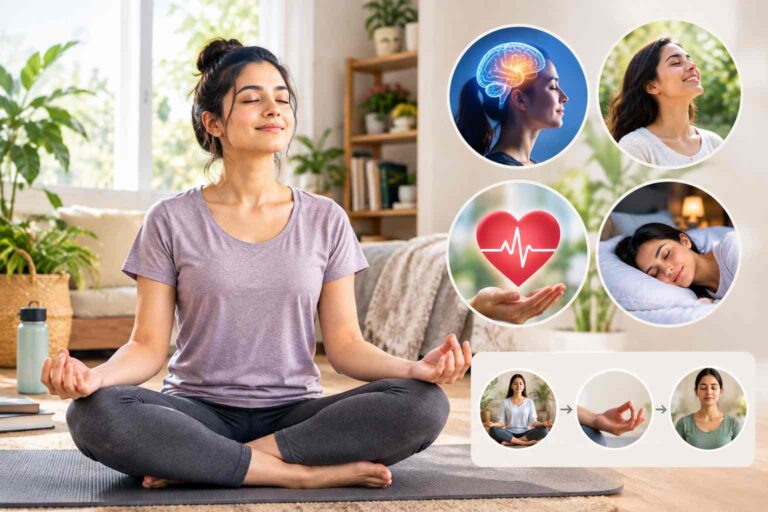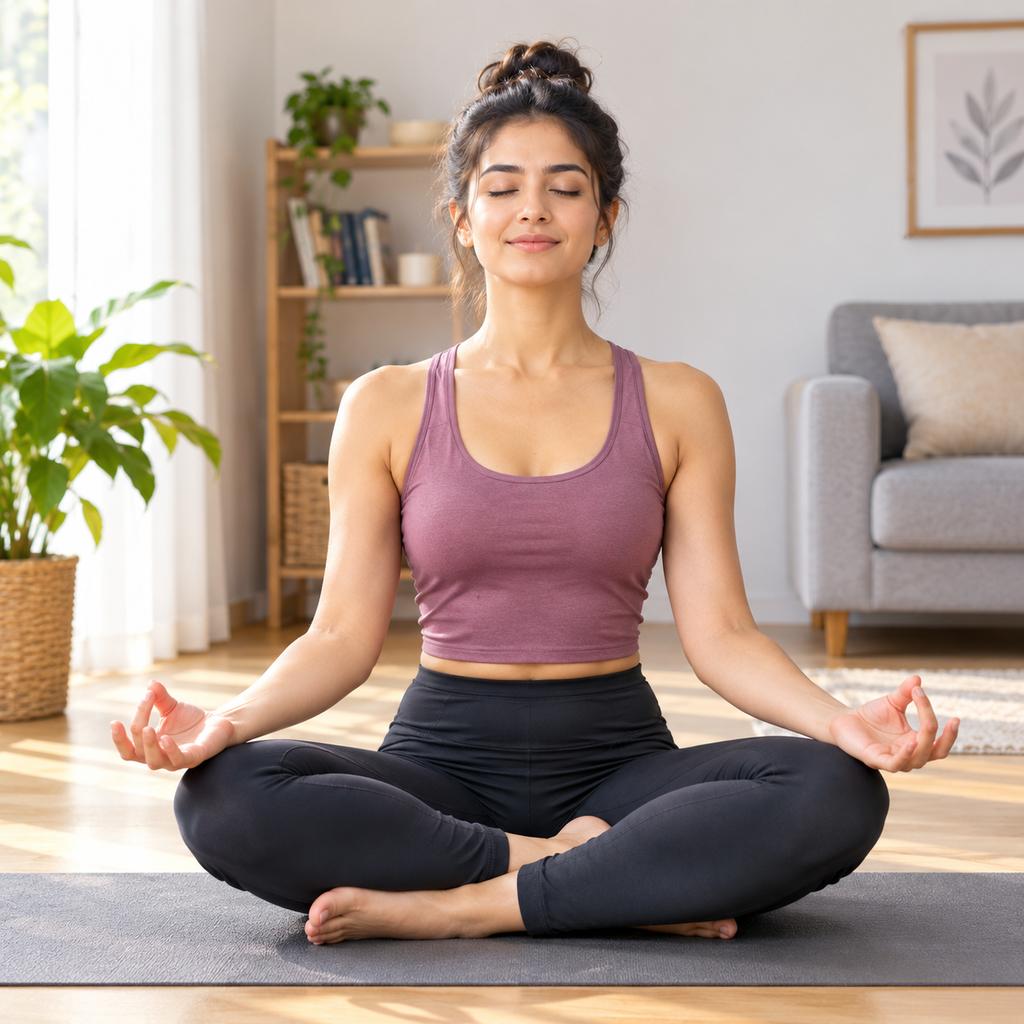
Yoga has been practised in India for thousands of years, valued not just as exercise but as a way to bring balance to the body, breath and mind. Today, it is practised across the world for flexibility, strength, stress relief and general wellbeing. Yet many people hesitate to start because they imagine yoga requires perfect flexibility, expensive classes or complicated poses seen on social media. In reality, yoga for beginners can start with just a mat, a few minutes and an open mind. You do not need to touch your toes on day one, and you certainly do not need fancy equipment.
This guide introduces the basics of yoga, its potential benefits, essential beginner poses, breathing techniques, a simple home routine, safety tips and how to build a lasting practice. This article is for general wellness information and does not replace guidance from a qualified yoga instructor or medical advice, especially if you have health conditions or injuries.
What Is Yoga, Really?
Yoga is a practice that combines physical postures (asanas), breathing techniques (pranayama) and often meditation or mindfulness. While many people today focus on the physical postures for fitness and flexibility, traditional yoga sees the body, breath and mind as connected.
You do not need to follow any particular philosophy to benefit from yoga. Whether you practise it purely as exercise, as a stress-relief tool or as a more holistic practice, the basic poses and breathing techniques can offer value.
Potential Benefits of Regular Yoga Practice
Many people who practise yoga regularly report improvements in several areas, though individual experiences vary.
- Flexibility: Gentle, repeated stretching can gradually improve range of motion in joints and muscles.
- Strength: Many poses use your own body weight to build strength, particularly in the core, legs and arms.
- Posture: Awareness of alignment can help counter the effects of long hours sitting or looking at screens.
- Stress relief: Combining movement with breath awareness can have a calming effect on the nervous system.
- Better sleep: Gentle evening yoga and relaxation techniques may support winding down before bed.
- Balance and coordination: Standing poses challenge and improve balance over time.
- Mind-body awareness: Practising mindfully can help you notice tension and habits in daily life.
Yoga is not a cure for medical conditions, but as part of a balanced lifestyle, it can be a valuable tool for general wellbeing.
Getting Started: What You Need
One of the best things about yoga is how little equipment it requires.
- A yoga mat: Provides cushioning and grip. If you do not have one, a folded blanket or towel on a non-slip floor can work temporarily.
- Comfortable clothing: Stretchy, breathable clothes that allow free movement.
- A quiet space: Enough room to stretch your arms and legs fully in different directions.
- Optional props: A cushion or folded blanket for seated poses, a strap or a long scarf for stretches, and a wall for balance support.
You do not need an expensive mat or matching yoga clothes to begin. Comfort and consistency matter far more than equipment.
Basic Safety Tips Before You Begin
- Consult a doctor first if you are pregnant, recovering from surgery or injury, or have a chronic health condition such as high blood pressure, heart issues or joint problems.
- Warm up gently before deeper stretches, especially in the morning when muscles are stiffer.
- Never force a stretch. Discomfort from stretching is normal, but sharp pain is a signal to stop.
- Move slowly and mindfully, rather than rushing through poses.
- Modify poses using props, bent knees or reduced range of motion as needed.
- Breathe steadily. Avoid holding your breath during poses.
- Stay hydrated and avoid practising immediately after a heavy meal.
- Listen to your body. Some days you may feel more flexible or energetic than others, and that is normal.
Understanding Basic Breathing (Pranayama)
Breath is central to yoga practice. Two simple techniques are excellent for beginners.
Deep Belly Breathing
Sit or lie comfortably. Place one hand on your belly. Inhale slowly through your nose, feeling your belly rise. Exhale slowly, feeling your belly fall. Continue for several breaths. This activates a calming response in the body.
Ujjayi Breath (Ocean Breath)
Breathe in and out through your nose while slightly constricting the back of your throat, creating a soft, ocean-like sound. This is often used during yoga poses to maintain focus and rhythm. Beginners can start with just a few gentle breaths and build familiarity over time.
Essential Beginner Yoga Poses
Here are foundational poses that build strength, flexibility and body awareness. Move into and out of each pose slowly, and hold as comfortable, typically 15 to 30 seconds to start.
1. Mountain Pose (Tadasana)
Stand with feet together or hip-width apart, weight evenly distributed, shoulders relaxed and arms by your sides. This simple standing pose teaches posture awareness and is the foundation for many other poses.
2. Child’s Pose (Balasana)
Kneel on the mat, sit back onto your heels, and fold forward with arms extended or resting by your sides. This gentle resting pose stretches the back and hips and can be used anytime you need a pause during practice.
3. Cat-Cow Pose (Marjaryasana-Bitilasana)
Start on hands and knees. Inhale, arch your back and lift your head (cow pose). Exhale, round your spine and tuck your chin (cat pose). Repeat slowly, syncing movement with breath. This warms up the spine gently.
4. Downward-Facing Dog (Adho Mukha Svanasana)
From hands and knees, tuck your toes and lift your hips up and back, forming an inverted V shape. Keep knees slightly bent if your hamstrings are tight. This stretches the back, shoulders and legs while building arm strength.
5. Forward Fold (Uttanasana)
Standing, hinge forward from the hips, letting your head and arms hang toward the floor. Bend your knees as much as needed. This stretches the back of the legs and releases tension in the neck and shoulders.
6. Warrior I and II (Virabhadrasana I and II)
Step one foot back into a lunge position with the back foot angled outward. In Warrior I, both hips face forward with arms raised overhead. In Warrior II, hips open to the side with arms extended parallel to the floor. These poses build leg strength and stability.
7. Tree Pose (Vrikshasana)
Stand on one leg, placing the sole of the other foot on your inner calf or thigh, avoiding the knee joint. Bring palms together at your chest or raise arms overhead. This improves balance and focus. Use a wall for support if needed.
8. Triangle Pose (Trikonasana)
Stand with feet wide apart, extend arms to the sides, and reach one hand toward the front foot while the other reaches up. This stretches the legs, hips and sides of the body.
9. Bridge Pose (Setu Bandhasana)
Lie on your back, bend knees with feet flat on the floor, and lift your hips while keeping shoulders grounded. This strengthens the back, glutes and core while gently opening the chest.
10. Cobra Pose (Bhujangasana)
Lie face down, place palms under shoulders, and gently lift your chest while keeping hips on the mat and elbows slightly bent. This strengthens the back and opens the chest. Avoid this pose if you have certain back conditions without professional guidance.
11. Seated Forward Bend (Paschimottanasana)
Sit with legs extended, and hinge forward from the hips, reaching toward your feet. Bend knees if hamstrings are tight. This stretches the back and legs.
12. Corpse Pose (Savasana)
Lie flat on your back with arms and legs relaxed, palms facing up. Close your eyes and breathe naturally. This final relaxation pose allows the body and mind to absorb the benefits of practice and should never be skipped.
A Simple 20-Minute Beginner Routine
This sample sequence is a gentle starting point. Move slowly, breathe steadily and modify as needed.
- Seated breathing (2 minutes): Sit comfortably and practise deep belly breathing.
- Cat-Cow (1 minute): Warm up the spine.
- Child’s Pose (1 minute): Settle into the body.
- Downward-Facing Dog (1 minute): Stretch the back and legs.
- Forward Fold (1 minute): Release the neck and hamstrings.
- Mountain Pose to Warrior I, both sides (3 minutes): Build strength and stability.
- Triangle Pose, both sides (2 minutes): Stretch the sides of the body.
- Tree Pose, both sides (2 minutes): Improve balance.
- Bridge Pose (1 minute): Strengthen the back and open the chest.
- Seated Forward Bend (1 minute): Calm the nervous system.
- Corpse Pose (4 to 5 minutes): Rest and integrate.
Adjust timing based on your comfort and available time. Even a shorter 10-minute version, focusing on a few key poses, is valuable.
Building a Home Yoga Habit
Choose a consistent time. Morning practice can energise your day, while evening practice can help you unwind. Choose what fits your schedule.
Start small. Ten to fifteen minutes a few times a week is a strong beginning. You can gradually increase duration and frequency.
Create a dedicated space. Even a small corner with your mat rolled out can signal to your mind that it is time to practise.
Use guided resources. Beginner-friendly videos or apps led by qualified instructors can help you learn correct alignment, especially when starting out.
Track your progress gently. Notice improvements in flexibility, strength or how you feel, without comparing yourself to others.
Be patient with your body. Flexibility and strength develop gradually. Some days will feel easier than others, and that is completely normal.
Combine yoga with other activities. Yoga pairs well with walking, strength training or other forms of exercise as part of a balanced routine.
Yoga for Specific Needs
For Stress and Anxiety
Focus on slow breathing, gentle forward folds, Child’s Pose and extended time in Corpse Pose. Combine with a few minutes of meditation or mindful breathing.
For Back Pain
Cat-Cow, gentle Cobra, Bridge Pose and Child’s Pose can help, but consult a doctor or physiotherapist first if you have chronic or severe back pain, and work with a qualified instructor for proper guidance.
For Better Sleep
A short evening routine with gentle forward folds, Legs-Up-The-Wall pose (lying on your back with legs resting up a wall) and Corpse Pose can support relaxation before bed.
For Flexibility
Regular practice of forward folds, Triangle Pose and gentle twists, done consistently over weeks, gradually improves flexibility. Avoid bouncing into stretches.
For Strength
Poses like Downward-Facing Dog, Warrior poses and Plank Pose (a straight-arm hold similar to the top of a push-up) build strength in the arms, legs and core over time.
Common Beginner Mistakes
- Comparing yourself to others, especially images on social media that may not reflect years of practice or natural flexibility.
- Forcing deep stretches too quickly, which can lead to injury.
- Holding your breath during poses instead of breathing steadily.
- Skipping the warm-up or Corpse Pose at the end.
- Practising on a hard, slippery surface without a proper mat.
- Ignoring pain signals and pushing through sharp discomfort.
- Expecting instant results. Benefits build gradually with consistent practice.
- Not modifying poses to suit your current flexibility and strength.
When to Seek Professional Guidance
While home practice from beginner-friendly resources is a great starting point, consider working with a qualified instructor if:
- You have a pre-existing injury or health condition.
- You are pregnant and want a routine suited to that stage.
- You want to deepen your practice with more advanced poses.
- You struggle to understand correct alignment from videos alone.
- You experience persistent pain during or after practice.
A good instructor can offer personalised modifications and help prevent injury.
Frequently Asked Questions
How often should beginners practise yoga?
Two to four times a week is a good starting point. Even short, consistent sessions offer more benefit than occasional long ones.
Do I need to be flexible to start yoga?
No. Yoga is a practice that builds flexibility over time. You do not need any prior flexibility to begin.
Can yoga help with weight loss?
Yoga can support overall wellbeing and, combined with other activity and balanced eating, may contribute to fitness goals, but it is not primarily a high-calorie-burning exercise like some cardio workouts.
Is it safe to practise yoga every day?
For most healthy beginners, gentle daily practice is generally safe, but include rest or lighter days as needed and listen to your body.
What is the best time of day to practise yoga?
There is no single best time. Morning practice can energise you, while evening practice can help you relax. Choose what fits your schedule and body.
Can I learn yoga just from videos?
Beginner-friendly videos from qualified instructors are a good starting point, but consider occasional guidance from a live instructor to check your alignment and technique.
Final Thoughts
Starting yoga for beginners does not require perfect flexibility, expensive equipment or years of experience. All it takes is a mat, a little space, a few minutes and a willingness to move slowly and breathe mindfully. Begin with a handful of simple poses, practise consistently rather than intensely, and let your body guide the pace.
Roll out your mat today, even for just ten minutes, and try a few of the poses from this guide. Over weeks and months, you may notice more flexibility, more strength and a calmer mind. Yoga is not a race to a perfect pose. It is a practice you can return to for a lifetime.
Disclaimer: This article is for general information only and is not medical advice. Consult a doctor or qualified yoga instructor before starting a new exercise routine, especially if you have a health condition.