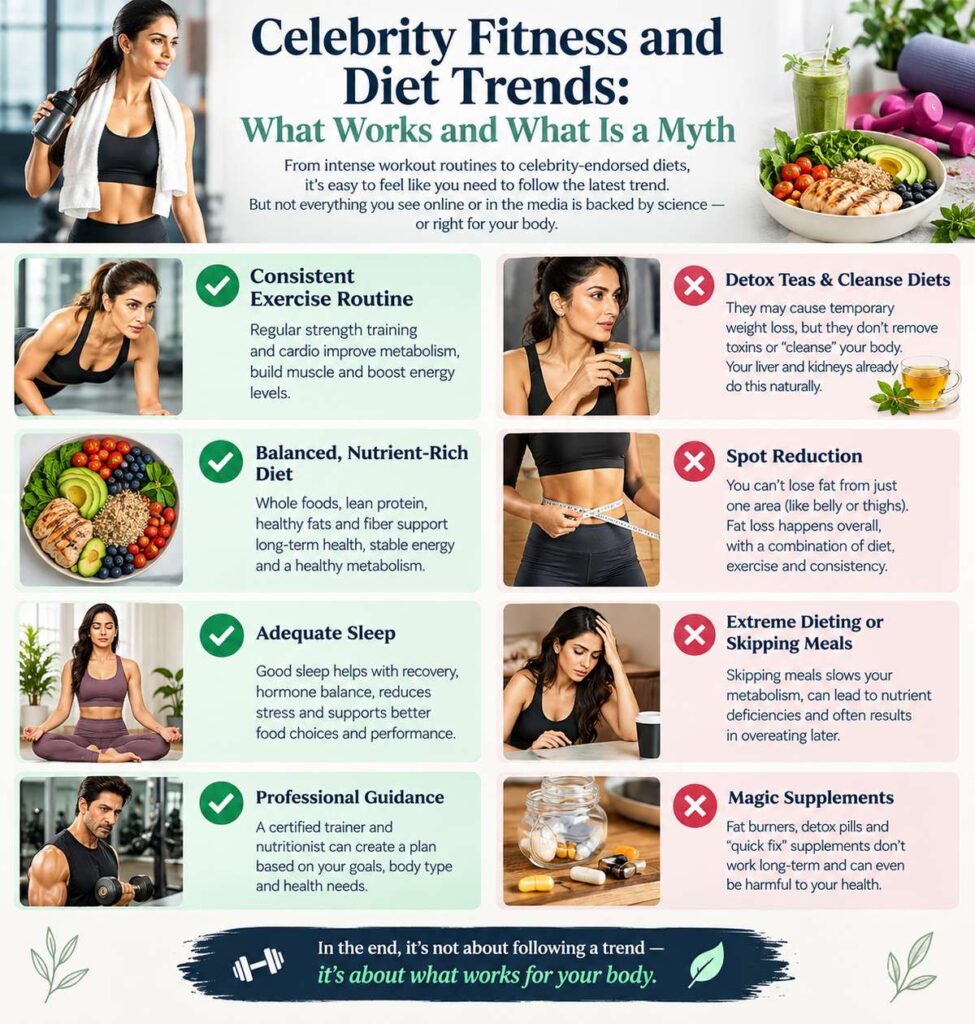
Open any social media app or entertainment website and you will find them: dramatic before-and-after photos, mysterious “secret diets,” detox teas, thirty-day transformations and workout routines that claim to deliver a film-ready body in weeks. It is natural to feel inspired, and sometimes envious, when public figures appear fit, energetic and glowing. But how much of what we see is realistic, and how much is marketing, editing or a lifestyle that most people cannot copy? Before you follow the next headline, it helps to understand the difference between useful ideas and myths. This guide to celebrity fitness trends sorts fact from fiction and shows how to build a safe, sustainable plan for your own life.
Please remember that this article is for general information only. It is not medical or nutritional advice, and you should consult a qualified professional before making major changes to your exercise or eating habits, especially if you have a health condition.
Why Celebrity Fitness Looks So Perfect
Public figures often follow routines that are very different from ordinary life. Consider the advantages many of them may have:
- Professional support: Personal trainers, nutritionists, chefs, physiotherapists and stylists can be part of a team.
- Time and flexibility: Some have schedules that allow multiple hours of training and meal preparation daily.
- Role-specific goals: A body for a particular film role may be temporary and not necessarily healthy or sustainable long term.
- Visual enhancement: Lighting, camera angles, makeup, posing, editing and filters can dramatically change how bodies appear in photos and videos.
- Selective sharing: People post their best moments, not the hard days, injuries, cravings or rest periods.
- Commercial interests: Some fitness plans, supplements or products are promoted because of sponsorships or partnerships.
None of this means their efforts are fake. Many put in serious work. But comparing your body and schedule with theirs is like comparing your commute with a race car driver’s track day.
Celebrity Fitness Trends That Can Be Genuinely Useful
Not everything popular is a myth. Several widely followed trends have solid foundations.
1. Strength Training
Building muscle through resistance exercises supports metabolism, posture, joint stability, bone density and long-term independence. It is beneficial for people of all genders and ages, and it does not automatically make you bulky. Beginners can start with bodyweight exercises such as squats, lunges, push-ups (on knees or against a wall if needed), planks and glute bridges, then progress to light weights or resistance bands with proper guidance.
2. Walking and Everyday Movement
Some public figures credit daily walks, stair climbing and active hobbies for their fitness. Walking is accessible, low-impact and easy to sustain. Increasing everyday movement, such as taking the stairs, stretching during breaks or walking while talking on the phone, adds up.
3. Yoga and Pilates
These practices improve flexibility, balance, core strength and body awareness, and they can help reduce stress. Many people enjoy them because they are adaptable to different fitness levels. A qualified instructor can help you use correct technique and avoid injury.
4. Balanced, Home-Cooked Meals
The idea that eating mostly whole foods, such as vegetables, fruits, pulses, whole grains, dairy or alternatives, eggs, fish, lean meat and healthy fats, supports health is well established. Cooking at home gives you more control over ingredients, portions and quality.
5. Prioritising Sleep and Recovery
Sleep affects hunger hormones, energy and mood. Rest days allow muscles to repair and reduce the risk of injury. Many trainers emphasise recovery as part of progress, and that advice is sound.
6. Hydration
Drinking enough water throughout the day supports energy, digestion and general wellbeing. You do not need special products for this. Plain water works well.
7. Stress Management
Meditation, breathing exercises, journaling and time in nature are frequently mentioned by public figures. They are genuinely helpful for mental and physical health.
8. Consistency Over Intensity
The most repeated lesson among reputable trainers is that regular, moderate effort beats occasional extreme effort. A routine you can maintain for years is more powerful than a brutal plan you abandon in two weeks.
Trends and Claims to Be Careful About
Some popular ideas are exaggerated, unproven or risky.
1. Crash Diets and Extreme Calorie Cutting
Severely restricting food can cause fatigue, dizziness, nutrient deficiencies, muscle loss, hormonal disruption and rebound weight gain. Fast weight loss may be mostly water and muscle rather than fat. Sustainable change usually happens gradually.
2. Detox Teas, Juice Cleanses and “Flat Tummy” Products
Your liver, kidneys, lungs, skin and digestive system already remove waste. There is little reliable evidence that most detox products do anything beyond acting as laxatives or diuretics, which can cause dehydration and stomach problems. Be sceptical of quick-fix claims.
3. Spot Reduction
You cannot choose to lose fat only from your stomach, thighs or arms by exercising those areas. Fat loss happens across the body, according to genetics and hormones. Targeted exercises can strengthen and shape muscles, but they do not burn fat from that specific spot.
4. “Miracle” Supplements
Fat burners, appetite suppressants and unregulated supplements may be ineffective and sometimes harmful, especially without medical supervision. Always consult a doctor or registered dietitian before using any supplement, and buy only from reputable, regulated sources.
5. Extreme Fasting Without Guidance
Various forms of intermittent fasting are popular, and some people feel comfortable with them. However, fasting is not suitable for everyone. People who are pregnant or breastfeeding, have diabetes or other medical conditions, take certain medications, are underweight or have a history of disordered eating should get professional advice first.
6. Cutting Out Entire Food Groups Without Reason
Unless there is a medical or ethical reason, eliminating all carbohydrates, fats or other major groups can make your diet unbalanced and hard to maintain. Carbohydrates provide energy, healthy fats support hormones, and protein supports muscle repair.
7. Over-Training and “No Pain, No Gain”
Pushing through sharp pain, ignoring fatigue or training every day without rest can lead to injuries and burnout. Muscle soreness can be normal, but pain that feels sharp or persistent is a signal to stop and seek advice.
8. Unrealistic Body Ideals
Public images are often filtered or edited, and body shapes naturally vary. Chasing a single ideal can harm self-esteem and mental health. Health can look different on different people.
9. Quick Transformation Promises
“Lose 10 kilograms in a week” or “Get abs in 14 days” are marketing lines, not realistic outcomes. Real, lasting changes take months and depend on many factors.
How to Judge Any Fitness or Diet Claim
Use these questions to protect yourself from myths:
- Who is making the claim? Is it a qualified professional or someone selling a product?
- Is there scientific evidence? Look for reliable sources like medical institutions, government health websites or peer-reviewed research.
- Does it sound too good to be true? Fast, effortless miracles almost always are.
- Is it safe for everyone or does it need medical supervision? Extreme methods often do.
- Can I follow this for years? If not, it is not a lifestyle plan.
- Does it make me feel bad about my body or food? Healthy approaches support wellbeing.
Build Your Own Realistic Fitness Plan
Instead of copying a public figure, create a plan that fits your body, budget, schedule and preferences.
Step 1: Define a Clear Goal
Set a specific, realistic goal, such as walking thirty minutes five days a week, doing two strength sessions weekly, improving stamina or gaining flexibility. Focus on health markers like energy, strength, mood and sleep, not just numbers on a scale.
Step 2: Check With a Professional
If you have any medical condition, injury, are pregnant, are over a certain age or have not exercised for a long time, consult a doctor first. A qualified trainer can teach correct form.
Step 3: Combine Different Types of Exercise
A balanced week could include:
- Cardio: Brisk walking, cycling, swimming, dancing or jogging for heart health.
- Strength: Two or three sessions covering major muscle groups.
- Flexibility and mobility: Stretching, yoga or Pilates.
- Daily movement: Steps, stairs and light activity.
General health guidelines often suggest at least 150 minutes of moderate activity per week for adults, along with muscle-strengthening activities on two or more days, but your needs may differ.
Step 4: Eat Balanced, Enjoyable Meals
Build a plate with vegetables, protein, whole grains and healthy fats. Include fruit, pulses and adequate fibre. Keep some flexibility so that occasional treats and festival foods fit into your life without guilt. Traditional Indian meals, when prepared with moderate oil and plenty of vegetables, pulses and whole grains, can be part of a healthy pattern.
Step 5: Sleep and Recover
Aim for seven to nine hours of sleep and schedule rest days. Listen to your body when it asks for a break.
Step 6: Track Progress Beyond the Scale
Notice how your clothes fit, how your energy feels, how strong you are getting and how well you sleep. Take measurements or photos if you like, but do not obsess over daily changes.
Step 7: Be Patient
Visible changes often take several weeks or months. Focus on showing up consistently and celebrating small wins.
A Sample Beginner Weekly Plan
- Monday: 30-minute brisk walk plus 10 minutes of stretching
- Tuesday: Bodyweight strength (squats, wall push-ups, glute bridges, plank)
- Wednesday: Rest or gentle yoga
- Thursday: 30 minutes of cycling, dancing or swimming
- Friday: Strength session with resistance bands or light weights
- Saturday: Fun activity like a hike, sports game or long walk
- Sunday: Rest, meal prep and light stretching
Adjust the plan to your fitness level and health advice.
Social Media Reality Check
Social media can motivate, but it can also distort our perception. Keep these reminders in mind:
- Photos may be edited, posed or taken at flattering moments.
- Fitness content is designed to attract views and sales.
- Progress is rarely linear, and everyone has setbacks.
- Comparing yourself to others can damage confidence.
- Follow qualified professionals, evidence-based educators and accounts that promote healthy attitudes.
- Mute or unfollow accounts that make you feel bad or promote extreme behaviour.
Compare yourself with who you were last month, not with someone else’s highlight reel.
Body Image and Mental Health
Fitness should improve your life, not control it. If you notice that you are obsessively counting calories, punishing yourself for eating, exercising excessively, avoiding social events because of food or feeling constant anxiety about your body, consider speaking with a doctor or mental health professional. Disordered eating and body image issues are real health concerns, and support is available.
Common Mistakes to Avoid
- Starting too intensely and quitting after a few weeks
- Copying a celebrity plan without considering your health and lifestyle
- Relying only on cardio and ignoring strength training
- Ignoring proper form
- Drinking too little water
- Cutting calories too low
- Skipping sleep to fit in workouts
- Weighing yourself daily and letting numbers control your mood
- Falling for miracle products
- Neglecting mental health
Frequently Asked Questions
Can I follow a celebrity workout plan?
You can try it if it is safe for your fitness level and health, but adjust the intensity and choose activities you enjoy. Consider consulting a trainer.
Is there one best diet for everyone?
No. The best eating pattern is balanced, nutritious, sustainable and suited to your health needs, culture and preferences.
Do detox drinks work?
Your body has its own detox systems. Most detox products lack strong evidence and can cause side effects. Eating well, staying hydrated and sleeping enough are better strategies.
How long does it take to see results from exercise?
You may feel more energetic within a couple of weeks, while visible changes often take a few months, depending on your starting point and consistency.
Will strength training make me bulky?
Not automatically. Building large muscles takes years of targeted training and specific nutrition. For most people, strength training creates a firmer, stronger body.
Should I consult a professional before starting a new plan?
Yes, especially if you have medical conditions, injuries or specific goals. A doctor, dietitian or certified trainer can provide personalised guidance.
Final Thoughts
Public figures can be a source of motivation, but their routines are shaped by professional teams, special goals and carefully curated images. When evaluating celebrity fitness trends, keep what is practical, such as strength training, walking, balanced meals, sleep and stress management, and question the rest, especially crash diets, detox products and quick-fix promises.
Real health is built quietly, through small habits repeated over time. Choose activities you enjoy, eat food that nourishes you, rest when you need to and be kind to yourself along the way. Your journey does not have to look like anyone else’s to be successful.
Disclaimer: This article is for general information only and is not medical, nutritional or fitness advice. Consult a qualified healthcare professional before beginning any new exercise or diet programme.