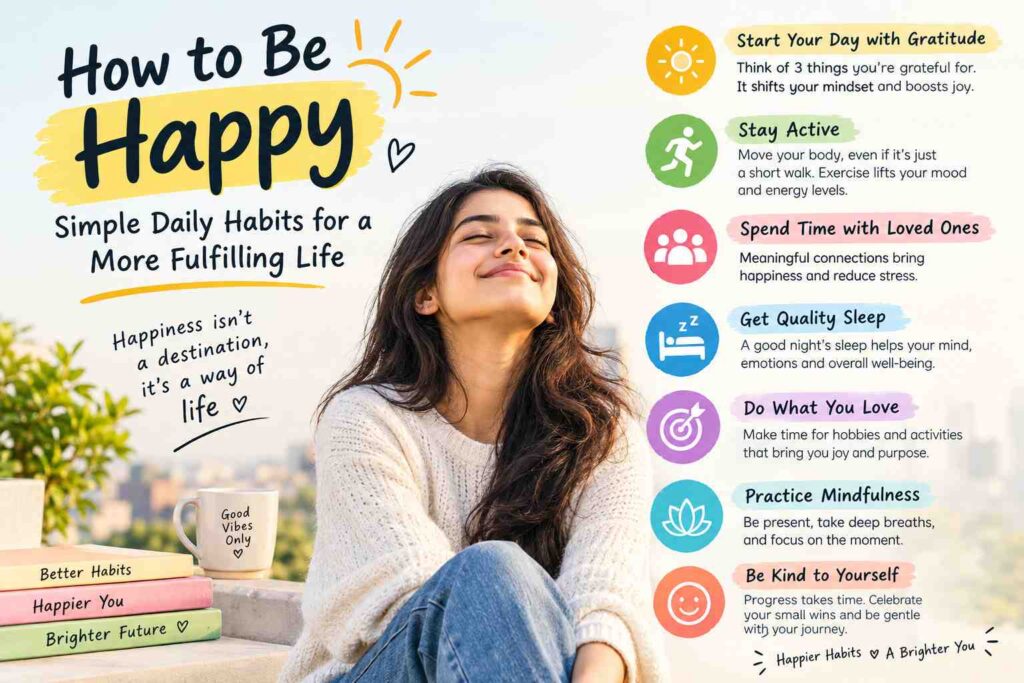
Somewhere between chasing deadlines, scrolling through highlight reels of other people’s lives, and managing the everyday demands of work and family, many of us quietly wonder whether we are actually happy, or simply keeping busy. The question of how to be happy is one of the oldest and most searched questions in human history, and while there is no single formula that works identically for everyone, researchers who study wellbeing have identified several consistent patterns and habits that genuinely tend to support a more fulfilling, contented life.
This guide explores what happiness research actually tells us, practical daily habits that support wellbeing, the role of relationships and gratitude, how to handle difficult emotions without suppressing them, common happiness myths worth unlearning, and how to build a more meaningful life over time rather than chasing fleeting moments of pleasure alone.
Understanding What Happiness Really Means
Before diving into habits, it helps to clarify what we actually mean by happiness, since the word gets used quite loosely.
Researchers often distinguish between two related but different concepts:
- Hedonic wellbeing: Moment-to-moment pleasure and positive emotion, such as enjoying a good meal or a fun evening with friends.
- Eudaimonic wellbeing: A deeper sense of meaning, purpose and fulfilment that comes from living in alignment with your values, even when specific moments are not necessarily pleasurable.
True, lasting happiness tends to involve both elements: genuine moments of joy and pleasure, combined with an underlying sense that your life has meaning and direction. Chasing only pleasure, without purpose, often leaves people feeling empty despite apparent success or enjoyable experiences.
Habit 1: Practise Gratitude Regularly
Gratitude is one of the most consistently researched and recommended habits for supporting happiness.
- Keep a simple gratitude journal, writing down three things you are grateful for each day, however small. This could be a good cup of chai, a kind message from a friend, or simply a comfortable bed.
- Express gratitude directly to others, whether through a message, a call or an in-person conversation, which tends to strengthen relationships alongside your own sense of wellbeing.
- Notice small positive moments throughout your day rather than only reflecting on gratitude at a set time, building a habit of appreciation into your everyday awareness.
- Avoid comparing your gratitude practice to an idealised standard. Even brief, simple moments of acknowledgment count and can build over time into a genuinely different mindset.
Habit 2: Nurture Meaningful Relationships
Numerous long-term studies on happiness and wellbeing consistently point to strong relationships as one of the most powerful predictors of a fulfilling life.
- Prioritise quality time with people who matter to you, even in small, regular doses, rather than waiting for large blocks of free time that may rarely materialise.
- Be present during conversations, putting away distractions like your phone to genuinely engage with the people in front of you.
- Invest in a few close relationships rather than spreading yourself thin trying to maintain a large number of surface-level connections.
- Reach out first rather than waiting for others to initiate, since many people feel similarly hesitant and would welcome the gesture.
- Address relationship conflicts directly and kindly rather than avoiding difficult conversations, since unresolved tension tends to weigh heavily on overall wellbeing.
Habit 3: Move Your Body Regularly
Physical activity has a well-documented positive effect on mood, energy and overall mental wellbeing.
- Choose activities you genuinely enjoy, whether that is walking, dancing, yoga, sports or the gym, since enjoyment significantly increases the likelihood of consistency.
- Aim for regular movement most days, even if it is just a twenty-minute walk, rather than only occasional intense workouts.
- Notice how movement affects your mood in the moment, which can reinforce the habit through direct, felt experience rather than relying purely on willpower.
- Combine movement with nature or social connection when possible, such as walking with a friend or exercising outdoors, which can amplify the mood benefits.
Habit 4: Prioritise Restful Sleep
Sleep quality significantly influences emotional regulation, stress resilience and overall mood.
- Maintain a consistent sleep schedule, going to bed and waking at similar times daily.
- Create a calming pre-sleep routine that helps signal to your body it is time to wind down.
- Limit screens before bed, since bright light and stimulating content can interfere with your ability to fall asleep easily.
- Notice the connection between poor sleep and your mood, which can motivate continued prioritisation of this often-neglected habit.
Habit 5: Engage in Activities That Create Flow
Flow refers to a state of complete absorption in an activity, where time seems to disappear and you are fully engaged in the present moment.
- Identify activities that create this state for you, whether that is cooking, painting, playing an instrument, gardening, writing or a particular sport.
- Make regular time for these activities, even in small amounts, rather than treating them as luxuries to be enjoyed only when everything else is done.
- Notice that flow activities often involve a balance of challenge and skill, neither so easy that they become boring nor so difficult that they become frustrating.
Habit 6: Practise Mindfulness and Present-Moment Awareness
Much of our unhappiness stems from dwelling on the past or worrying about the future, rather than fully experiencing the present moment.
- Try simple mindfulness practices, such as focused breathing, a body scan, or mindful eating, even for just a few minutes a day.
- Notice when your mind wanders to worry or rumination, and gently redirect your attention back to the present without harsh self-judgment.
- Engage fully in everyday activities, whether that is truly tasting your food, noticing your surroundings on a walk, or being fully present during a conversation.
- Consider guided meditation apps or resources if you find it helpful to have structured support when starting a mindfulness practice.
Habit 7: Contribute to Something Beyond Yourself
Research consistently shows that helping others, contributing to your community, or working toward something larger than immediate personal gain tends to significantly boost wellbeing.
- Volunteer your time or skills for a cause you genuinely care about, even in small, manageable amounts.
- Perform small acts of kindness in daily life, whether that is helping a colleague, supporting a friend, or simply being patient and kind with strangers.
- Consider how your work or daily activities connect to something meaningful, even if your job itself does not feel inherently glamorous, finding purpose in how it supports your family or contributes to others.
- Mentor or support someone else’s growth, which often provides a genuine sense of meaning and connection.
Habit 8: Manage Your Relationship With Comparison and Social Media
Constant comparison, particularly fuelled by curated social media content, is a significant modern obstacle to happiness.
- Notice how you feel after using social media, and consider adjusting your usage if it consistently leaves you feeling worse rather than better.
- Unfollow or mute accounts that consistently trigger comparison, envy or inadequacy.
- Remember that social media typically shows curated highlights, not the full, honest reality of anyone’s life, including moments of struggle that rarely get shared.
- Focus on your own progress and values rather than measuring your life against others’ external, often incomplete, presentations.
Habit 9: Allow Yourself to Feel Difficult Emotions
True happiness is not about constant positivity or suppressing negative emotions. It involves developing a healthy relationship with the full range of human emotion.
- Acknowledge difficult emotions rather than suppressing them, which research suggests tends to be more sustainable for long-term wellbeing than forced positivity.
- Allow yourself to feel sadness, frustration or disappointment when appropriate, understanding these as normal, temporary parts of a full human experience rather than failures.
- Seek support when emotions feel overwhelming, whether from trusted friends, family or a mental health professional.
- Practise self-compassion during difficult times, treating yourself with the same kindness you would offer a good friend facing similar struggles.
Habit 10: Set and Pursue Meaningful Goals
Having a sense of direction and purpose, working toward goals that align with your genuine values, contributes significantly to long-term life satisfaction.
- Reflect on what genuinely matters to you, rather than pursuing goals primarily because of external expectations or comparison with others.
- Set specific, achievable goals that connect to your deeper values, whether related to career, relationships, health or personal growth.
- Celebrate progress along the way, rather than only focusing on the final outcome, since the journey itself contributes significantly to overall life satisfaction.
- Remain flexible, allowing your goals to evolve as you learn more about yourself and your circumstances change over time.
Common Happiness Myths Worth Unlearning
“Happiness means constant positivity.” Genuine wellbeing involves experiencing the full range of human emotions, not suppressing anything negative.
“I will be happy once I achieve [specific external milestone].” Research on hedonic adaptation shows that humans tend to return to a relatively stable baseline happiness level after both positive and negative life events, meaning external achievements alone rarely provide lasting fulfilment without accompanying internal habits and perspective.
“Money is the primary key to happiness.” While financial security genuinely reduces stress and enables important life choices, research suggests that beyond meeting basic needs, additional income has a diminishing effect on overall happiness compared to factors like relationships and purpose.
“Comparing myself to successful people will motivate me.” While some healthy inspiration can be motivating, frequent comparison, particularly through curated social media, more often undermines wellbeing than genuinely motivates sustainable positive change.
“Happiness is a destination I will eventually reach.” Happiness is better understood as an ongoing practice and set of habits woven throughout daily life, rather than a final state achieved once and maintained permanently without effort.
Building a Simple Daily Happiness Practice
You do not need to implement every habit at once. Consider starting with a simple daily structure:
Morning: A few minutes of gratitude reflection, along with movement or fresh air if possible.
Throughout the day: Present-moment awareness during routine activities, meaningful connection with at least one person, and attention to how different activities and interactions affect your mood.
Evening: Reflection on the day’s positive moments, connection with loved ones, and a calming wind-down routine that supports quality sleep.
Weekly: Time dedicated to activities that create flow, contribution to something beyond yourself, and honest reflection on your goals and values.
When to Seek Professional Support
While these habits genuinely support wellbeing for many people, persistent unhappiness, particularly when accompanied by other symptoms, may benefit from professional support. Consider reaching out to a mental health professional if you experience:
- Persistent sadness, hopelessness or loss of interest in activities you once enjoyed, lasting more than a couple of weeks
- Significant changes in sleep, appetite or energy that concern you
- Difficulty functioning in daily responsibilities due to your emotional state
- Thoughts of self-harm or feeling that life is not worth living
Seeking support is a sign of strength and self-awareness, not weakness, and many people find that professional guidance significantly accelerates and deepens their journey toward genuine wellbeing.
Frequently Asked Questions
Can happiness really be learned through habits?
Research in positive psychology suggests that while genetics and circumstances play a role, a significant portion of our happiness is influenced by intentional habits and daily choices, meaning meaningful improvement is genuinely possible through consistent practice.
How long does it take to feel happier after starting new habits?
This varies significantly by individual, but many people notice initial shifts in mood within a few weeks of consistent practice, while deeper, more stable changes in overall life satisfaction often develop over several months of sustained effort.
Is it normal to not feel happy all the time, even with good habits?
Yes, completely. Genuine wellbeing includes experiencing a full range of emotions, including difficult ones. The goal is not constant happiness but rather building resilience, meaning and overall life satisfaction over time.
Do I need money to be happy?
While financial security reduces significant stress and enables important choices, research suggests that beyond meeting basic needs, relationships, purpose and daily habits tend to have a greater influence on overall happiness than additional income alone.
What is the single most important habit for happiness?
Research consistently points to strong, meaningful relationships as one of the most powerful predictors of long-term happiness and wellbeing, though a combination of habits, including gratitude, movement and purpose, tends to be most effective overall.
Should I see a therapist if I want to be happier, even without a diagnosed condition?
Yes, many people benefit from therapy or counselling for general personal growth and wellbeing, not only during times of crisis. A mental health professional can offer valuable tools and perspective for anyone genuinely interested in a more fulfilling life.
Final Thoughts
Learning how to be happy is less about discovering a single secret and more about consistently practising a collection of simple, research-supported habits: gratitude, meaningful relationships, movement, restful sleep, present-moment awareness, contribution beyond yourself, and pursuing goals aligned with your genuine values.
Start small. Choose just one or two habits from this guide to focus on this week, whether that is a brief gratitude practice, reaching out to someone you care about, or a short daily walk. Genuine, lasting happiness is built gradually, through everyday choices and consistent practice, not through a single dramatic change. Be patient and compassionate with yourself along the way, and remember that the journey toward a more fulfilling life is itself a meaningful and worthwhile pursuit.