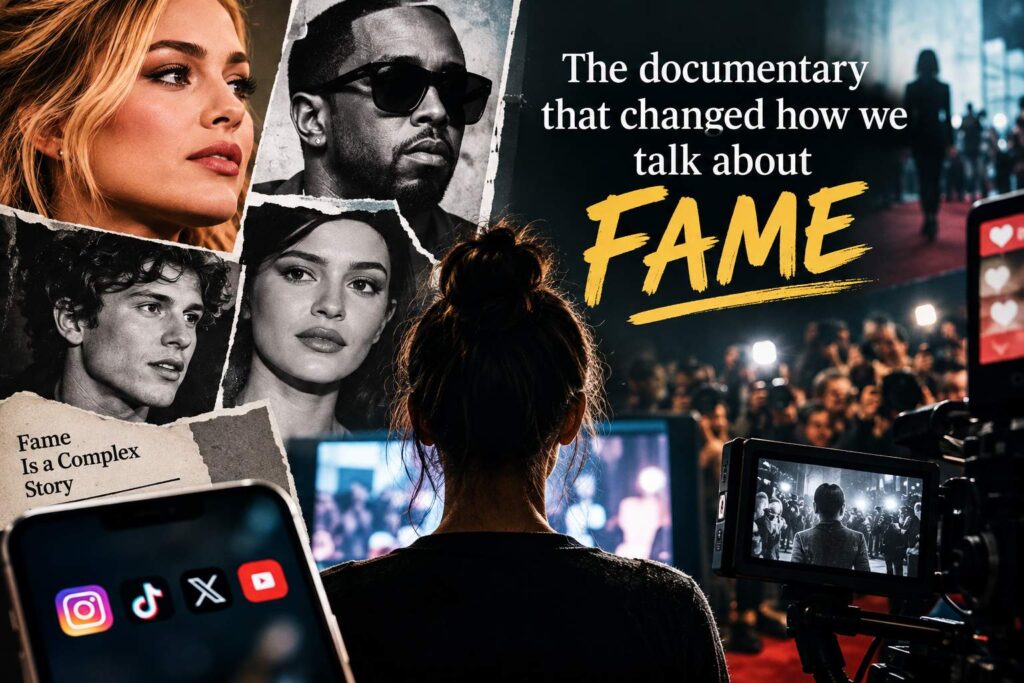
Documentaries about celebrity life are a well-established genre, most following a fairly predictable arc — rise, struggle, redemption, told largely on the subject’s own terms with the subject’s own cooperation. A recent release has broken from that pattern distinctly enough that it’s become an unexpected touchstone in broader public conversation about fame itself, well beyond its immediate subject.
What makes this documentary different
Unlike the genre’s more typical approach, this particular documentary was structured around extended, largely unedited footage rather than a heavily produced narrative arc, giving it an observational quality several critics have compared more to documentary journalism than typical celebrity-profile filmmaking. This structural choice appears to be central to why audiences have responded so differently to it compared to more conventionally produced celebrity documentaries released around the same time.
Critics have specifically pointed to several extended, quiet sequences — moments of genuine boredom, frustration or uncertainty that a more conventionally edited documentary would likely have cut for pacing — as the material generating the most audience discussion. These unpolished moments appear to have resonated precisely because they depart so clearly from the more curated, narrative-driven presentation audiences have come to expect from the genre.
Why it’s sparked a broader conversation about fame itself
Beyond commentary on the documentary’s specific subject, a broader conversation has developed around what the film reveals about the structural cost of visibility more generally — the constant presence of cameras, the loss of any genuinely unobserved moment, and the psychological toll of that condition sustained over years rather than the brief, contained periods most audiences experience visibility themselves. Several commentators have noted this broader conversation has taken on a life somewhat independent of the documentary’s specific subject.
Mental health professionals have been drawn into this wider conversation in a way that’s relatively unusual for celebrity documentary coverage, with several offering public commentary on what constant surveillance and lack of private space does to psychological wellbeing over sustained periods — commentary that’s been widely shared and discussed well beyond entertainment media coverage, moving into broader conversations about privacy, technology and modern fame more generally.
The industry response, and what it might signal
Within the entertainment industry itself, several other public figures have referenced the documentary directly in their own subsequent interviews and public statements, often using it as a reference point for describing their own experiences with visibility and loss of privacy in ways they hadn’t previously articulated as clearly or received as much public sympathy for. This pattern of other celebrities using the documentary as a shared reference point is, according to several industry commentators, relatively unusual and suggests the film has struck a chord beyond its immediate subject.
Whether this particular documentary marks a genuine, lasting shift in how celebrity documentaries are made and how audiences engage with fame as a subject, or whether it remains a singular moment that fades from broader conversation within a few months as attention moves elsewhere, is something industry observers say will only become clear with time. What’s already evident is that it’s generated a noticeably different, more reflective kind of public conversation than the genre typically produces, and several production companies have reportedly begun developing similarly observational projects in response to its reception.
How audiences are engaging differently with this documentary
Beyond critical reception, social media discussion around the documentary has taken a noticeably different shape than typical celebrity-documentary conversation, with a significant share of the most-shared commentary focusing on personal reflection about audiences’ own relationship to celebrity culture and consumption, rather than commentary directed at the documentary’s subject specifically. Several media analysts have described this self-reflective quality as unusually rare for the genre, which more typically generates discussion focused outward on the subject rather than inward on the audience’s own habits and assumptions.
This shift in the nature of audience engagement — from commentary about the subject to reflection on the audience’s own consumption patterns — appears to be a significant part of why the documentary has sustained conversation for considerably longer than the typical few-week news cycle most celebrity documentaries generate before attention moves elsewhere.
What critics say sets the tone throughout
Critics have specifically praised the documentary’s restraint in avoiding an explicit moral conclusion or clear directorial judgment about the systems and dynamics it depicts, instead trusting the observational footage to prompt audience reflection without being told directly what to conclude. Several reviewers noted this restraint as a meaningful departure from the more editorialised, clearly directed narrative style typical of the genre, and credited it directly with the documentary’s ability to generate such varied, genuinely personal audience responses rather than a single, predictable reaction.
Whatever its lasting influence on how future celebrity documentaries are made, critics and industry figures alike seem to agree that this particular film has already achieved something genuinely uncommon for the genre — sparking sustained, substantive public conversation that extends well beyond its own immediate promotional cycle and into broader, ongoing discussion about fame, visibility and privacy in public life more generally. Few documentaries in this category manage to outlast their opening weeks of coverage in quite this way, which alone marks this one as a genuine outlier worth watching closely as a possible template for the genre’s future direction. Its reception may end up being remembered as significant as the documentary itself. For now, at least, it stands as a rare example of celebrity media prompting audiences to look inward rather than simply outward. If nothing else, it has demonstrated that audiences are hungrier for that kind of reflection than the industry may have previously assumed. Whatever comes next in the genre, that appetite seems unlikely to disappear. If anything, it may end up being the defining shift the industry looks back on. Either way, it has already changed the conversation more than most releases in its category manage to in a decade. That, more than any specific box-office or streaming figure, is probably the truest measure of its actual impact. Ten years from now, that may well be the detail people remember about it most.