Long before modern architecture and interior design became popular topics online, Indian households were already thinking carefully about how a home is arranged. Vastu Shastra, an ancient tradition connected to architecture and design, is based on the idea that the direction, placement and flow of a home can influence the energy, comfort and harmony of the people living in it. Today, many people search for vastu tips for home not necessarily out of strict belief, but because these principles often align naturally with good ventilation, better light, sensible furniture placement and a calmer living environment.
This guide explains the basic ideas behind vastu, practical tips for different rooms, simple changes you can make without construction, common vastu doshas or imbalances and easy remedies, and how to blend vastu with modern design sensibly. Please remember that vastu is a traditional belief system, and this article presents commonly followed practices for informational purposes. It is not a substitute for professional structural, electrical or safety advice, and people are free to follow, adapt or set aside these ideas according to their own preferences.
Understanding the Basics of Vastu
Vastu Shastra is built around the idea that a home interacts with five natural elements: earth, water, fire, air and space. It also considers the eight directions and how energy is believed to move through them. While the tradition includes complex calculations used by trained vastu consultants for new construction, most homeowners today are more interested in simple, practical adjustments they can make to an existing home.
Common vastu goals include:
- Allowing natural light and air to flow well
- Placing rooms according to their function and the direction believed to suit them best
- Reducing clutter, which is thought to block positive energy
- Creating a sense of balance and calm within the home
You do not need to renovate your entire house to apply these ideas. Many vastu tips involve simple placement changes, decluttering and mindful arrangement.
Vastu Tips for the Main Entrance
The main door is often considered the most significant point in a home according to vastu, since it is seen as the primary source through which energy enters.
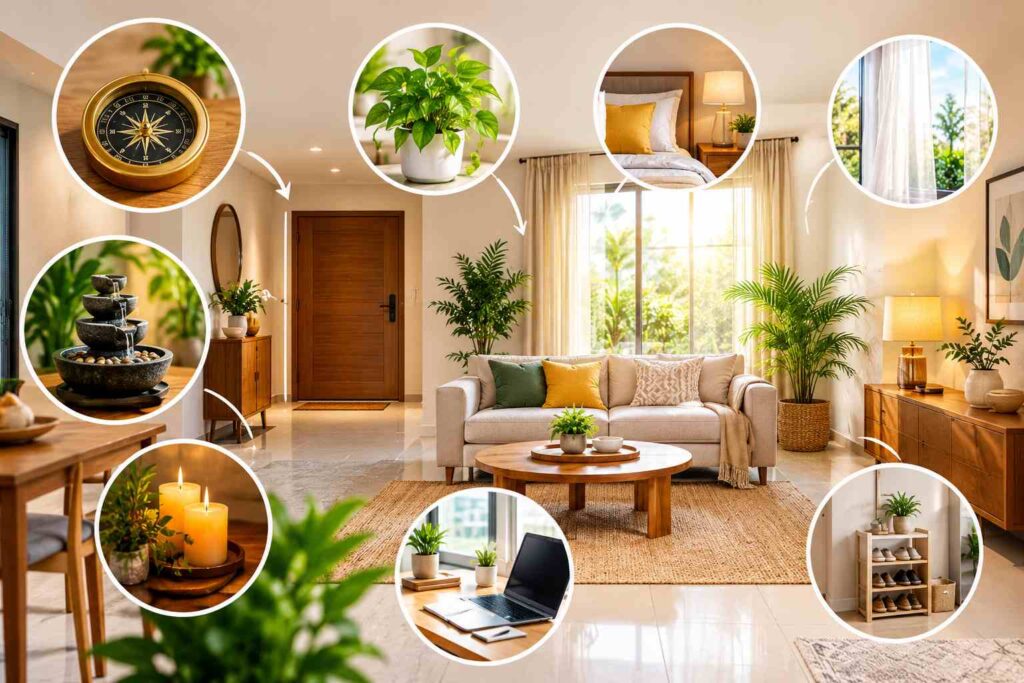
- Keep the entrance clean and well-lit. A bright, tidy entrance is traditionally believed to invite positive energy, and practically, it also creates a warm first impression.
- Avoid clutter near the door. Shoes, bins or broken items placed right at the entrance are generally discouraged.
- The north, east or north-east facing doors are traditionally considered favourable, though many homes cannot be altered structurally, and remedies like mirrors or specific colours are often suggested by vastu consultants for other directions.
- Add a nameplate, a small plant or a traditional torans (door hangings) at the entrance, which many households do as a welcoming gesture.
- Ensure the door opens smoothly without creaking or sticking, which is both a vastu suggestion and simple good maintenance.
- Avoid placing a mirror directly facing the main door, as some vastu practices suggest this can reflect incoming energy back outside.
Vastu Tips for the Living Room
The living room is where families gather and guests are welcomed, so vastu places importance on making it open and comfortable.
- The north, east or north-east direction is often considered favourable for the living room.
- Keep the centre of the room open, avoiding heavy furniture or clutter in the middle, which aligns with the vastu concept of “Brahmasthan,” the central space believed to need openness.
- Place heavier furniture like sofas along the south or west walls, allowing the room to feel more open toward the north and east.
- Use light, soothing colours on the walls, which vastu often recommends for a calm atmosphere, and this also tends to make rooms feel more spacious.
- Add indoor plants like money plant or bamboo, which many households place in the living room for a fresh, positive feel.
- Avoid broken furniture or non-functional items, such as a stopped clock or a cracked mirror, which are generally considered inauspicious in vastu and are also simply not ideal for everyday living.
Vastu Tips for the Kitchen
The kitchen holds special importance in vastu because it is associated with the fire element.
- South-east is traditionally considered the ideal direction for the kitchen, since this direction is associated with fire (Agni). North-west is often considered the next preferable option.
- The stove should ideally not be directly in line with the main door or facing the kitchen entrance directly.
- Cook facing east, which is a commonly followed practice in many households.
- Keep the sink and stove separated, since water and fire are considered opposing elements in vastu, and this also makes practical sense for kitchen workflow and safety.
- Store drinking water in the north-east corner of the kitchen, a common traditional practice.
- Keep the kitchen clean and organised, which vastu emphasises strongly, and which also supports hygiene and easier cooking.
Vastu Tips for the Bedroom
Since the bedroom is where we rest and recharge, vastu offers several suggestions for this space.
- The south-west direction is generally considered ideal for the master bedroom, believed to provide stability and grounding.
- Sleep with your head toward the south or east, according to common vastu guidance, and avoid sleeping with your head toward the north, which some traditions associate with disturbed sleep.
- Avoid placing a mirror facing the bed, as many vastu practitioners suggest this can be disruptive to rest.
- Keep the bedroom clutter-free, particularly avoiding storage of unnecessary items under the bed if possible, since vastu associates a clear space beneath the bed with better energy flow.
- Choose calming colours like soft blues, greens or earthy tones for a restful atmosphere.
- Avoid placing electronic devices like televisions directly facing the bed, which aligns with both vastu suggestions and general sleep hygiene advice about reducing screen exposure before bed.
- Ensure good ventilation and natural light during the day, which vastu values highly and which also supports general wellbeing.
Vastu Tips for the Pooja Room or Prayer Area
Many Indian homes dedicate a specific space for prayer and reflection.
- North-east is traditionally considered the most favourable direction for a pooja room or altar, since this direction is associated with divine energy in vastu.
- Keep the space clean and clutter-free, with idols or images placed facing east or west so that you face these directions while praying.
- Avoid placing the pooja room in the bedroom if possible, though this is not always feasible in smaller homes, in which case a designated clean corner is generally considered acceptable.
- Use soft, warm lighting rather than harsh lights in this space.
- Keep the area separate from the bathroom or kitchen wall where structurally possible.
Vastu Tips for the Bathroom and Toilet
Bathrooms are treated carefully in vastu due to their association with waste and water drainage.
- North-west is often considered a suitable direction for bathrooms.
- Keep the bathroom well-ventilated with an exhaust fan or window, which supports both vastu principles and practical hygiene.
- Keep the door closed when not in use and maintain cleanliness at all times.
- Avoid placing the toilet seat directly facing north or east, according to common vastu guidance.
- Fix leaking taps promptly, since standing water or leaks are considered inauspicious in vastu and are also simply good home maintenance.
Vastu Tips for Study or Work Areas
With more people working or studying from home, this space has become increasingly important.
- East or north-east facing study areas are often considered favourable for concentration and learning.
- Sit facing east or north while studying or working, according to common vastu guidance.
- Keep the desk organised and clutter-free, which supports focus regardless of vastu beliefs.
- Avoid sitting directly under a beam or sloped ceiling if possible, as vastu considers this potentially unsettling.
- Add a small plant or a source of natural light near the desk for a fresher, more pleasant workspace.
Vastu Tips for the Staircase
For homes with an internal staircase, vastu offers guidance on placement and direction.
- South, west or south-west are commonly considered favourable directions for staircases.
- Avoid staircases in the north-east corner, which vastu generally considers unfavourable, as this direction is associated with openness and lightness.
- Keep the area under the staircase clean and well-used, rather than turning it into a cluttered storage dump, which vastu discourages.
- Ensure good lighting along the staircase for both energy flow and practical safety.
Colours and Vastu
Colour plays a role in vastu, with different shades associated with different directions and moods.
- North-east: Light colours like white, light blue or light yellow are often recommended for a fresh, open feel.
- South-east (kitchen area): Warm tones like orange, red or pink are sometimes suggested, aligning with the fire element.
- South-west (bedroom area): Earthy tones like brown, beige or grey are often recommended for grounding and stability.
- North (living areas): Light greens and blues are commonly suggested.
These are general guidelines, and personal preference, natural light and existing decor should always be considered alongside any vastu suggestions.
Common Vastu Doshas and Simple Remedies
A “dosha” in vastu refers to an imbalance or flaw in the arrangement of a space. Many modern homes cannot be restructured to perfectly align with traditional vastu due to existing architecture, but several simple remedies are commonly suggested.
Toilet in the north-east: Since this is considered an unfavourable placement, some remedies include keeping the door closed, using sea salt in a bowl (changed regularly) to symbolically absorb negative energy, and ensuring excellent ventilation.
Main door facing south: Some suggest placing a bright light or a small mirror near the entrance, along with keeping the area extremely well-lit and clean.
Kitchen in the north-east: Remedies often include using bright lighting, keeping the space extremely clean, and some households consult a vastu expert for more specific guidance in such cases.
Beam above the bed or sitting area: A false ceiling is sometimes suggested to visually and structurally “break” the line of the beam.
It is worth noting that many of these are traditional beliefs rather than scientifically proven practices, and readers should approach them according to their own comfort and beliefs, consulting a qualified vastu expert for detailed guidance on structural matters if desired.
Vastu-Friendly Decluttering and Cleaning
One of the most universally agreed-upon vastu principles, and one that benefits any home regardless of belief, is the importance of cleanliness and reduced clutter.
- Declutter regularly, especially entrances, corners and under furniture.
- Fix broken items like clocks, mirrors, furniture or electronics, or discard them if repair is not possible.
- Keep windows clean to allow maximum natural light.
- Avoid accumulating unnecessary items in the north-east corner of any room, which vastu generally wants to keep open and light.
- Regularly clean water storage areas and check for leaks.
A decluttered, clean, well-lit home tends to feel more peaceful and welcoming, whether or not you follow vastu strictly.
Indoor Plants and Vastu
Certain plants are traditionally considered auspicious in vastu and are commonly placed in Indian homes.
- Money plant: Often placed in the south-east direction, believed to bring prosperity.
- Tulsi (holy basil): Traditionally placed in the north, east or north-east, often near the entrance or in a dedicated pot outside.
- Bamboo plant: Considered to bring good fortune and is often placed indoors in a vase.
- Areca palm and snake plant: Popular for their air-purifying qualities alongside their positive vastu associations.
Avoid placing thorny plants like cacti indoors, as vastu generally discourages them inside living spaces, though they are often considered fine outdoors.
Blending Vastu With Modern Design
You do not need to choose between vastu and contemporary style. Many principles align naturally with good design practices.
- Open floor plans that keep the centre of a room clear align with both vastu and modern minimalist design trends.
- Maximising natural light is valued in vastu and is also a key principle in modern interior design for making spaces feel larger and more welcoming.
- Functional, clutter-free layouts support both vastu harmony and practical everyday living.
- Choosing calming colour palettes benefits both traditional vastu recommendations and modern preferences for soothing, livable interiors.
When renovating or decorating, you can consult a vastu expert alongside your interior designer to find a balance that respects tradition while achieving the aesthetic you want.
Simple Vastu Changes You Can Make This Weekend
If you want to start applying these ideas without a full renovation, here are some easy first steps:
- Declutter your main entrance and keep it well-lit.
- Fix any leaking taps in the kitchen or bathroom.
- Rearrange bedroom furniture so the bed does not directly face a mirror.
- Add a money plant or tulsi in a suitable spot.
- Clean and organise the north-east corner of your home.
- Replace or repair any broken clocks, mirrors or furniture.
- Improve lighting in darker corners of your home.
Frequently Asked Questions
Is vastu scientifically proven?
Vastu is a traditional belief system rooted in ancient Indian architecture. While it is not a scientifically validated practice in the modern sense, many of its suggestions, such as good ventilation, natural light and decluttering, align with generally accepted principles of comfortable, functional living.
Can I apply vastu tips without renovating my home?
Yes. Many vastu suggestions involve furniture placement, decluttering, colour choices and small additions like plants, all of which can be applied without structural changes.
What is the most important vastu tip for beginners?
Keeping your home clean, decluttered and well-lit, especially the main entrance and the north-east corner, is one of the most commonly emphasised and universally practical starting points.
Do I need to consult a vastu expert?
For new construction or major renovations, many people choose to consult a vastu expert for detailed guidance. For simple adjustments to an existing home, the general tips in this guide are usually sufficient for most households.
What if my home does not align with any vastu-recommended directions?
Many modern homes, especially apartments, cannot be perfectly aligned with traditional vastu directions. Simple remedies like specific colours, mirrors, lighting and decluttering are commonly used to help balance such spaces according to vastu practice.
Are vastu tips the same across all regions of India?
Core principles are broadly similar, though some regional and family traditions vary in specific practices and recommendations. If you follow a particular family or community tradition, it is worth consulting those sources as well.
Final Thoughts
Whether you follow vastu tips for home as a deep-rooted tradition or simply as inspiration for a more organised, well-lit and harmonious living space, many of these principles offer genuinely practical benefits. Focus on decluttering, improving natural light, arranging furniture thoughtfully and keeping key areas like the entrance, kitchen and bedroom clean and functional.
Start with a few simple changes this week, such as tidying your entrance or adding a plant to the south-east corner, and notice how your home feels. Whether the effect comes from tradition, better organisation, or simply a fresher-feeling space, a mindful approach to your home’s layout can genuinely contribute to a calmer, more welcoming environment for you and your family.