When the temperature drops, many people fall into one of two traps. Some pile on random sweaters and end up looking bulky and uncomfortable. Others choose style over warmth and shiver through the day. The secret to looking good and feeling comfortable in cold weather is not one heavy coat. It is winter fashion layering: combining thin, well-chosen pieces that trap warmth, allow movement and can be added or removed as the day changes. In North India, hill stations and many other regions, winter mornings can be freezing while afternoons turn pleasantly warm, which makes layering even more useful.
This guide explains the science behind layering, the three-layer system, the best fabrics, colour and pattern combinations, outfit formulas for work, college, casual days and weddings, accessories, footwear, styling tips for different body types and common mistakes to avoid. By the end, you will know how to build winter outfits that are warm, flattering and practical.
Why Layering Works Better Than One Thick Garment
A single heavy sweater may feel warm at first, but it has limitations. If you enter a heated room or the sun comes out, you cannot easily adjust. Layering solves this because warmth comes from air trapped between thin layers. Each layer holds a little warm air close to your body, and together they form an effective insulation system.
Benefits of layering:
- Flexibility: Add or remove layers as the temperature changes.
- Better insulation: Trapped air between layers keeps heat in.
- More outfit options: Mixing pieces creates many combinations from a small wardrobe.
- Comfort: Thin layers move with your body and reduce bulk.
- Style: Layers add texture, colour and depth to outfits.
The Three-Layer System
Outdoor clothing experts often describe layering in three parts. You can adapt this to everyday fashion.
Layer 1: The Base Layer
This is the layer closest to your skin. Its job is comfort and moisture management.
- Options: Thermal innerwear, fitted cotton or modal T-shirts, camisoles, fine merino wool tops or lightweight long-sleeve tees.
- What to look for: Soft, breathable, close-fitting fabrics that do not irritate skin.
- What to avoid: Very thick base layers that create bulk, and damp cotton that stays cold if you sweat heavily.
Layer 2: The Insulating Layer
This layer provides warmth by trapping air.
- Options: Sweaters, cardigans, sweatshirts, fleece pullovers, knitted vests and warm shirts.
- What to look for: Wool, wool blends, cashmere blends, acrylic knits or fleece in a comfortable fit.
- Tip: Choose a slightly looser fit than your base layer so air can circulate.
Layer 3: The Outer Layer
This layer protects from wind, rain and cold.
- Options: Coats, jackets, puffers, blazers, shawls, ponchos, trench coats and long overcoats.
- What to look for: Wind-resistant fabric, a good fit across the shoulders and enough room to wear a sweater underneath.
You do not always need all three layers. On a mild day, base plus outer layer may be enough.
Best Fabrics for Winter Layering
The right fabric is as important as the number of layers.
- Wool: Naturally warm and breathable. Merino wool is soft and less itchy.
- Cashmere and blends: Luxuriously soft and warm, though pricier.
- Cotton knit: Good for mild winters and base layers.
- Fleece: Lightweight and warm, ideal for casual wear.
- Thermal fabrics: Designed to trap heat close to the body.
- Down and synthetic fill: Very warm for outerwear like puffer jackets.
- Corduroy and denim: Structured, stylish and useful for jackets and trousers.
- Velvet: Adds evening elegance for special occasions.
- Leather and faux leather: Blocks wind and looks sharp.
Check the fabric label and try to move your arms before buying. A garment should feel warm without restricting movement.
Colour Palettes for Winter
Winter is a great time to use richer, deeper shades, but you can also keep things neutral.
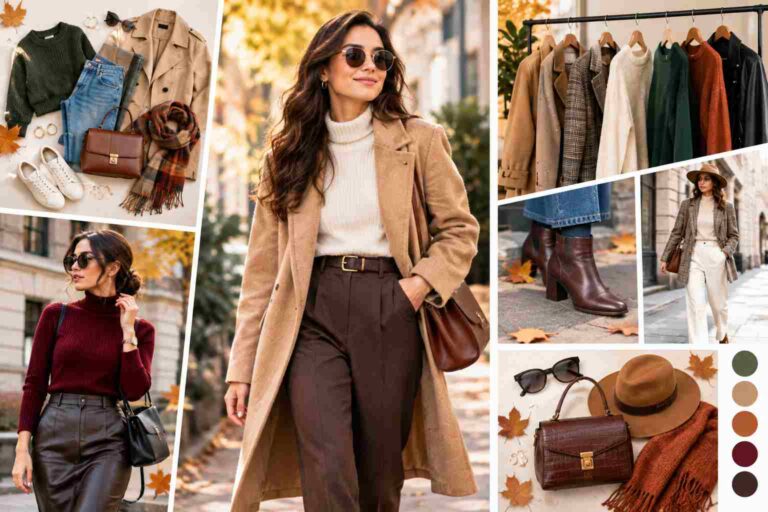
Neutral palette: Black, grey, camel, cream, navy and olive. These mix and match easily and look sophisticated.
Rich jewel tones: Emerald, burgundy, mustard, teal, plum and deep blue add warmth to dull days.
Earthy tones: Rust, brown, tan and forest green create a cosy autumnal feel.
Monochrome layering: Wear different shades of the same colour, such as cream, beige and camel, for an elegant and slimming effect.
Pops of colour: Add a bright scarf, beanie or bag to cheer up neutral outfits.
A helpful rule is to combine two or three main colours and one accent.
Outfit Formulas You Can Copy
Formula 1: The Classic Casual
Fitted long-sleeve tee + crew-neck sweater + straight jeans + puffer or denim jacket + sneakers.
Add a beanie and a scarf on cold mornings.
Formula 2: The Smart Office Look
Button-up shirt + fine-knit sweater or vest + tailored trousers + blazer or long coat + loafers or ankle boots.
Choose muted colours such as navy, grey and camel for a professional appearance.
Formula 3: The Turtleneck Style
Slim turtleneck + trousers or skirt + long coat + boots.
Turtlenecks are excellent base or standalone layers because they keep the neck warm.
Formula 4: The Cosy Weekend Look
Thermal top + oversized cardigan or hoodie + joggers or leggings + warm socks + comfortable sneakers.
Balance a loose top with slimmer bottoms to keep proportions neat.
Formula 5: The Dress and Tights Combo
Knit dress or long-sleeve dress + opaque tights + ankle boots + long coat.
For extra warmth, wear thermal leggings under the tights.
Formula 6: The Shirt-Under-Sweater Look
Collared shirt + sweater (collar visible) + trousers or jeans + jacket.
This adds a preppy touch and a little extra warmth around the neck.
Formula 7: The Kurta Winter Look
Cotton or woollen kurta + full-sleeve thermal underneath + churidar or pants + Nehru jacket or shawl + juttis with socks or closed shoes.
Formula 8: The Saree in Winter
Silk or woollen saree + full-sleeve blouse + shawl or cape + closed shoes with socks. Wear thermal innerwear underneath if needed.
Formula 9: The Wedding-Season Winter Outfit
Velvet lehenga, sherwani or heavy suit + thermal innerwear + embroidered shawl, cape or jacket. Choose closed embellished footwear or ankle boots with ethnic outfits if the venue is cold.
Formula 10: The Evening Out Look
Silk or satin top + blazer or leather jacket + dark jeans or tailored trousers + boots + statement earrings.
Styling Layers Without Looking Bulky
Avoiding bulk is a common worry. These tips help.
- Start thin. Choose slim base layers and fine-knit sweaters.
- Vary the lengths. Let a shirt hem peek out under a sweater or a sweater peek out under a coat for depth.
- Balance volume. If the top is oversized, wear fitted bottoms. If the coat is bulky, keep the inner layers slim.
- Choose structure on the outside. A tailored coat or jacket gives shape, even over thick sweaters.
- Define the waist. A belt over a coat, cardigan or long sweater creates a silhouette.
- Use vertical lines. Long cardigans, open coats and vests elongate the body.
- Keep sleeves in mind. Slimmer sleeves on inner layers fit comfortably under jackets.
- Avoid too many patterns. Combine one pattern with solids.
Accessories That Add Warmth and Style
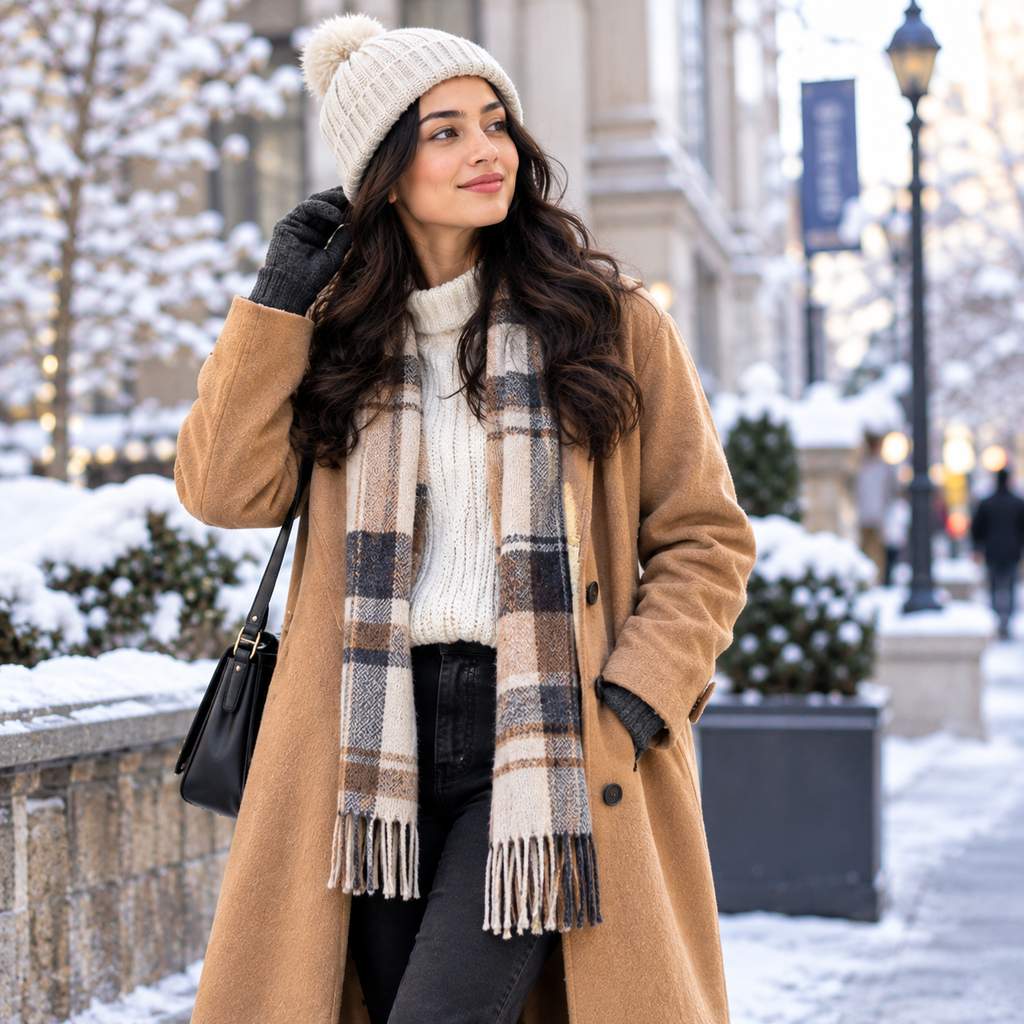
- Scarves and mufflers: Wool, cashmere or thick cotton. Learn a few knots, or drape loosely.
- Beanies and caps: Protect ears and head. Cover ears when it is very cold.
- Gloves: Choose touchscreen-friendly gloves if you use your phone often.
- Socks: Wool or thermal socks keep feet warm. Colourful socks can peek from boots.
- Stoles and shawls: Useful with both western and ethnic outfits.
- Belts: Define coats and long sweaters.
- Bags: Structured totes and crossbodies in leather or suede look wintry.
- Sunglasses: Winter sun can be bright, particularly in the hills.
- Lip balm and moisturiser: Keep skin comfortable, since cold air dries lips and hands.
Footwear for Winter
- Ankle boots: Versatile with jeans, dresses and trousers.
- Sneakers: Choose closed, cushioned pairs with thick socks.
- Loafers with socks: A smart, comfortable office option.
- Knee-high boots: Stylish with skirts and dresses.
- Waterproof boots: Helpful in rain, snow or wet streets.
- Closed juttis or mojaris with socks: For ethnic wear.
Make sure footwear has good grip on cold, slippery surfaces.
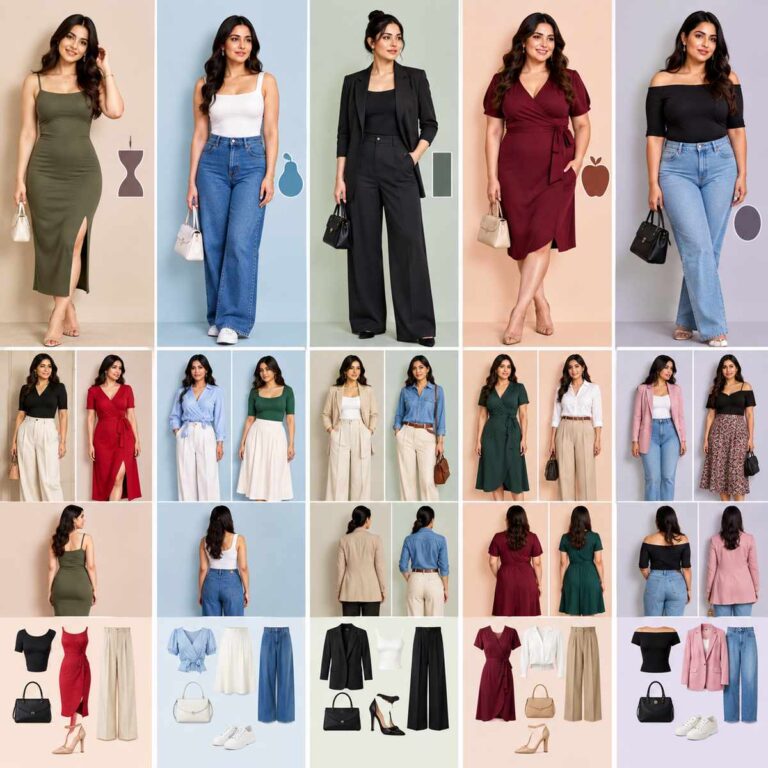
Winter Layering for Different Body Types
Everyone can layer well by choosing the right proportions.
- Petite frames: Choose shorter coats and cropped jackets, monochrome outfits and slim layers to avoid being overwhelmed.
- Tall frames: Long coats, maxi cardigans and layered scarves work well.
- Curvy figures: Tailored coats with belts, wrap cardigans and fitted inner layers create a balanced shape.
- Broad shoulders: Soft, unstructured jackets and V-neck sweaters reduce visual width.
- Slim frames: Chunky knits, puffers and multiple layers add volume.
Comfort and confidence are more important than strict rules.
Building a Small Winter Capsule
If you want a simple winter wardrobe, consider these pieces:
- Two thermal or fitted base tops
- Two fine-knit sweaters in neutral colours
- One turtleneck
- One cardigan or long knit
- One warm jacket or puffer
- One tailored coat or blazer
- One pair of dark jeans
- One pair of tailored trousers
- One knit dress or warm skirt with tights
- A scarf, beanie and gloves
- Ankle boots and sneakers
- A shawl for ethnic outfits
With these pieces, you can create dozens of outfits.
How to Care for Winter Clothes
- Follow the label. Wool and cashmere often need gentle or hand washing.
- Avoid hanging heavy knits, which can stretch. Fold them instead.
- Use a fabric shaver to remove pilling.
- Air out coats and jackets after wearing.
- Store off-season woollens with neem leaves or natural repellents in breathable bags.
- Dry-clean structured coats, velvet and embellished items when required.
- Repair small holes early.
Common Winter Layering Mistakes
- Wearing too many thick layers. This causes bulk and overheating.
- Ignoring the base layer. Comfort begins closest to your skin.
- Choosing style over fit. A too-tight sweater under a coat can restrict movement.
- Forgetting accessories. Head, neck, hands and feet lose heat quickly.
- Wearing only cotton in extreme cold. It can feel damp and chilly.
- Neglecting colour balance. Too many clashing tones can look messy.
- Skipping moisturiser. Cold weather can dry skin, so care for it.
Layering for Travel and Changing Climates
Winter travel often means moving between very different temperatures in one day: a cold morning at home, a heated airport, a chilly destination and perhaps an indoor event with high heating. Layering solves this beautifully.
- Wear your bulkiest item instead of packing it, such as a coat or boots, to save luggage space.
- Choose pieces that double as daywear and eveningwear, such as a versatile sweater that works with jeans by day and a skirt by night.
- Pack a compact, foldable extra layer, like a light merino cardigan, that takes up little space but adds real warmth.
- Keep a scarf handy as both an accessory and an emergency layer for sudden temperature drops.
- Choose wrinkle-resistant knits for travel days so you look put together even after hours of sitting.
Layering for Different Occasions in One Day
Many winter days involve moving between very different settings, such as a cold morning commute, a warm office, an outdoor event and a cold evening out. Building your outfit with removable layers makes this transition effortless.
- Morning: Full layering with coat, scarf and gloves for the commute.
- Daytime indoors: Remove the coat and scarf, keeping the sweater and base layer for comfort in heated spaces.
- Evening outdoors: Add the coat and scarf back, and consider a warmer accessory like a beanie if temperatures drop further.
Planning your outfit with this flexibility in mind means you are never stuck feeling too hot or too cold as your day unfolds.
Frequently Asked Questions
How many layers should I wear in winter?
Two or three thin layers are usually enough. Adjust based on temperature, activity and whether you will be indoors or outdoors.
What should I wear under a sweater?
A fitted cotton tee, thermal top, camisole or shirt works well. Choose a breathable, soft fabric.
How do I layer clothes without looking fat?
Use slim base layers, define your waist, balance volume and choose structured outerwear and dark or monochrome palettes.
Which colours are best for winter?
Neutrals like black, grey, navy, camel and cream are dependable, and jewel tones such as emerald, burgundy and mustard look lovely.
Can I layer ethnic wear in winter?
Yes. Wear thermals underneath, and add shawls, Nehru jackets, capes or woollen dupattas.
Are puffer jackets stylish?
Yes, especially when paired with slim bottoms and simple layers. Choose a fit and colour that suits you.
Final Thoughts
Great winter fashion layering is about smart combinations rather than heavy clothing. Start with a comfortable base, add an insulating layer, finish with a protective outer layer and use accessories to complete the look. Play with fabric, colour and proportion, and always keep comfort in mind.
Before the cold arrives, take out your winter wardrobe, try a few outfit formulas from this guide and see what works for you. With a little creativity, you can stay warm all season while looking effortlessly stylish.