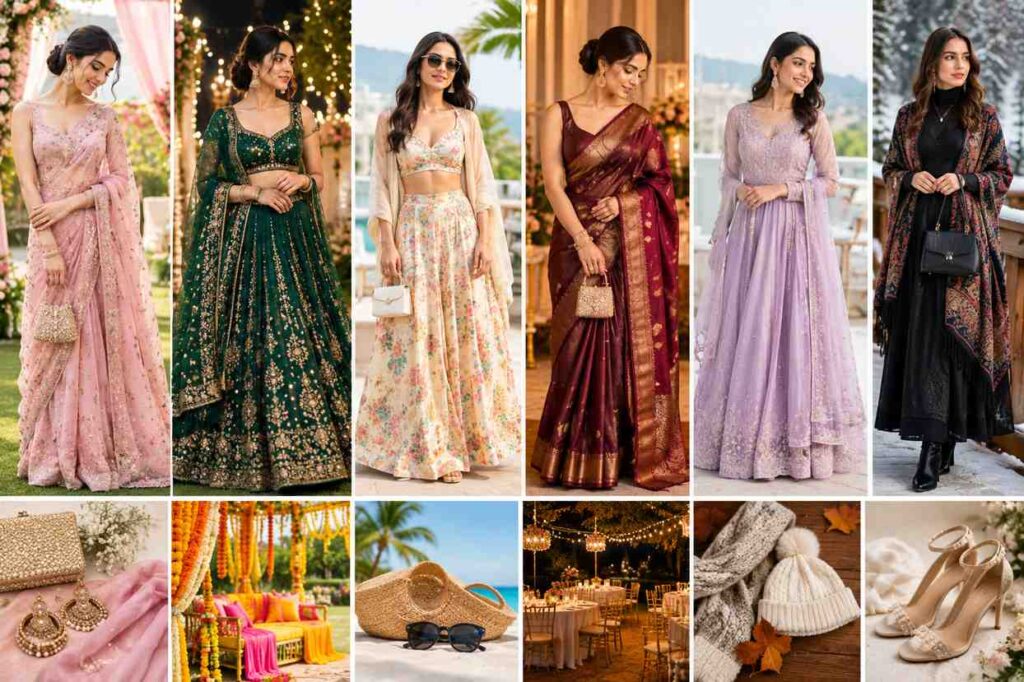
Indian weddings are rarely a single event. They are often a joyful, multi-day celebration involving several functions, each with its own mood, dress code and energy, from the playful yellows of haldi to the glamorous evening wear of the reception. For guests, this can mean anything from genuine excitement to a bit of wardrobe panic, especially when back-to-back functions require several different outfits in a short span of time. If you have ever found yourself scrolling for wedding guest outfit ideas the night before a big function, this guide is designed to make that decision much easier.
We will walk through outfit ideas for each major wedding function, colour etiquette, tips for different seasons, budget-friendly styling strategies, accessory guidance and common mistakes to avoid, so you can look and feel your best at every event on the wedding calendar.
Understanding the Typical Wedding Function Lineup
While every family and region has its own traditions, many Indian weddings include some version of the following events:
- Haldi: A joyful, informal ceremony involving turmeric paste, usually held during the day.
- Mehendi: A colourful, festive event centred around henna application, often with music and dancing.
- Sangeet: A high-energy evening of music, dance performances and celebration.
- Wedding ceremony: The main, often more traditional and formal event.
- Reception: A glamorous evening event, often the most formal of all the functions.
Knowing which function you are attending helps you choose an outfit that matches both the dress code and the general energy of the event.
Outfit Ideas for Haldi
Haldi is playful, messy and joyful by nature, since turmeric paste is applied to the bride and groom, often with guests joining in the fun.
What to wear:
- Bright yellow or floral prints are the most popular and thematic choice, though other light, cheerful colours also work well.
- Cotton or light fabrics that you do not mind getting slightly stained are ideal, since turmeric can leave marks.
- Simple, comfortable silhouettes like a cotton kurta set, a floral anarkali or a simple saree work beautifully.
- Comfortable flat footwear, since haldi often involves sitting on the floor or standing for extended periods.
What to avoid:
- Expensive silk or heavily embellished outfits, since turmeric stains can be difficult or impossible to remove.
- Complicated hairstyles or heavy makeup, since the function can get playfully messy.
Outfit Ideas for Mehendi
Mehendi is festive, colourful and typically less formal than the main wedding ceremony, often held in the afternoon or early evening.
What to wear:
- Bright, vibrant colours like pink, orange, green, yellow or a colourful mix work beautifully with the festive mood.
- Flowy anarkalis, palazzo sets, lehenga cholis in lighter fabrics, or a colourful saree are all popular choices.
- Floral prints, mirror work and light embroidery suit the celebratory but slightly less formal atmosphere.
- Comfortable footwear is important, since mehendi often stretches over several hours with dancing and socialising.
What to avoid:
- Very heavy, formal outfits that feel more suited to the main wedding ceremony.
- Extremely light colours like white or very pale pastels, which can look washed out against the vibrant mehendi backdrop, unless paired thoughtfully with colourful accessories.
Outfit Ideas for Sangeet
Sangeet is essentially a wedding party, filled with music, dance performances and high energy, usually held in the evening.
What to wear:
- Shimmery, sequinned or embellished outfits fit the festive evening mood.
- Indo-western fusion pieces like a sequinned crop top with a flared skirt, a stylish jumpsuit, or a glamorous saree with a statement blouse work wonderfully.
- Choose an outfit that allows you to dance comfortably, since sangeet often involves choreographed or impromptu dancing.
- Bold colours like emerald green, royal blue, wine, gold or a rich jewel tone photograph beautifully under evening lighting.
What to avoid:
- Overly restrictive outfits that make dancing or moving freely difficult.
- Extremely long trains or excessive draping that could pose a tripping hazard on the dance floor.
Outfit Ideas for the Wedding Ceremony
The main wedding ceremony is often more traditional and formal, though the specific dress code varies significantly by religion, region and family preference.
What to wear:
- Traditional sarees, lehengas or salwar suits in rich fabrics like silk, brocade or velvet are commonly appropriate.
- Deeper, richer colours such as maroon, royal blue, emerald, gold or burgundy tend to suit the formal, ceremonial atmosphere.
- Men often opt for a sherwani, a bandhgala suit, or a kurta pajama with a Nehru jacket.
- Choose modest, elegant necklines and appropriate coverage, particularly for religious ceremonies where specific etiquette may apply.
What to avoid:
- Wearing white or cream as a primary colour in many Indian wedding traditions, since these are sometimes associated with mourning, though this varies by region and family, so it is worth checking if uncertain.
- Wearing colours identical to the bride’s chosen outfit, out of courtesy, so it is thoughtful to check with close family or the couple if you are unsure of the bride’s colour scheme.
- Overly casual attire that does not match the formality of the ceremony.
Outfit Ideas for the Reception
The reception is typically the most glamorous, party-like event, often held in the evening with an emphasis on photography and celebration.
What to wear:
- Shimmery gowns, sequinned sarees, heavily embellished lehengas or elegant Indo-western fusion outfits all work beautifully.
- Metallic tones like gold, silver and copper, as well as jewel tones like emerald, sapphire and ruby, photograph wonderfully under reception lighting.
- Statement jewellery, a well-styled updo or blow-dried hair, and polished makeup complete the glamorous reception look.
- Men often choose a well-tailored suit, a bandhgala, or an elegant kurta with a statement jacket.
What to avoid:
- Excessive casualness, since receptions are typically among the more formal functions of the wedding.
- Outfits that are difficult to sit in comfortably for an extended dinner and photo session.
Colour Etiquette for Indian Wedding Guests
Choosing colours thoughtfully shows respect for the couple and the occasion.
- Avoid pure white or plain black as a primary outfit colour for many traditional Hindu weddings, since these are sometimes associated with mourning in certain communities, though this varies regionally and by personal preference, so context matters.
- Avoid wearing red if you suspect the bride may be wearing red, as it is traditionally considered the bride’s colour in many Indian wedding traditions.
- When in doubt, opt for jewel tones, pastels or festive colours like pink, green, blue, orange or gold, which are almost universally appropriate across most functions and religions.
- Consider the specific religion and regional customs of the wedding you are attending, since etiquette can vary significantly between different communities.
- If a specific dress code or colour theme is mentioned on the invitation, always follow it as a sign of respect for the couple’s wishes.
Seasonal Wedding Guest Outfit Tips
Summer Weddings
Choose breathable fabrics like cotton, chiffon, georgette or lightweight silk. Lighter colours and simpler draping help manage the heat, and carrying a small hand fan or choosing outdoor-friendly footwear can add comfort for outdoor summer ceremonies.
Winter Weddings
Richer fabrics like velvet, silk and brocade suit the cooler weather beautifully. Layer with an elegant shawl, cape or jacket that complements your outfit, both for warmth and added style, particularly for outdoor evening functions.
Monsoon Weddings
Choose quick-drying fabrics and avoid delicate materials that could be damaged by unexpected rain. Darker colours hide potential splashes better, and comfortable, weather-appropriate footwear is a practical choice over delicate embellished sandals.
Budget-Friendly Wedding Guest Styling Tips
Attending multiple wedding functions can become expensive quickly if you buy an entirely new outfit for each event. Here are ways to manage this thoughtfully.
- Rent statement outfits for one-time events like the sangeet or reception, rather than purchasing pieces you may only wear once.
- Repurpose one heavier outfit across two functions with different styling, such as changing the dupatta, jewellery or adding a jacket to create a fresh look.
- Mix and match separates, such as pairing a festive top with different bottoms across different functions.
- Borrow jewellery or accessories from family members rather than purchasing new statement pieces for every event.
- Invest in one or two versatile pieces, like a good lehenga or an elegant saree, that can be restyled for multiple occasions across different weddings, not just one.
- Shop during sales or off-season for wedding-appropriate pieces you can use across future events.
Accessorising Your Wedding Guest Look
Accessories can transform a simple outfit into a standout wedding-ready look.
- Statement earrings are one of the most impactful and versatile accessories, instantly elevating even a simple kurta or saree.
- A well-chosen clutch or potli bag adds both function and style.
- Bangles and bracelets in gold, silver or colourful stones complement ethnic outfits beautifully.
- A bindi can add a lovely traditional touch to many looks, particularly for more formal functions.
- Comfortable footwear is essential, given the long hours and, often, significant walking or standing involved in wedding functions.
Makeup and Hair Considerations for Wedding Functions
- Daytime functions like haldi and mehendi generally suit lighter, more natural makeup with a dewy finish.
- Evening functions like sangeet and reception allow for bolder makeup, such as a defined smoky eye or a statement lip colour.
- Hairstyles should complement your outfit’s neckline, with updos suiting statement necklines and open or braided hair working well with simpler necklines.
- Consider the weather and function duration when choosing makeup, opting for long-wear, humidity-resistant products for outdoor or lengthy events.
Dressing Etiquette for Male Guests
Men attending Indian weddings also have several considerations to keep in mind.
- Haldi and mehendi: Simple, comfortable kurtas in cotton or linen, often in lighter or brighter colours, work well.
- Sangeet: A stylish kurta with an ethnic jacket, or smart casual Indo-western wear that allows comfortable movement for dancing.
- Wedding ceremony: A traditional sherwani, bandhgala or classic kurta pajama, often in richer fabrics and colours.
- Reception: A well-tailored suit or an elegant bandhgala with polished footwear.
- Colour etiquette applies similarly, avoiding stark white as a primary colour for ceremonies and being mindful of colours that might clash with the wedding party’s chosen theme.
Common Wedding Guest Outfit Mistakes to Avoid
- Wearing something too similar to the bride’s outfit, which is generally considered poor etiquette.
- Choosing outfits that are too revealing or overly casual for more traditional or religious ceremonies.
- Ignoring the practical demands of each function, such as wearing delicate, easily stained fabrics to haldi.
- Overpacking for a multi-day wedding without planning specific outfits for each function in advance, leading to last-minute stress.
- Forgetting about comfort, particularly footwear, given the long hours typically involved in wedding celebrations.
- Not checking the invitation for any specific dress code or colour theme that the couple may have requested.
Building a Wedding Season Capsule Wardrobe
If you attend multiple weddings throughout the season, consider building a small, versatile collection:
- One bright, comfortable outfit for daytime functions like haldi or mehendi
- One festive, dance-friendly outfit for sangeet-style events
- One traditional, elegant outfit for wedding ceremonies
- One glamorous outfit for receptions
- A versatile dupatta or stole that can be styled differently across outfits
- A couple of statement jewellery pieces that pair with multiple looks
- Comfortable footwear suited to long hours of standing and walking
With thoughtful planning, you can attend an entire wedding season looking polished and appropriate for every function, without needing an entirely new wardrobe for each event.
Frequently Asked Questions
What colours should I avoid wearing to an Indian wedding?
Generally avoid pure white and plain black as primary colours for ceremonies in many Hindu wedding traditions, and avoid red if you suspect the bride will be wearing it, though customs vary by region and religion.
What should I wear to a daytime haldi function?
Bright, cheerful colours like yellow in comfortable, easily washable fabrics like cotton are ideal, since turmeric paste can stain more delicate materials.
Is it okay to wear the same outfit to multiple wedding functions?
Yes, especially with restyling through different accessories, jewellery or draping. Many people thoughtfully repurpose outfits across a multi-day wedding to manage both budget and packing.
What is appropriate for a reception if I am not close family?
A well-coordinated, elegant outfit that matches the reception’s glamorous, formal tone, such as a nice saree, an Indo-western gown, or a well-tailored suit for men, is generally appropriate.
How do I know the wedding’s dress code?
Check the invitation carefully for any specific colour theme or dress code mentioned, and if in doubt, it is completely appropriate to ask a close friend or family member connected to the couple.
What should male guests wear to a sangeet?
A stylish kurta with an ethnic jacket, or comfortable Indo-western wear that allows for easy movement, works well for the high-energy, dance-focused nature of a sangeet.
Final Thoughts
Navigating wedding guest outfit ideas across multiple functions does not need to be overwhelming. Understanding the mood and typical dress code of each event, from playful haldi to glamorous receptions, helps you choose outfits that feel both appropriate and personally stylish. Keep colour etiquette in mind, prioritise comfort for long celebration hours, and do not hesitate to creatively restyle pieces across functions to manage your wardrobe thoughtfully.
With a little planning, you can walk into every wedding function feeling confident, comfortable and genuinely excited to celebrate alongside the happy couple, exactly as every wedding guest deserves to feel.