Walk through any clothing store and you will notice something interesting: the same dress can look completely different on two people, not because of size, but because of how it interacts with each person’s unique proportions. Understanding how to dress according to body type is not about fitting into a narrow beauty standard or hiding your body. It is about learning which cuts, fabrics and silhouettes naturally work with your proportions so that clothes feel comfortable, flattering and authentically you. Every body type has countless beautiful options, and this guide is meant to expand your styling toolkit, not restrict it.
We will cover the most commonly discussed body shapes, practical styling tips for each, universal principles that work across all body types, common myths to unlearn, and how to build confidence in your personal style regardless of trends.
An Important Note Before We Begin
Body shape categories are simplified tools, not rigid boxes. Real bodies are wonderfully diverse, and many people fall between categories or feel their body changes over time due to age, health, pregnancy or simply life. Use this guide as a flexible starting point for experimentation, not as a strict rulebook. The ultimate goal of dressing well is feeling comfortable and confident, and that always matters more than any styling guideline.
Common Body Shape Categories
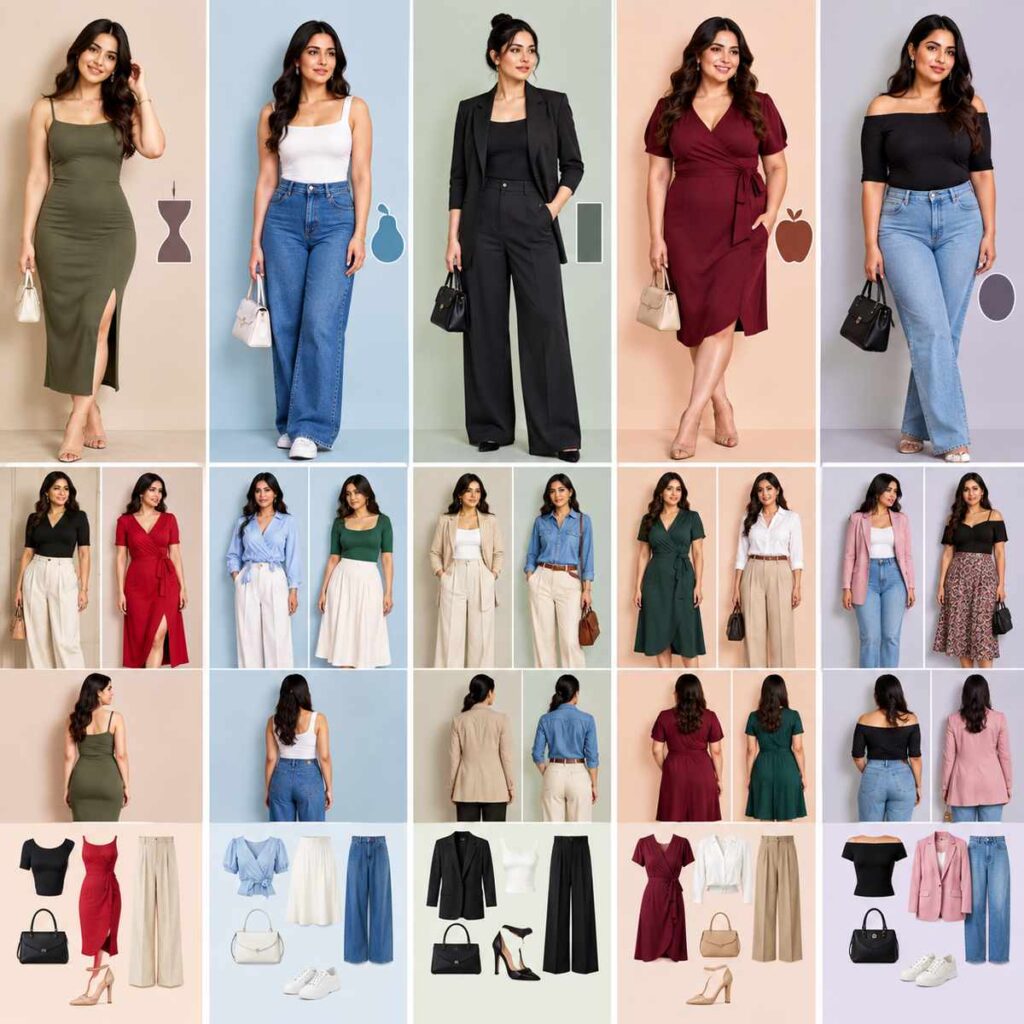
Fashion stylists often describe body shapes using a few broad categories based on the relationship between shoulders, waist and hips.
- Pear (Triangle): Hips are wider than the shoulders, with a defined waist.
- Apple (Round): Fuller through the midsection, with a less defined waist, and often slimmer legs.
- Hourglass: Shoulders and hips are roughly balanced, with a clearly defined, narrower waist.
- Rectangle (Straight): Shoulders, waist and hips are similar in width, with less curve definition.
- Inverted Triangle: Shoulders are broader than the hips, often with a strong, athletic upper body.
Remember, you might see elements of more than one shape in yourself, and that is completely normal.
Styling Tips for a Pear (Triangle) Shape
The goal here is often to create visual balance between the upper and lower body, though of course, you can absolutely dress to highlight your curves if that is your preference.
Tops:
- Boat necks, off-shoulder tops and details like ruffles or embellishment on the shoulders draw attention upward and add width to the upper body.
- Bright colours, patterns or textured fabrics on top can create visual balance.
- Structured jackets and blazers with shoulder definition work beautifully.
Bottoms:
- A-line skirts and wide-leg trousers skim over the hips rather than clinging.
- Darker, solid colours on the bottom half can be slimming if that is your goal, while lighter colours on top add balance.
- Avoid bottoms with excessive detailing like large pockets or bold prints if you want to minimise attention on the hip area, though this is entirely a personal choice.
Dresses:
- Fit-and-flare dresses that nip in at the waist and flow out gently are a classic flattering choice.
- Wrap dresses highlight the waist while skimming over the hips.
What to embrace: A well-defined waist is often a pear shape’s strongest asset. Belts, wrap styles and fitted waistbands can beautifully highlight this feature.
Styling Tips for an Apple (Round) Shape
The general goal is often to create a defined waistline and draw attention to the legs, arms or neckline, though again, personal preference should always guide your choices.
Tops:
- V-necks and scoop necks elongate the torso and draw the eye downward in a flattering line.
- Empire waistlines, which sit just below the bust, skim over the midsection rather than clinging.
- Structured, tailored jackets that are not too fitted at the waist can create a streamlined silhouette.
Bottoms:
- Straight-leg or bootcut trousers balance proportions nicely.
- High-waisted bottoms paired with a top that is not tucked in tightly can be comfortable and flattering.
Dresses:
- A-line and empire waist dresses tend to work beautifully, skimming over the midsection while showing off the legs.
- Wrap dresses with an empire waist combine two flattering elements.
What to embrace: Many apple-shaped individuals have lovely legs and arms. Well-fitted trousers, knee-length skirts and dresses that show off the legs can be wonderful choices.
Styling Tips for an Hourglass Shape
The natural balance of an hourglass figure often means the goal is simply to maintain that balance rather than dramatically alter proportions.
Tops:
- Fitted or semi-fitted tops that follow your natural waistline showcase your proportions beautifully.
- Wrap tops and belted styles highlight the waist elegantly.
- Avoid overly boxy or oversized tops if you want to maintain visible waist definition, though relaxed styles can look great too, especially when belted.
Bottoms:
- High-waisted trousers and skirts that sit at your natural waistline complement your shape well.
- Pencil skirts and fitted trousers often look particularly flattering on this body type.
Dresses:
- Wrap dresses, bodycon styles and fit-and-flare silhouettes are classic hourglass-friendly choices.
- Belted dresses of almost any style tend to work well by emphasising the natural waist.
What to embrace: Fitted silhouettes that follow your natural curves often look effortlessly elegant on this body type, though you can absolutely enjoy looser, relaxed styles too when the mood calls for it.
Styling Tips for a Rectangle (Straight) Shape
The common styling goal here is often to create the appearance of curves and a more defined waistline, though many people with this body type also love the clean, streamlined look their shape naturally offers.
Tops:
- Peplum tops, ruffled details and structured shoulders can add the illusion of curves.
- Cropped jackets and fitted blazers that cinch at the waist create definition.
- Layering different textures adds visual interest and dimension.
Bottoms:
- Skirts with volume, such as A-line or pleated styles, can add curve to the lower body.
- Trousers with details like pockets or pleats add visual interest to a straighter silhouette.
Dresses:
- Belted dresses create a defined waistline where one may not naturally exist.
- Fit-and-flare styles add volume at the hips for a more curved silhouette.
- Dresses with interesting necklines, cutouts or textural details add visual dimension.
What to embrace: This body type often carries structured, tailored pieces beautifully, and can experiment freely with bold silhouettes, layering and statement pieces without worrying about disrupting curve balance.
Styling Tips for an Inverted Triangle Shape
The common goal is often to balance broader shoulders with the lower body, though strong shoulders can also be celebrated and highlighted if preferred.
Tops:
- V-necks and scoop necks soften the shoulder line.
- Avoid heavily padded shoulders or very structured, wide necklines if you want to minimise upper body width, though these can look striking if that is your preference.
- Darker or more subdued colours on top can help create balance with lighter, brighter bottoms.
Bottoms:
- Wide-leg trousers, flared jeans and full skirts add volume to the lower body, creating balance.
- Bright colours, patterns or interesting details on the bottom half draw the eye downward.
Dresses:
- A-line and fit-and-flare dresses that add volume below the waist work well.
- Dresses with details concentrated on the skirt rather than the shoulders help balance proportions.
What to embrace: Strong shoulders often carry structured jackets, halter necklines and statement sleeves beautifully. Many people with this body type also have great definition in their arms and back, which strapless or open-back styles can highlight.
Universal Styling Principles That Work for Everyone
Regardless of body shape, a few core principles consistently help create a polished, confident look.
Fit matters more than size. A well-fitted garment in a larger size will almost always look better than a tight garment in a smaller size. Tailoring is one of the best investments you can make in your wardrobe.
Proportion creates balance. Pairing a fitted piece with a looser one, such as a fitted top with wide-leg trousers, or an oversized top with fitted bottoms, generally creates a more polished silhouette than an entirely loose or entirely tight outfit.
Vertical lines can elongate. Elements like a long cardigan, a monochromatic outfit, or vertical stripes can create a lengthening visual effect if that is an effect you enjoy.
Confidence is the ultimate accessory. Clothes look their best when worn with genuine comfort and confidence, regardless of how closely they follow any particular styling guideline.
Dressing for Your Personal Comfort, Not Just Your Shape
While understanding body shape guidelines can be a helpful tool, it should never override your own comfort and personal taste. Some additional factors worth considering:
- Comfort level with certain necklines or hemlines, which is deeply personal and can change over time or in different settings.
- Cultural context and occasion, which often shape appropriate styling choices alongside body-shape considerations.
- Personal style preferences, whether you gravitate toward minimalist, bold, classic or trend-forward looks.
- How a garment makes you feel, which is arguably the most important factor of all, sometimes even more important than how it technically “flatters” your shape according to general guidelines.
Common Myths About Dressing for Body Type
“Certain body types cannot wear certain trends.” In reality, almost any trend can be adapted with the right fit, proportion and styling choices to work beautifully on any body type.
“You must hide your body if it does not match a certain ideal.” Dressing for your body type is about understanding what you want to highlight or balance, not about hiding or apologising for your natural shape.
“There is one universally flattering outfit formula.” Body shape is just one factor among many, including personal style, skin tone, height and comfort, that contribute to how an outfit works for you.
“Body shape guidelines are strict rules you must follow. They are flexible tools for experimentation, and breaking them entirely is a valid and often stylish choice.
Building a Wardrobe That Works for Your Shape
- Take note of pieces you already own and love. Notice what silhouettes, necklines and fits you naturally gravitate toward and feel confident in.
- Try on a variety of styles when shopping, rather than assuming something will or will not work based on shape guidelines alone.
- Invest in tailoring for pieces that are almost, but not quite, a perfect fit.
- Build a small collection of trusted “formula” outfits that you know work well for your body and lifestyle, which you can return to for effortless dressing.
- Experiment gradually with new silhouettes rather than overhauling your entire wardrobe at once.
How Height Interacts With Body Shape Styling
Height can influence how certain styling principles play out in practice.
- Petite frames may find that very voluminous silhouettes overwhelm their proportions, so choosing one statement element at a time, such as a full skirt with a fitted top, often works better than layering multiple voluminous pieces.
- Taller frames often have more flexibility to experiment with proportion, oversized layering and dramatic silhouettes without appearing overwhelmed.
- Regardless of height, high-waisted bottoms tend to elongate the legs, and vertical lines can create a lengthening effect if desired.
Frequently Asked Questions
How do I know my body shape?
Compare the width of your shoulders, waist and hips. If hips are noticeably wider than shoulders with a defined waist, you may lean pear-shaped. If shoulders and hips are similar with a defined waist, hourglass. If there is little difference between shoulders, waist and hips, rectangle. If shoulders are broader than hips, inverted triangle. If you carry more fullness through the midsection, apple. Many people are a blend of categories, which is completely normal.
Do body shape guidelines apply to all genders?
While much body shape styling content focuses on typically feminine silhouettes, the underlying principles of proportion, fit and balance apply broadly and can be adapted for anyone’s body and personal style.
Can my body shape change over time?
Yes, due to factors like age, weight changes, pregnancy or general life changes. It is completely normal to revisit your styling approach periodically as your body and preferences evolve.
Is it necessary to follow body shape rules strictly?
Not at all. These are flexible guidelines meant to expand your options, not restrict them. Many people intentionally break these guidelines and look wonderful doing so, because confidence and personal style ultimately matter more than strict adherence to any framework.
What is the most important factor in dressing well?
Fit is often considered the single most impactful factor, more so than following specific body shape guidelines. A well-fitted garment in a colour and style you love will generally look better than anything chosen purely based on shape rules.
Should I dress to hide parts of my body I am insecure about?
This is entirely your personal choice. Some people prefer to minimise certain areas, while others choose to embrace and highlight every part of themselves. Both approaches are valid, and the goal should always be helping you feel confident and comfortable.
Final Thoughts
Learning how to dress according to body type is best approached as a toolkit of helpful ideas rather than a strict rulebook. Understanding your proportions can genuinely help you shop more efficiently and feel more confident in your clothing choices, but ultimately, personal comfort, style preference and how an outfit makes you feel should always take priority.
Use this guide as a starting point for experimentation. Try silhouettes you have not considered before, notice what makes you feel most like yourself, and remember that true style confidence comes not from perfectly following any formula, but from wearing what genuinely makes you feel good, exactly as you are.