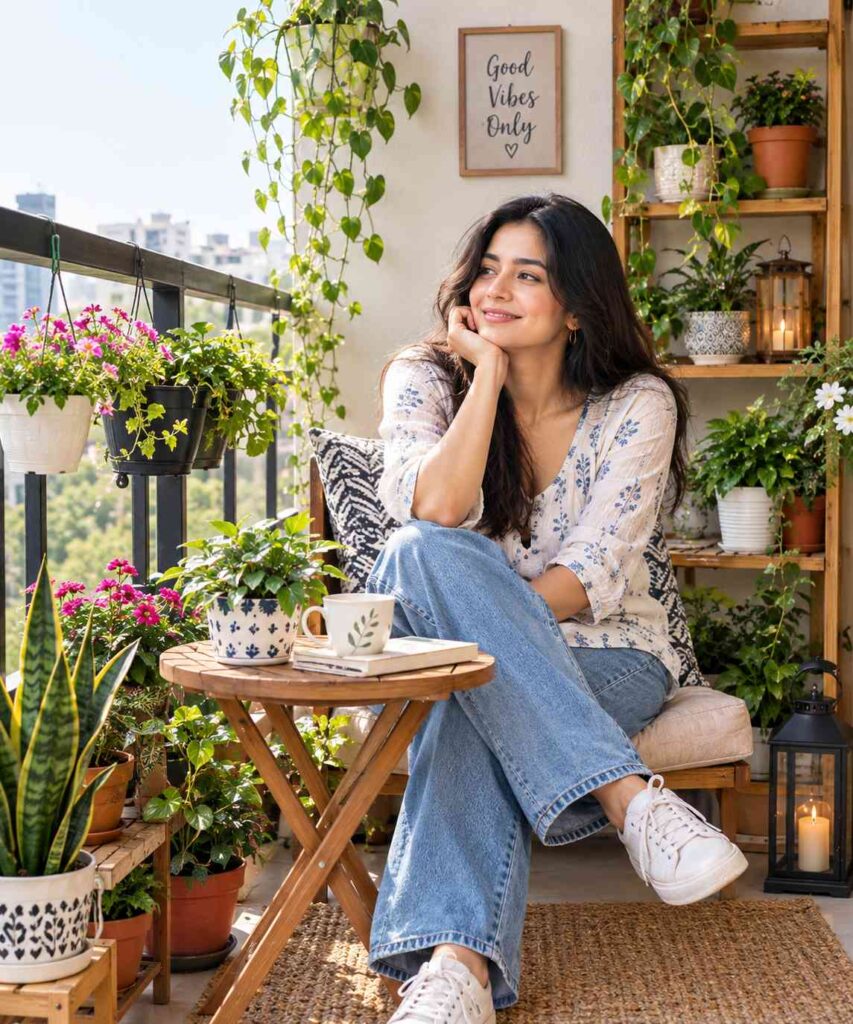
A balcony is often the most ignored part of a home. It becomes a storage corner for old buckets, a clothes-drying area or a place where dust quietly collects. Yet with a little planning and a very modest budget, the same small space can turn into your favourite corner of the house, a spot for morning tea, evening conversations and a few minutes of calm after a long day. If you have been looking for practical balcony garden ideas that do not cost a fortune, this guide is written for you.
You do not need a large terrace, expensive designer planters or years of gardening experience. You need to understand your sunlight, choose the right plants, use vertical space wisely and build a simple care routine. We will walk through each step, from planning to styling to maintenance, with special attention to small Indian balconies where space, heat and monsoon rains are real considerations.
Why a Balcony Garden Is Worth the Effort
Plants do more than look pretty. A small green corner can improve your daily mood and give you a reason to step outside. Watching a new leaf open or picking fresh mint for your tea is a surprisingly satisfying experience. Many people also find that caring for plants becomes a gentle, screen-free routine.
A balcony garden also improves the look of your home from the outside and adds a feeling of privacy. Tall plants and climbers can soften the view of neighbouring buildings and reduce direct glare from the street. Some herbs and vegetables even help reduce your kitchen expenses over time.
Most importantly, a balcony garden is flexible. You can start with three pots and expand slowly as you learn what grows well in your space.
Step 1: Understand Your Balcony Before Buying Anything
The most common beginner mistake is buying plants first and thinking about conditions later. Instead, spend a few days observing your balcony.
Check the Direction and Sunlight
Note how many hours of direct sunlight your balcony receives.
- East-facing: Gentle morning sun, ideal for most plants.
- West-facing: Strong afternoon sun, hot in summer. Needs sun-loving or heat-tolerant plants and some shade protection.
- South-facing: Bright light for most of the day. Good for flowering plants and vegetables.
- North-facing: Softer, indirect light. Best for shade-loving foliage plants.
Measure Your Space
Measure the length and width of the balcony, the height of the railing and any hooks or grills you can use. Sketch a quick layout on paper. Mark where you want a seating spot, where plants can hang and where you need to keep a walking path clear.
Note Wind and Rain Exposure
High-floor balconies often face strong winds that dry out soil quickly and knock over lightweight pots. Open balconies may get heavy monsoon rain. Choose sturdy containers and plants that can handle these conditions.
Step 2: Choose Plants Based on Sunlight
Matching plants to light is the secret of a healthy balcony garden.
Plants for Strong Sun (4 to 6 or more hours)
- Hibiscus
- Rose (miniature varieties are easier)
- Marigold
- Bougainvillea
- Portulaca (moss rose)
- Chilli, tomato, brinjal and other vegetables
- Lemongrass and rosemary
Plants for Partial Sun (2 to 4 hours)
- Money plant
- Spider plant
- Mint, coriander and curry leaf
- Jasmine
- Aloe vera
- Tulsi (holy basil)
- Coleus
Plants for Low Light
- Snake plant
- ZZ plant
- Peace lily
- Pothos
- Cast iron plant
If you are a complete beginner, start with hardy plants such as money plant, snake plant, aloe vera, tulsi and mint. They forgive small mistakes and grow steadily.
Step 3: Use Vertical Space Like a Designer
Floor space on a balcony is limited, so think upward. Vertical gardening lets you grow more plants without crowding the area.
Railing Planters
Rectangular planters that hang over the balcony railing are perfect for herbs, flowers and trailing plants. Make sure they are securely fixed and that water does not drip onto neighbours below. Use a tray or choose planters with a drip catcher.
Hanging Pots
Hang baskets from the ceiling grill or hooks. Trailing plants like pothos, spider plant and petunia look beautiful when they cascade down at different heights.
Wall Planters and Pallet Gardens
If you have a solid wall, attach a small wooden pallet or wall-mounted pocket planters. You can grow herbs, succulents and small flowering plants in a compact vertical arrangement.
Tiered Plant Stands
A simple three or four-tier stand allows you to display many pots in a small footprint. Place taller plants at the back or top and shorter ones in front.
Climbers on a Trellis
Fix a simple bamboo trellis or thin ropes along one side. Climbers such as jasmine, sweet pea, money plant and morning glory add height, privacy and greenery.
Step 4: Choose Low-Cost Containers
You do not need to buy expensive designer pots. Many everyday items can become charming planters.
- Old paint buckets: Wash, drill drainage holes and paint them in matching colours.
- Tin cans and ghee tins: Decorate with rope, fabric or paint.
- Plastic bottles: Cut and hang horizontally for herbs.
- Baskets: Line with plastic and place a smaller pot inside.
- Old ceramic mugs or teapots: Great for succulents.
- Wooden crates: Ideal for herbs and seasonal flowers.
- Terracotta pots: Affordable, breathable and beautiful. Paint them or leave them natural.
Always ensure every container has drainage holes. Waterlogged roots are the most common reason plants die.
To create a stylish look, keep the colour palette limited. For example, use terracotta and white pots, or paint everything in shades of green and cream. A consistent palette makes even mismatched containers look intentional.
Step 5: Prepare Good Soil and Fertiliser
Healthy soil creates healthy plants. Instead of using plain garden soil, which can become hard in pots, make a light mix.
Simple potting mix:
- 40 percent garden soil
- 30 percent cocopeat or coir
- 30 percent compost or vermicompost
This mix drains well but still holds enough moisture. For succulents and cacti, add extra sand or perlite.
Natural fertilisers you can try:
- Vermicompost once a month
- Diluted buttermilk for occasional leaf boosting
- Banana peel compost (well decomposed)
- Used tea leaves (washed and dried) mixed lightly into the soil
Avoid overfeeding. More fertiliser does not mean faster growth and can burn roots.
Step 6: Create a Comfortable Seating Corner
A garden you can enjoy is more valuable than a garden you only look at. Even in a narrow balcony, you can add a compact seating area.
- Two foldable chairs and a small side table
- A cushioned bench with hidden storage
- A floor cushion set and a small round table
- A hanging swing chair if the ceiling structure allows it
Use weather-resistant cushions or covers that can be removed and washed. Place a small outdoor rug or mat to define the area and add warmth. Keep the walkway clear so the balcony still feels open.
Step 7: Add Lighting for Evening Charm
Lighting transforms a balcony after sunset. You do not need complicated wiring.
- String lights: Warm white fairy lights around the railing or trellis.
- Solar lanterns: No electricity needed and easy to hang.
- Small table lamp: Rechargeable lamps are safe and portable.
- Candles in glass jars: Use carefully, and never in windy conditions or near dry plants.
Warm light makes plants look richer and gives the balcony a cosy, relaxing atmosphere in the evening.
Step 8: Styling Ideas That Look Expensive but Are Not
Small touches make the space feel designed.
- Group plants in odd numbers. Clusters of three or five look more natural than pairs.
- Mix heights. Use stools, crates or stands to raise some pots.
- Repeat colours. Match cushion colours with flower shades or pot colours.
- Add natural textures. Jute rugs, wooden trays and cane baskets bring warmth.
- Use a small water feature. A tiny bowl with floating flowers or a compact fountain adds soothing sound.
- Hang a mirror. It reflects greenery and makes the balcony feel larger.
- Include a decorative element. A brass diya, a small statue or a lantern adds personality.
Step 9: Build a Simple Care Routine
A beautiful garden needs consistency, not complicated effort.
Watering
Water early in the morning or in the evening. Check the soil with your finger; if the top inch is dry, it is time to water. In summer, most plants may need daily water, while in winter you can reduce frequency. Group plants with similar water needs together so watering becomes easier.
Pruning and Cleaning
Remove yellow leaves and spent flowers regularly. Wipe dusty leaves with a damp cloth so plants can absorb sunlight properly.
Pest Control
Check leaves weekly for tiny insects. A simple spray of diluted neem oil mixed with a few drops of mild liquid soap can help control common pests. Avoid using strong chemicals on a balcony where you sit.
Rotate Pots
Turn pots every couple of weeks so all sides receive light and plants grow evenly.
Seasonal Care: Summer, Monsoon and Winter
Summer
Hot afternoon sun can scorch leaves. Use a green shade net, place delicate plants behind sturdier ones and water deeply in the morning. Mulch the soil with dry leaves or coconut husk to reduce evaporation.
Monsoon
Heavy rain can waterlogged pots. Lift containers on small stands so water drains freely, and move delicate plants under cover. Watch for fungal issues and reduce fertiliser during this time.
Winter
Growth slows down. Water less and protect tender plants from cold winds. This is also an excellent season for flowers such as marigold, petunia and pansy in many regions.
Easy Vegetables and Herbs for a Small Balcony
Growing something you can eat makes the garden even more rewarding.
- Mint: Grows fast; keep in its own pot because it spreads.
- Coriander: Sow seeds every few weeks for a steady supply.
- Green chilli: Productive in sunny spots.
- Cherry tomatoes: Need support and good sunlight.
- Spinach and methi: Quick-growing leafy greens.
- Curry leaf: Slow at first but long-lasting.
- Lemongrass: Great for tea and easy to maintain.
Common Balcony Garden Mistakes to Avoid
- Overwatering. More plants die from too much water than too little.
- Ignoring drainage. Always keep holes and use trays wisely.
- Choosing plants that need more sun than you have. Match plants to light first.
- Overcrowding. Plants need air circulation.
- Heavy pots on weak railings. Check the strength and fixtures before hanging anything heavy.
- Buying too many plants at once. Start small and expand gradually.
- Forgetting neighbours. Prevent water dripping onto balconies below.
A Sample Low-Budget Plan
If you want a simple starting point, here is a realistic plan for a small balcony:
- Three terracotta pots with snake plant, money plant and aloe vera
- A railing planter with mint, coriander and marigold
- Two hanging pots with pothos and spider plant
- A small foldable chair and side table
- A string of warm fairy lights
- One jute mat
With smart shopping, reused containers and cuttings from friends, this whole setup can be created affordably and expanded over time.
Frequently Asked Questions
What is the cheapest way to start a balcony garden?
Begin with four or five hardy plants in reused containers. Take cuttings from friends and family, since many plants like money plant, pothos and mint grow easily from cuttings.
Which plants are best for a hot west-facing balcony?
Portulaca, bougainvillea, hibiscus, aloe vera, rosemary and marigold handle strong heat. Add a shade net during peak summer afternoons.
Can I grow vegetables in a small balcony?
Yes. Chillies, tomatoes, leafy greens, coriander and mint grow well in containers when they receive enough sunlight.
How do I stop pots from making the balcony floor dirty?
Place trays or saucers under pots, use a mat under the plants and clean the floor regularly. You can also choose self-watering planters.
How often should I water balcony plants?
It depends on season, plant type and pot size. Always check the top layer of soil and water only when it feels dry.
Are balcony gardens safe for pets and children?
Some plants can be harmful if eaten. Check plant safety before buying, especially if you have curious pets or small children.
Final Thoughts
A balcony garden is a small project with a big emotional return. You do not need a large budget, and you do not need to be an expert. Observe your light, choose easy plants, use vertical space, reuse containers and keep your care routine simple. Add a comfortable seat and warm lights, and your ordinary balcony becomes a place you look forward to visiting.
Start with just a few pots this weekend. Watch how they grow, learn from them and expand slowly. With patience and simple care, these balcony garden ideas can turn any small corner into a fresh, green retreat that feels truly yours.