.Skincare can feel complicated.
Walk into a beauty shop or scroll through social media and you may see cleansers, toners, serums, exfoliators, masks, oils, moisturisers, sleeping creams and countless other products.
It is easy to believe that beautiful skin requires a bathroom cabinet full of bottles.
It does not.
A good skincare routine starts with understanding the basics.
In 2026, the beauty conversation is increasingly moving towards skin health, barrier support, prevention and personalised routines rather than simply collecting products. Current beauty trend reports highlight resilient routines and long-term skin health as important themes.
This guide explains how beginners can create a simple skincare routine without unnecessary complexity.
What Is a Skincare Routine?
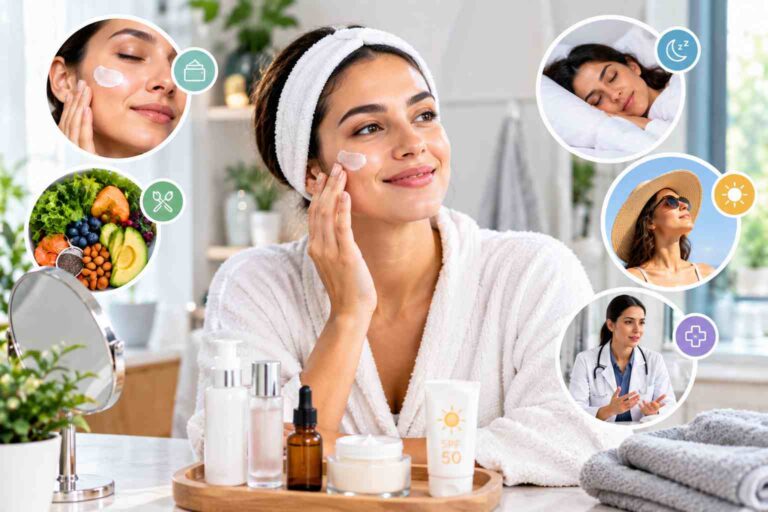
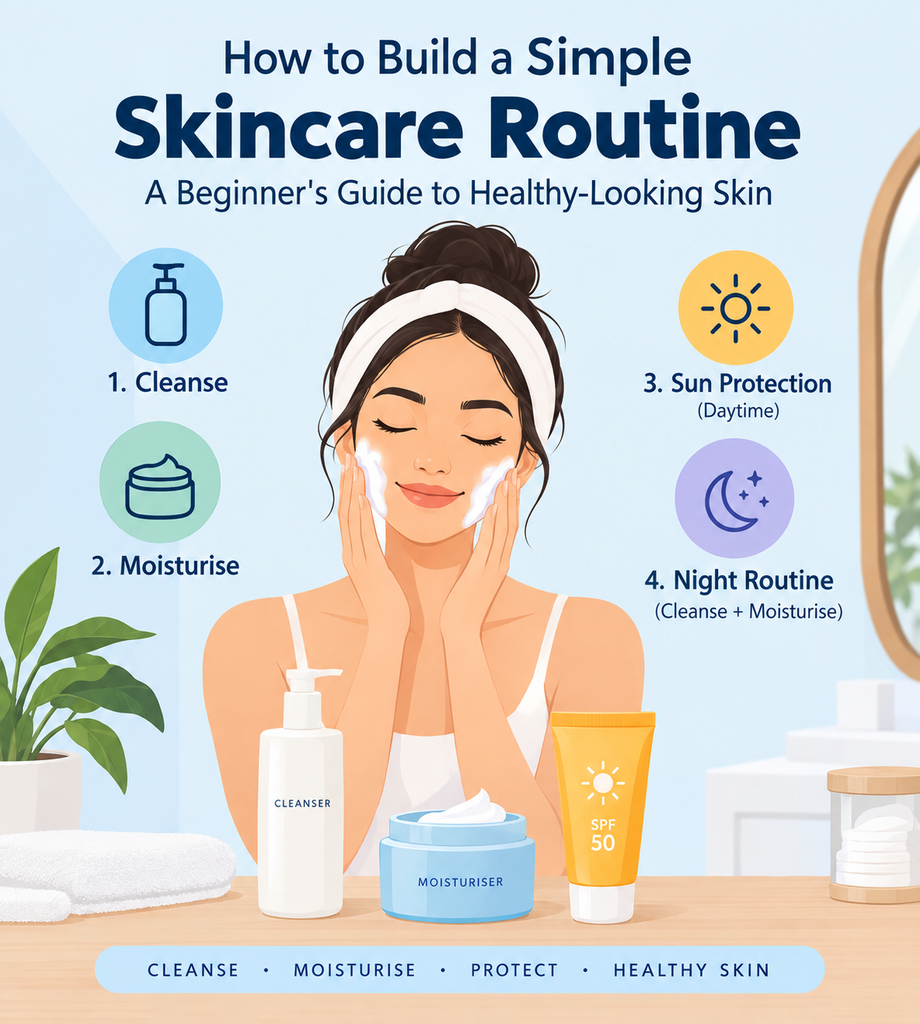
A skincare routine is a regular sequence of products and habits designed to clean, moisturise and protect the skin.
A basic routine can be surprisingly simple.
At its foundation are:
- Cleansing
- Moisturising
- Sun protection during the day
Additional products can be introduced depending on your personal needs.
Why Keep Your Routine Simple?
A simple routine has several advantages.
It is easier to remember.
It is easier to understand.
It may be easier to identify which product is causing irritation if something goes wrong.
And it can be considerably cheaper.
Skincare does not need to become a hobby unless you want it to.
Step 1: Understand Your Skin
Before purchasing products, consider how your skin behaves.
It may generally feel:
- Dry
- Oily
- Combination
- Balanced
- Sensitive
Skin can also change depending on weather, hormones, stress, environment and other factors.
For example, skin that feels comfortable during a humid summer may feel drier during winter.
This is why a routine should be flexible.
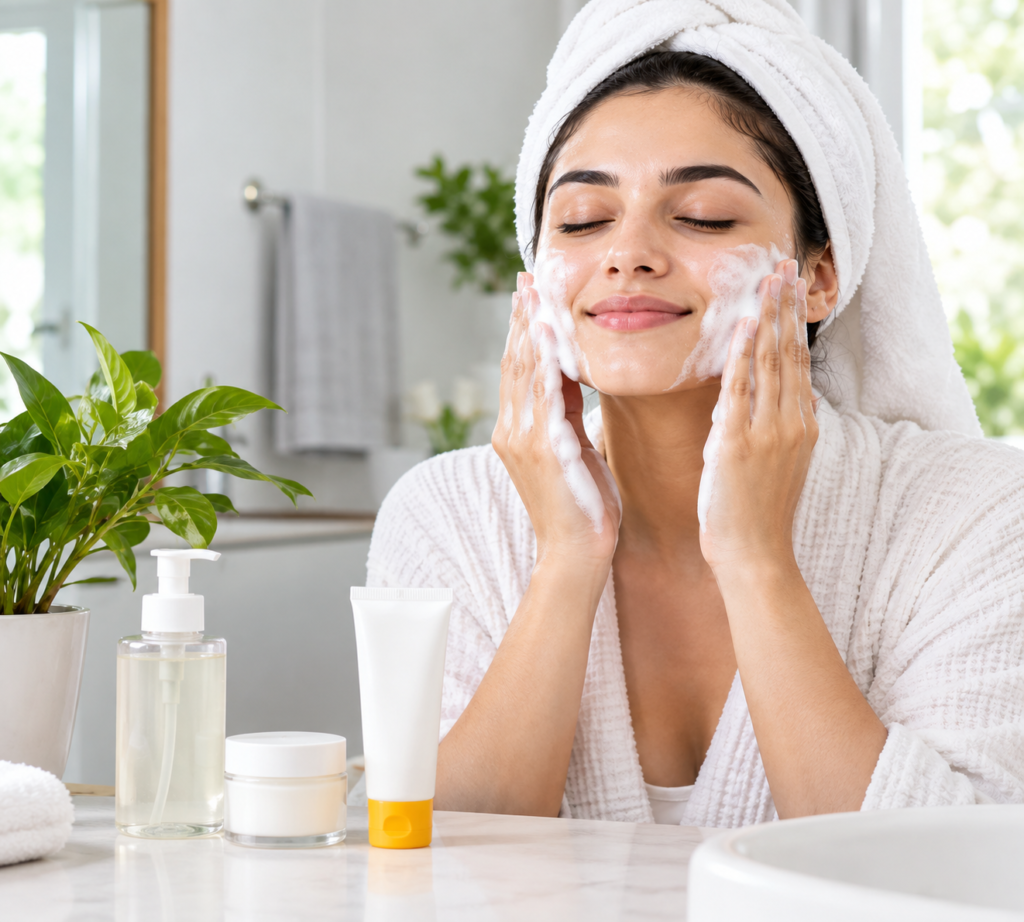
Step 2: Choose a Gentle Cleanser
Cleansing removes substances such as makeup, excess oil, sunscreen and everyday dirt from the skin.
Choose a cleanser appropriate for your skin and how much cleansing you need.
If your skin feels tight, uncomfortable or excessively dry after cleansing, the product or frequency may not be suitable for you.
A cleanser should leave your skin feeling clean without making it feel stripped.
Step 3: Add Moisturiser
Moisturiser helps support skin hydration.
Even people with oily skin may benefit from moisturising.
The key is finding a texture that feels comfortable.
Light gel textures may appeal to people who dislike heavier products.
Creams may be preferable for people who want richer hydration.
There is no single perfect moisturiser.
Step 4: Make Sunscreen a Daily Habit
Sun protection is one of the most important parts of daytime skincare.
Choose a broad-spectrum sunscreen suitable for your needs and follow its application instructions.
A sunscreen that feels pleasant is more likely to become a consistent habit.
This is particularly relevant if your goal is long-term skin health.
Step 5: Build an Evening Routine
Your evening routine can be simple.
Start by removing makeup and sunscreen if you have worn them.
Cleanse.
Then apply any targeted skincare product appropriate for your needs.
Finish with moisturiser.
You do not need to use multiple active ingredients at once.
What About Serums?
Serums are concentrated skincare products designed around specific ingredients or purposes.
Different serums may target different concerns.
Examples include products containing:
- Hyaluronic acid
- Niacinamide
- Vitamin C
- Retinoids
- Peptides
- Other active ingredients
However, “more active ingredients” does not automatically mean better skincare.
Choose products according to your actual needs.
How Should Beginners Introduce New Products?
Do not change everything at once.
Introduce one new product at a time.
This makes it easier to understand how your skin responds.
Follow the product’s instructions.
If irritation occurs, stop using the product and consider seeking advice from a qualified healthcare professional if the reaction is significant or persistent.
What Is the Skin Barrier?
The skin barrier refers broadly to the outer protective layer of the skin.
It helps limit water loss and protects the skin from environmental factors.
Current beauty trends place considerable emphasis on maintaining this barrier rather than constantly using aggressive treatments.
Signs that your routine may be too harsh can include:
- Persistent dryness
- Burning
- Redness
- Increased sensitivity
- Flaking
If these symptoms persist, professional medical advice may be appropriate.
Should You Exfoliate?
Exfoliation removes dead skin cells from the skin’s surface.
There are physical and chemical exfoliating products.
However, exfoliation is not automatically necessary for everyone, and over-exfoliation can irritate the skin.
If you choose to exfoliate, follow the product instructions and avoid combining numerous strong active products without understanding how they interact.
Skincare and Climate
Your environment can influence how your skin feels.
Hot and humid weather may make some people prefer lighter textures.
Cold or dry weather may increase the need for richer moisturisation.
Pollution and environmental exposure can also influence how people approach skincare. Boots’ 2026 report identifies environmental stressors and “resilient routines” as important beauty themes.
Skincare for Busy People
If you have little time, keep the routine extremely simple.
Morning
Moisturiser + sunscreen
Evening
Cleanser + moisturiser
That is enough to establish a basic routine.
You can add other products later if you have a specific reason to do so.
Common Skincare Mistakes
Using Too Many Products
More products create more opportunities for irritation and unnecessary expense.
Changing Products Too Frequently
Give a routine enough time to assess whether it suits you, unless irritation occurs.
Ignoring Sunscreen
Daily sun protection is an important part of long-term skincare.
Copying Someone Else’s Routine
Someone else’s skin is not your skin.
Expecting Immediate Results
Skincare often requires consistency.
How to Choose Skincare Products
Read the product information.
Consider:
- Your skin type
- Your specific concern
- Ingredients
- Texture
- Fragrance preferences
- Cost
- How frequently you intend to use it
Do not purchase a product simply because it is viral.
Beauty Trends vs Real Skincare Needs
One of the biggest challenges today is separating trends from genuine needs.
A product can become extremely popular online within weeks.
But popularity does not prove that it is suitable for every person.
Trend-led products can be enjoyable, but your basic routine should remain grounded in your own needs.
The Role of Professional Advice
If you have persistent acne, eczema, rosacea, unusual pigmentation, severe irritation or another ongoing skin concern, consider speaking with a qualified healthcare professional or dermatologist.
Online skincare content can provide general information, but it cannot replace individual medical assessment.
A Simple Beginner’s Skincare Checklist
Morning
- Gentle cleanse if appropriate
- Moisturiser if needed
- Sunscreen
Evening
- Remove makeup if applicable
- Cleanse
- Treatment product if appropriate
- Moisturiser
Weekly
Avoid the temptation to add a large number of treatments simply because they are trending.
Instead, focus on consistency.
How to Make Skincare a Habit
Place your products somewhere visible.
Keep the routine short.
Connect skincare with an existing habit such as brushing your teeth.
For example:
Brush teeth → cleanse → moisturise → sunscreen
Creating a routine around an existing habit makes consistency easier.
Skincare Is Not Perfection
Perhaps the most important lesson is that healthy skin does not mean flawless skin.
Pores are normal.
Texture is normal.
Lines are normal.
Occasional spots are normal.
The purpose of skincare is not to turn your face into a photograph.
It is to care for your skin.
Final Thoughts
A good skincare routine does not need to be complicated.
Start with the foundations: gentle cleansing, appropriate moisturisation and daytime sun protection. Then introduce additional products only when you understand why you are using them.
Current 2026 beauty trends show increasing interest in skin-barrier support, personalised routines and long-term skin health.
The beauty industry will continue to introduce new ingredients and technologies.
You do not need to chase all of them.
Build a routine that works for your skin, your budget and your lifestyle.
Consistency will always be more useful than a crowded bathroom shelf.