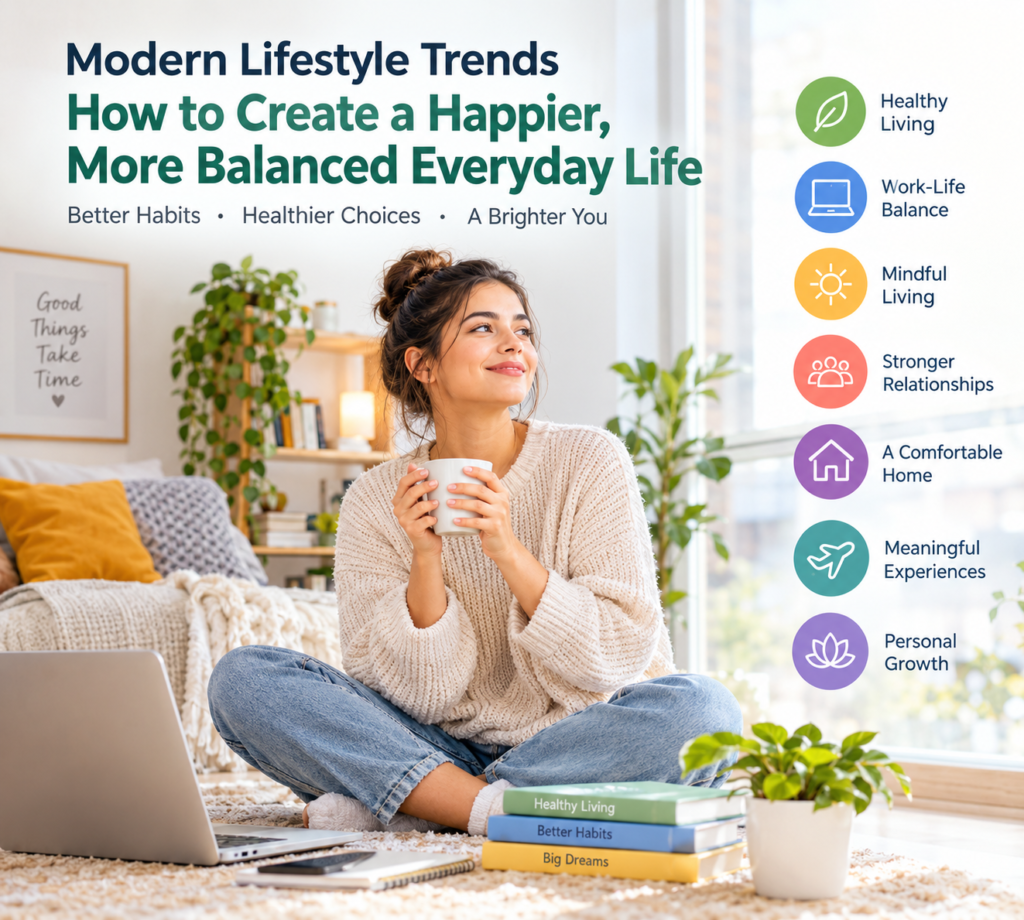
Modern life moves quickly.
Our mornings begin with notifications, our working days can stretch across multiple screens, and our evenings often disappear between messages, entertainment, household responsibilities and endless scrolling.
Yet somewhere between the noise, people are searching for something quieter.
Balance.
A modern lifestyle is no longer simply about being busy. Increasingly, people are thinking about how they spend their time, where they live, what they consume, how they work and which habits genuinely make everyday life better.
The result is a lifestyle movement built around intentional living rather than constant productivity.
What Does a Modern Lifestyle Mean?
A modern lifestyle is the way people organise their everyday lives around work, relationships, technology, health, entertainment, home and personal interests.
There is no single definition.
For one person, modern living may mean working remotely and travelling.
For another, it may mean creating a calm home, cooking more often and spending less time online.
The important point is that lifestyle is personal.
1. Intentional Living Is Becoming More Important
Intentional living means making conscious choices about your time and attention.
Instead of automatically saying yes to every invitation, notification or opportunity, you begin asking:
Does this actually matter to me?
This simple question can change how you spend your days.
You might decide to:
- Reduce unnecessary commitments
- Spend more time with family
- Protect your evenings
- Create technology-free periods
- Make time for hobbies
- Organise your finances
- Improve your home environment
A balanced life is not necessarily a life with fewer responsibilities.
It is a life where your responsibilities and priorities are more deliberately organised.
2. Digital Boundaries Matter
Technology has become an essential part of modern life.
Phones help us communicate, work, shop, learn and entertain ourselves.
But constant connectivity can make it difficult to mentally switch off.
Creating digital boundaries can help.
Try:
- Turning off unnecessary notifications
- Keeping your phone away during meals
- Creating a screen-free bedtime routine
- Taking short breaks from social media
- Avoiding work messages outside working hours where possible
You do not need to leave technology behind.
The goal is to control your technology rather than allowing it to control every spare moment.
3. Slow Mornings Are Becoming a Lifestyle Goal
A rushed morning can influence the entire day.
Instead of checking your phone immediately after waking, consider creating a simple morning sequence.
For example:
Wake up → drink water → wash → get dressed → breakfast → review priorities
Even 20 quiet minutes can make the morning feel different.
A slower morning does not mean waking at 5am or following an elaborate routine.
It simply means creating a little space before the day’s demands begin.
4. The Home Is Becoming a Lifestyle Space
Home is no longer simply where people sleep.
For many people, it is also:
- Office
- Gym
- Restaurant
- Entertainment space
- Study area
- Social environment
This has made home design an important part of lifestyle.
Even a small improvement can make everyday life easier.
A comfortable chair can improve reading.
Better lighting can change the atmosphere.
Organised storage can reduce visual clutter.
A dedicated workspace can make working from home feel more structured.
5. Experiences Matter
Modern consumers increasingly value experiences alongside possessions.
Experiences can include:
- Travel
- Concerts
- Restaurants
- Classes
- Local events
- Outdoor activities
- Creative hobbies
- Time with friends
This does not mean material possessions have no value.
It simply means that a fulfilling lifestyle can include more than shopping.
6. Hobbies Are Not a Waste of Time
In a productivity-focused culture, hobbies can sometimes feel unnecessary.
They are not.
Reading, painting, gardening, photography, cooking, music, gaming or crafts can provide space for creativity.
A hobby does not need to become a side business.
It can simply be something you enjoy.
7. Personal Finance Is Part of Lifestyle
Lifestyle is also connected to money.
A beautiful lifestyle becomes stressful if it depends on spending beyond your means.
Practical financial habits can include:
- Tracking monthly spending
- Building an emergency fund
- Planning large purchases
- Reviewing subscriptions
- Avoiding unnecessary debt
- Setting realistic savings goals
The purpose is not to eliminate enjoyment.
It is to create greater control.
8. Social Connection Remains Essential
Digital communication is convenient, but real relationships require attention.
Make space for:
- Family meals
- Friendships
- Conversations
- Community activities
- Shared hobbies
A lifestyle can look perfect online while feeling lonely offline.
Real connection matters.
9. Food and Lifestyle
Food is another important part of everyday life.
Cooking at home can provide more control over ingredients and portions, while eating out can create social experiences.
A balanced lifestyle does not need strict food rules.
Instead, focus on variety and enjoyment.
Include foods you genuinely like while making room for nutritious choices.
If you have specific dietary or medical needs, individual professional advice is more appropriate than generic online lifestyle guidance.
10. Movement Without Obsession
Exercise does not have to mean spending hours in a gym.
Movement can include:
- Walking
- Cycling
- Swimming
- Dancing
- Yoga
- Strength training
- Sports
- Everyday physical activity
The best activity is often the one you enjoy enough to continue.
11. Sleep Is a Lifestyle Foundation
Sleep affects how people function during the day.
Creating a consistent evening routine may help support better sleep.
Consider:
- Going to bed at a consistent time
- Reducing stimulating screen use before bed
- Keeping the bedroom comfortable
- Avoiding unnecessary late-night work
- Creating a relaxing pre-sleep routine
If persistent sleep problems affect your daily life, professional medical advice may be appropriate.
12. Travel Is Changing
Travel is increasingly about more than ticking destinations off a list.
People may seek:
- Local culture
- Food experiences
- Nature
- Wellness
- Slow travel
- Longer stays
- Smaller destinations
Travel can become more meaningful when the goal is experiencing a place rather than simply photographing it.
13. Decluttering Your Life
Decluttering is not only about cupboards.
You can declutter:
Physical space
Remove things you no longer use.
Digital space
Delete unnecessary files and apps.
Schedule
Reduce commitments that add little value.
Mental space
Create periods without constant information consumption.
The result can be a simpler daily environment.
14. Create a Weekly Reset
A weekly reset can help organise your life.
Spend 30–60 minutes reviewing:
- Upcoming appointments
- Work priorities
- Household tasks
- Meals
- Finances
- Exercise
- Social plans
You do not need an elaborate planner.
A simple checklist can work.
15. Build Small Habits
Major lifestyle transformations are often difficult to maintain.
Small habits are easier.
Instead of:
“I will completely change my lifestyle.”
Try:
“I will walk for 20 minutes after dinner.”
Instead of:
“I will stop using my phone.”
Try:
“I will keep my phone away during breakfast.”
Small changes can become sustainable routines.
16. Create Your Own Definition of Success
Social media can make success appear to have a specific appearance.
Beautiful home.
Luxury holidays.
Designer clothing.
Perfect body.
Successful career.
But life does not have one universal template.
Your version of a successful lifestyle might be:
- Having time for family
- Building a career you enjoy
- Living within your means
- Travelling occasionally
- Having creative hobbies
- Feeling comfortable at home
Define success for yourself.
Conclusion
Modern lifestyle trends are moving towards something surprisingly simple: living more intentionally.
Technology, work, social media and consumer culture are unlikely to disappear.
Instead, the challenge is learning how to use them without allowing them to consume every part of life.
A balanced lifestyle does not need to look impressive from the outside.
It needs to feel meaningful from the inside.
Start small.
Protect your time.
Create healthy routines.
Stay connected.
Make your home comfortable.
Keep hobbies alive.
And leave enough room in your life for moments that were never planned.