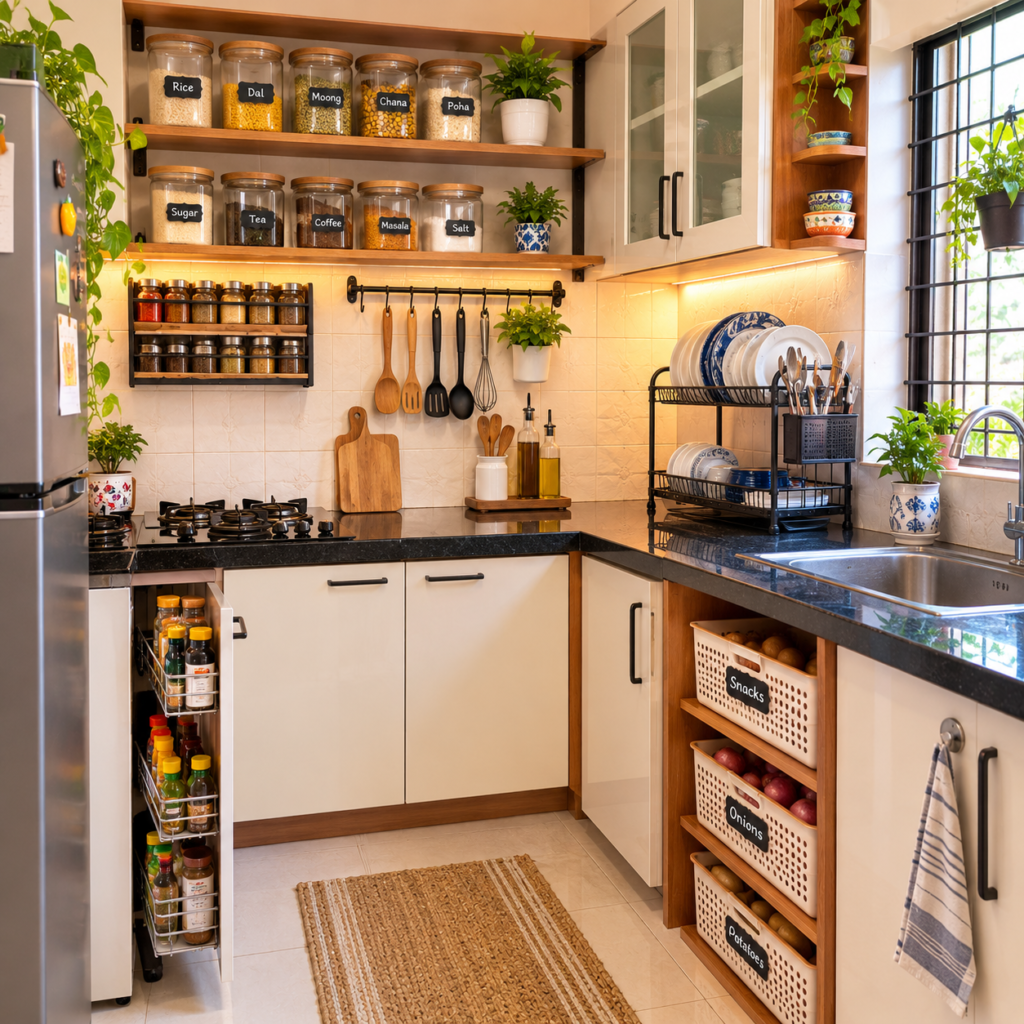
The kitchen is the busiest room in most Indian homes. It is where the day begins with chai, where lunch boxes get packed, where festival sweets are made and where the family gathers in the evening. Yet in many apartments and older houses, the kitchen is also the smallest and most crowded space. Dabbas fall out of cupboards, masala boxes hide at the back, the pressure cooker lid never fits anywhere, and finding a single spoon can feel like a treasure hunt. If this sounds familiar, the solution is not always a bigger kitchen. Often it is better planning. These small kitchen organization ideas are designed for real Indian cooking, with its many spices, heavy vessels, daily rotis and large quantities of grains and pulses.
In this guide, we will cover how to declutter first, how to divide your kitchen into zones, smart storage for masalas, grains, utensils and appliances, ways to use walls and doors, budget-friendly containers, cleaning habits that keep order and mistakes to avoid. You can apply most of these ideas in a single weekend without renovating.
Why Kitchen Organization Matters
A well-organised kitchen does more than look neat. It changes how you cook and how you feel while doing it.
- Saves time. When everything has a place, you spend less time searching, especially during morning rush hours.
- Reduces food waste. You can see what you have, so you buy less duplicate stock and use ingredients before they expire.
- Improves safety. Sharp knives, hot vessels and heavy items stored properly lower the risk of accidents.
- Makes cleaning easier. Clear counters and tidy shelves are faster to wipe and keep pests away.
- Lowers stress. A calm kitchen makes cooking more enjoyable, even on busy days.
Step 1: Declutter Before You Organise
Buying baskets and containers before removing clutter only rearranges the mess. Start by emptying one section at a time, such as one cupboard or one drawer, and sort items honestly.
- Remove expired food. Check dates on packaged foods, sauces, masalas and oils. Old ground spices lose flavour, and stale items attract insects.
- Sort by frequency of use. Separate items you use daily, weekly, monthly and rarely.
- Let go of duplicates. Do you need six similar steel bowls or three broken-handled kadhais? Donate or recycle what you do not use.
- Discard mismatched or damaged containers. Lids without boxes and boxes without lids only waste space.
- Move rarely used items out. Festival vessels, large cooking pots and party serving sets can go on the top shelf, a loft or another room.
- Keep the counters nearly clear. Only items used every day, like the kettle, tawa or a masala dabba, should stay out.
Work in short sessions of thirty to sixty minutes so you do not feel overwhelmed.
Step 2: Divide the Kitchen Into Work Zones
Professional kitchens are organised by task, and you can do the same at home. Store things close to where you use them.
Cooking zone (around the stove): Oils, masala dabba, tongs, ladles, spatulas, tawa, kadhai and pans.
Prep zone (near the main counter): Knives, chopping boards, peelers, graters, mixing bowls and colanders.
Cleaning zone (around the sink): Dish soap, scrubbers, dishcloths, dustbin, drying rack and cleaning supplies.
Storage zone (pantry or cupboards): Grains, pulses, flours, snacks, tea, sugar and packaged foods.
Serving zone (near the dining area): Plates, bowls, glasses, cutlery, trays and serving spoons.
Cold storage zone (fridge area): Leftovers containers, water bottles and lunch boxes nearby.
When zones are logical, you move less, work faster and keep your kitchen tidier.
Step 3: Organise Masalas and Spices
Spices are the heart of Indian cooking, and they can also be the biggest source of chaos.
- Use one main masala dabba for daily spices such as turmeric, red chilli powder, cumin, coriander powder, mustard seeds and garam masala. Keep it next to the stove for easy reach.
- Store extra stock in small airtight jars. Refill your daily dabba from these jars weekly. This protects spices from heat and moisture near the stove.
- Label everything clearly. Use stickers or a marker with the name and, if you like, the purchase date.
- Use uniform jars. Same-sized square or rectangular containers stack better than round ones and use space efficiently.
- Arrange alphabetically or by cuisine. Alphabetical order makes finding spices simple, especially for guests or new helpers.
- Use a tiered rack or lazy Susan. A two-tier stand in a cupboard lets you see the back row. A rotating tray is excellent for corner cabinets.
- Try a pull-out spice rack if your cabinet is narrow.
- Keep whole spices separate from ground spices. Whole spices stay fresh longer.
Store spices away from direct sunlight and steam. A cool, dry cupboard is better than an open shelf above the gas stove.
Step 4: Smart Storage for Grains, Pulses and Flours
Indian households often buy staples in bulk. Good storage prevents pests, keeps food fresh and saves space.
- Use airtight containers for rice, atta, dals, poha, sooji and besan. Clear containers let you see stock levels at a glance.
- Choose stackable square containers in a few standard sizes. They fit neatly on shelves and waste less space than round jars.
- Place heavy items low. Store large atta and rice containers on lower shelves or the floor cabinet to avoid strain.
- Add neem leaves, dried bay leaves or a few cloves to storage containers as a traditional way to deter insects. Always keep containers tightly closed.
- Label with dates. Note when you filled the container and use older stock first.
- Store oils and ghee in a cool place, away from the stove.
- Keep a small “daily use” set on the counter, such as a container of tea leaves, sugar and salt.
If you buy 25 kg bags, use a large drum with a lid and decant into smaller containers weekly.
Step 5: Organise Utensils and Cookware
Steel vessels, pressure cookers and kadhais are bulky and hard to stack. A few tricks help.
- Use vertical dividers or racks to store tawas, lids and chopping boards upright, like files in a folder. This avoids stacking heavy items.
- Nest pots and pans by size, placing a soft cloth or paper between non-stick pieces to protect the coating.
- Store lids together in a lid organiser or a hanging rack on the inside of a cupboard door.
- Keep everyday vessels at waist height. Rarely used items go on higher or lower shelves.
- Hang frequently used tools such as ladles, sieves and spatulas on hooks or a rail near the stove.
- Use drawer dividers for cutlery and utensils. Adjustable bamboo or plastic dividers keep spoons, knives and peelers separate.
- Group lunch boxes and bottles in one basket or drawer, with lids stored alongside, to end the daily hunt for matching pieces.
Step 6: Make the Most of Vertical Space
In a small kitchen, walls and doors are valuable storage areas.
- Install wall-mounted racks or shelves above the counter for masala jars, cups and small containers.
- Use a rail with hooks for hanging mugs, utensils and even small pans.
- Add hooks inside cupboard doors for measuring spoons, oven mitts and cloth wipes.
- Use over-the-door organisers on the pantry door for spice pouches, foil rolls and snacks.
- Fix a magnetic strip on the wall to hold knives safely away from children.
- Stack shelves inside cabinets with add-on risers to double usable space.
- Use the top of the refrigerator for lightweight items in baskets, and keep everything tidy so it does not become a dumping ground.
- Consider a slim trolley on wheels that slides between the fridge and the wall.
Always check that wall fittings are securely installed, especially in older buildings.
Step 7: Organise Small Appliances
Mixer grinders, toasters, air fryers, rice cookers and kettles can eat up your counter.
- Keep only daily-use appliances out, such as a kettle or mixer.
- Store others in a dedicated cupboard, ideally near an electrical outlet.
- Use a cabinet or shelf for the mixer jars with lids stored beside them.
- Wind cords neatly with cable ties or velcro straps.
- Consider multi-purpose appliances if you are buying new items and space is limited.
- Create a “charging and appliance corner” with a power strip, but keep it away from water.
Step 8: Organise the Refrigerator
A messy fridge causes waste and odours. Try this simple system:
- Top shelves: Ready-to-eat foods, leftovers, curd and beverages.
- Middle shelves: Dairy, eggs (or in the door if designed for that) and batter.
- Bottom shelves: Raw ingredients such as marinated items, stored in covered containers.
- Crisper drawers: Fruits in one and vegetables in the other.
- Door: Condiments, bottled items and water bottles, where temperature changes more.
Use clear, stackable containers for cut fruits, chopped vegetables and leftovers. Label with dates. Do a weekly “fridge check” before shopping so old items are used or discarded.
Step 9: Add Simple Daily Habits
Organisation lasts only when habits support it.
- Return items to their place immediately after use.
- Wipe counters and the stove after cooking.
- Do a five-minute reset each night: load dishes, clear the counter and empty the dustbin.
- Check pantry stock weekly and write a shopping list.
- Follow the “one in, one out” rule. When a new container or gadget arrives, remove an old one.
- Involve family members. Show everyone where things belong and label shelves if needed.
- Do a monthly mini-declutter of one drawer or shelf.
Budget-Friendly Organising Ideas
You do not need expensive systems.
- Reuse jars and bottles. Clean glass jars from pickles or jam are ideal for pulses and spices.
- Use shoe boxes or cardboard boxes as drawer dividers, covered with contact paper.
- Repurpose baskets from around the house for onions, potatoes or snacks.
- Turn a small ladder or wooden crate into a shelf for extra storage.
- Use tension rods under the sink to hang spray bottles.
- Cut plastic bottles to make holders for foil or napkins.
- Buy affordable racks and hooks from local markets and sturdy adhesive hooks for light items.
Keeping Your Kitchen Clean and Pest-Free
Organisation supports hygiene.
- Store food in tightly closed containers.
- Clean cupboards and shelves every few months and line them with washable liners.
- Sweep and mop the floor daily, and clean under and behind appliances regularly.
- Keep the dustbin covered and empty it daily.
- Check for leaks under the sink, which can attract pests and damage cabinets.
- Ensure good ventilation with a chimney or exhaust fan to reduce grease and moisture.
Common Kitchen Organisation Mistakes
- Buying containers before decluttering. Clear out first, then measure.
- Storing everything at eye level. Reserve prime spots for daily items.
- Overfilling shelves. Leave a little breathing room for easy access.
- Ignoring the back of cupboards. Use pull-outs or turntables so items do not get lost.
- Mixing many different container styles. Consistency looks tidy and stacks better.
- Keeping everything on the counter. Clutter attracts dust, grease and pests.
- Forgetting labels. They keep the system alive when several people use the kitchen.
Frequently Asked Questions
How do I organise a very small kitchen with no storage?
Use vertical space with wall racks and hooks, choose stackable containers, keep the counters nearly clear and store rarely used items elsewhere.
What is the best way to store masalas?
Keep a small daily masala dabba near the stove and store bulk spices in airtight, labelled jars in a cool, dry cupboard.
How can I prevent insects in flour and pulses?
Use airtight containers, keep storage areas clean and dry, and consider natural deterrents like neem or bay leaves. Buy quantities you can finish in a reasonable time.
Which containers are best for kitchen storage?
Airtight, stackable and preferably clear containers in square or rectangular shapes make the best use of space. Food-grade steel and glass are also good options.
How often should I reorganise my kitchen?
A quick weekly reset and a deeper seasonal review work well for most homes.
Can I organise my kitchen without spending much?
Yes. Decluttering, reusing jars and boxes and rearranging items by zones cost little and can make a big difference.
Final Thoughts
An organised kitchen is not about perfection or matching containers from a catalogue. It is about creating a system that suits how your family cooks and eats. Start by decluttering, divide the space into logical zones, use vertical storage, choose airtight containers for staples and build small daily habits to keep everything in order.
Pick one drawer or one shelf this weekend, and apply these small kitchen organization ideas. When you see how much easier cooking feels, you will want to continue with the rest of the room. Little by little, your compact kitchen can become a calm, efficient and inviting heart of your home.