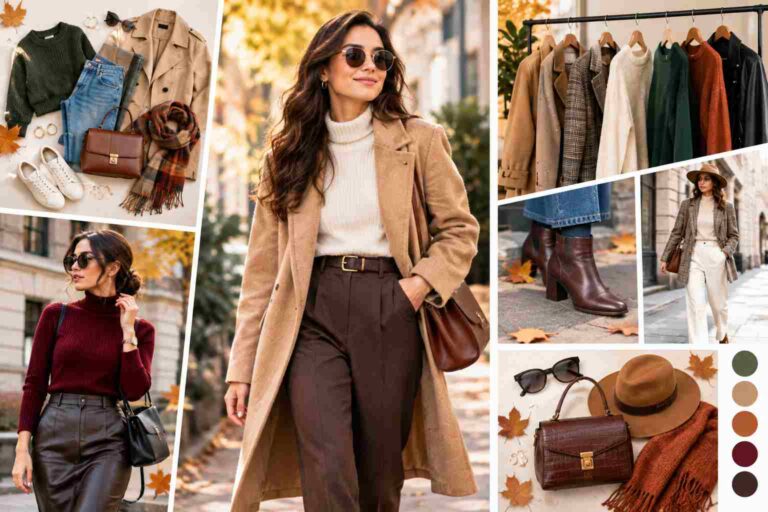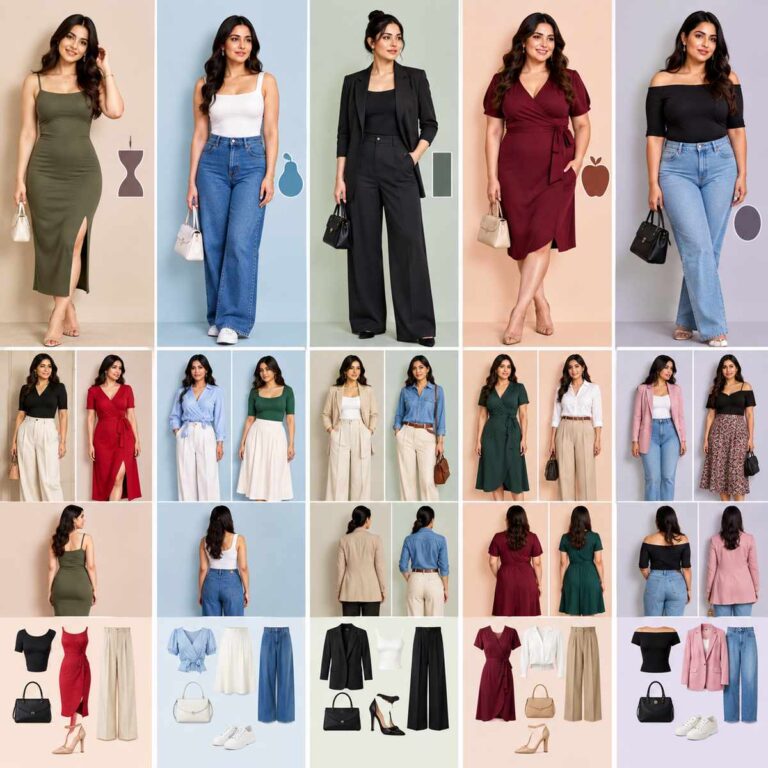
Almost everyone has stood in front of a full closet and thought, “I have nothing to wear.” It is a strange and common feeling. The wardrobe is packed, yet the right outfit never seems to appear. The reason is usually simple: we own many clothes that do not work together, do not fit properly or do not match our real daily life. A capsule wardrobe solves this problem by focusing on fewer, better and more versatile pieces that mix and match easily.
This guide explains what a capsule wardrobe is, how to build one from scratch, which 15 essential pieces to start with, how to choose colours and fabrics, and how to style each item in multiple ways. By the end, you will have a clear plan to make getting dressed easier, cheaper and more enjoyable.
What Is a Capsule Wardrobe?
A capsule wardrobe is a small, carefully chosen collection of clothes that all work well together. The idea was popularised decades ago and remains relevant because it addresses a timeless challenge: how to look put-together without owning too much.
Instead of chasing every trend, you invest in timeless basics that suit your body, your lifestyle and your climate. You then add a few seasonal or personal pieces to keep things fresh. Because everything coordinates, you can create dozens of outfits from a small number of items.
A capsule wardrobe is not about strict rules or deprivation. It is not necessary to own exactly 15 or 30 pieces. It is simply a mindset of choosing quality, fit and versatility over quantity.
Why a Capsule Wardrobe Makes Sense
There are several practical benefits.
- Saves time. You spend less time deciding what to wear because every piece works with others.
- Saves money. Fewer impulse purchases and longer-lasting clothes reduce spending over time.
- Reduces clutter. A tidy closet makes your room and your mind feel calmer.
- Makes packing easy. Travel becomes simple when your clothes already match.
- Improves confidence. When you wear clothes that fit and suit you, you naturally feel better.
- Supports sustainability. Buying less and wearing more helps reduce fashion waste.
Step 1: Understand Your Lifestyle
Before buying anything, look at how you actually spend your week. A wardrobe should reflect real life, not imaginary life.
Ask yourself:
- How many days a week do I go to an office, college or formal setting?
- How many days am I at home, running errands or working remotely?
- Do I attend events, weddings or family functions regularly?
- What is the weather like most of the year?
- What do I feel most comfortable in?
If you work in a smart-casual office, your capsule needs more tailored trousers and shirts. If you work from home, comfortable knitwear and relaxed trousers may deserve more space. Your list should reflect your true routine.
Step 2: Clean Out and Sort Your Existing Wardrobe
You do not need to throw everything away and start over. Begin by sorting what you already own.
- Take everything out. Seeing all your clothes together shows what you truly have.
- Create three piles: Love and wear often, Maybe, and Let go.
- Try things on. Fit matters more than size on a label. If it feels uncomfortable, it will stay unworn.
- Check condition. Remove items with permanent stains, damage or fading.
- Donate, sell or repurpose the clothes you no longer use.
Keep the pieces you love and wear often. These will become the foundation of your capsule. Store the Maybe pile in a box for a few months. If you do not miss those clothes, you can let them go.
Step 3: Choose Your Colour Palette
The easiest way to make every item work together is to choose a limited colour palette. Aim for three groups:
- Base colours (2 or 3): Neutral shades like black, white, navy, beige, grey or olive. These form most of your pieces.
- Supporting colours (1 or 2): Shades that look good with your base, such as denim blue, camel or dusty pink.
- Accent colours (1 or 2): Brighter tones like mustard, emerald or maroon for scarves, tops or accessories.
Choose colours that flatter your skin tone. Warm undertones often suit earthy shades like camel, rust and olive. Cool undertones often look striking in navy, emerald and berry tones. If you are unsure, hold a garment near your face in daylight and see whether it brightens or dulls your complexion.
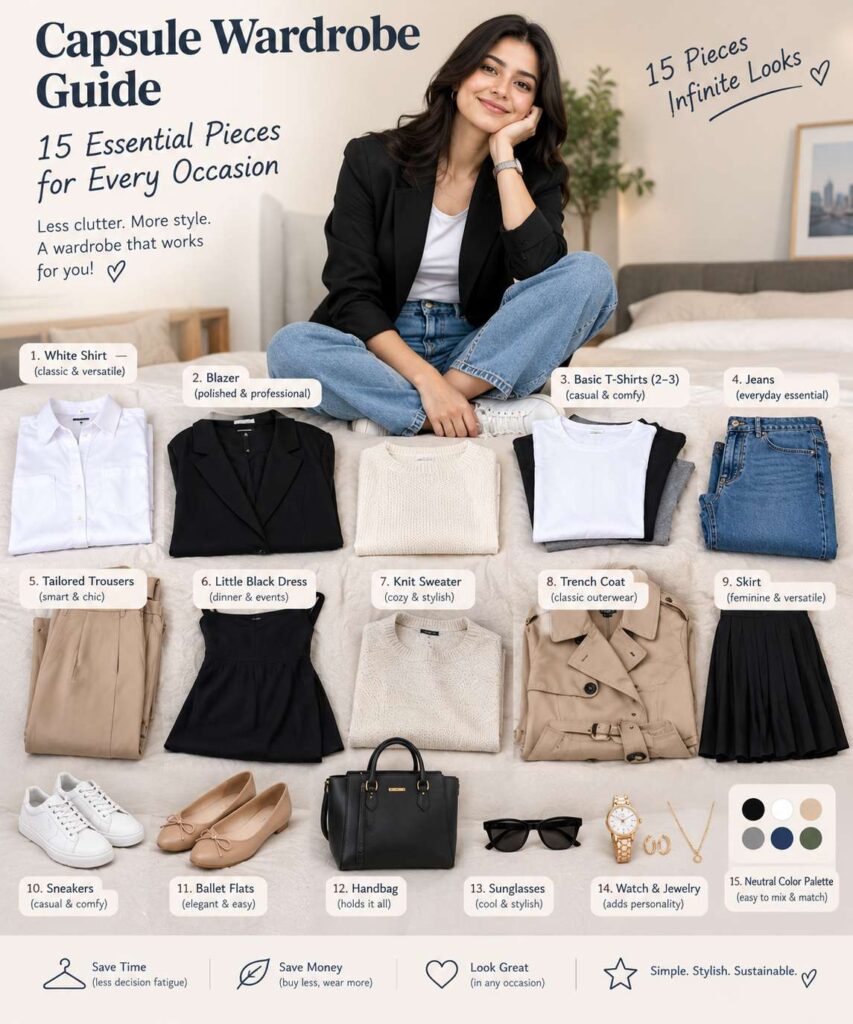
The 15 Essential Pieces to Start With
This is a practical starter list. Adjust it to your lifestyle and climate.
Tops (5 pieces)
1. A white cotton shirt. Crisp, versatile and timeless. Wear it buttoned for work, open over a T-shirt for weekends or knotted at the waist for a relaxed look.
2. A plain T-shirt in black, white or navy. Choose thick, good-quality cotton that holds its shape. It works under blazers, with jeans or tucked into skirts.
3. A striped or subtly printed top. This adds personality while staying easy to match. A classic stripe works with almost everything.
4. A knit sweater or lightweight cardigan. Choose a fine knit for layering. A neutral colour like beige, grey or navy is the most flexible.
5. A dressy blouse or kurta. This piece takes you from office meetings to dinners. Choose fabrics like crepe, silk blend, cotton silk or chanderi with a clean cut.
Bottoms (4 pieces)
6. Dark blue straight-fit jeans. Dark denim looks polished and works in many settings. Prioritise a comfortable rise and a fit that flatters your shape.
7. Tailored trousers. In black, navy or beige, these give you a professional and elegant base.
8. A neutral skirt or palazzo. Choose an A-line, midi skirt or wide-leg palazzo that suits your style and moves comfortably.
9. Comfortable everyday bottoms. Leggings, joggers or soft cotton pants for relaxed days.
Layers (2 pieces)
10. A blazer or structured jacket. It instantly lifts basic outfits. Look for a neutral shade and a shape that suits your shoulders.
11. A denim or light jacket. Perfect for casual outfits, evening breeze or air-conditioned rooms.
One-Piece (1 piece)
12. A simple dress or co-ord set. A well-cut dress in a solid colour or small print is a lifesaver on busy days.
Footwear (3 pieces)
13. Clean white sneakers. They work with jeans, dresses, trousers and even ethnic wear.
14. Comfortable flats or loafers. Ideal for office, travel and long days.
15. One dressy pair. Heels, block heels, mojaris or ankle boots for events and formal occasions.
Add Accessories Without Overloading
Accessories are the easiest way to change the mood of an outfit without buying new clothes. Keep a small, versatile collection:
- One structured tote or work bag
- One small crossbody or clutch
- A leather belt in a neutral shade
- A scarf or dupatta in a colour that matches your palette
- Simple earrings and a delicate necklace
- A classic watch
- Sunglasses that suit your face shape
These pieces should mix well with most of your outfits.
Fabric Matters More Than You Think
Two garments can look identical on a hanger but feel completely different after a few washes. Fabric quality affects comfort, appearance and lifespan.
- Cotton: Breathable and easy to care for, ideal for hot climates.
- Linen: Airy and stylish, but wrinkles easily; embrace the relaxed look.
- Wool and wool blends: Warm and durable for colder months.
- Viscose and rayon blends: Drape nicely but may shrink; follow wash instructions carefully.
- Denim: Choose sturdy denim with a little stretch for comfort.
- Silk blends and crepe: Elegant for dressy pieces.
Look at the label, feel the fabric and stretch it slightly. If it feels thin, scratchy or loses shape immediately, think twice.
Fit Is the Real Secret
An inexpensive garment that fits well looks more expensive than a costly one that does not. Pay attention to shoulders, waist and length. If a piece is nearly perfect, a local tailor can fix hems, sleeve length or waist for a small cost. Tailoring is one of the best investments you can make for your capsule.
Styling One Piece Five Ways
To see how versatile a capsule can be, take the white shirt:
- Classic office: Tucked into tailored trousers with loafers and a watch.
- Relaxed weekend: Worn open over a T-shirt with jeans and sneakers.
- Smart layered: Under a knit sweater with the collar showing.
- Evening look: With a skirt, statement earrings and heels.
- Vacation style: Sleeves rolled, tied at the waist, with shorts or linen pants.
Now imagine doing this with every item. With just 15 pieces, you can create more than 40 outfit combinations.
Sample Weekly Outfit Plan
- Monday: White shirt, tailored trousers, loafers.
- Tuesday: Striped top, dark jeans, blazer, flats.
- Wednesday: Dress with a light jacket and sneakers.
- Thursday: Kurta or blouse with neutral skirt or palazzo.
- Friday: T-shirt, jeans, denim jacket, white sneakers.
- Saturday: Sweater, comfortable bottoms, sneakers.
- Sunday: Co-ord set or relaxed dress with accessories.
Adapting Your Capsule to Seasons
A capsule wardrobe can expand slightly with seasons. You do not need to replace everything.
- Summer: Add lightweight cotton tops, linen trousers and breathable dresses.
- Monsoon: Choose quick-drying fabrics and darker bottoms, and keep a compact umbrella and waterproof footwear.
- Winter: Add a coat, shawl, woollen sweaters and boots.
Store off-season clothes neatly to keep your closet uncluttered.
How to Shop Smartly for Your Capsule
Building a capsule wardrobe does not mean rushing to the mall. Go step by step.
- Make a list. Write down exactly what you need before shopping.
- Set a budget. Decide how much you will spend per item.
- Follow the 30-wear rule. Ask yourself if you will wear the item at least 30 times.
- Check compatibility. Can you make at least three outfits with pieces you already own?
- Try before buying. Sit, walk and lift your arms to test comfort.
- Buy quality where it counts. Spend more on items you wear often, such as jeans, shoes and outerwear.
- Avoid impulse sales. A discount is not a saving if you do not wear the item.
Caring for Your Clothes So They Last
A capsule works only if the clothes last, so care matters.
- Follow washing instructions and use gentle detergent.
- Wash dark clothes inside out to reduce fading.
- Air-dry delicate items away from harsh direct sun.
- Use padded or wooden hangers for jackets.
- Fold knitwear rather than hanging it to prevent stretching.
- Repair small issues such as loose buttons quickly.
- Keep neem leaves or natural repellents in storage to protect from insects.
Common Capsule Wardrobe Mistakes
- Copying someone else’s list. Your lifestyle is unique.
- Buying only neutrals and hating the result. Include colours you truly enjoy.
- Ignoring comfort. If you do not feel good, you will not wear it.
- Throwing away everything at once. Change gradually.
- Forgetting occasion wear. Keep one or two outfits ready for weddings or formal events.
- Neglecting accessories. They add variety without adding bulk.
Frequently Asked Questions
How many pieces should a capsule wardrobe have?
Between 15 and 30 pieces works for many people, excluding underwear, sleepwear and workout clothes. Choose a number that suits your lifestyle.
Is a capsule wardrobe boring?
Not at all. You can add personality with accessories, layering, prints and seasonal accent colours.
Can men build a capsule wardrobe too?
Absolutely. The same principles apply. Focus on well-fitted shirts, trousers, a blazer, jeans, sneakers and leather shoes in coordinated colours.
How long does it take to build one?
You can start immediately with what you own. Filling the gaps may take a few months if you shop thoughtfully.
What if I love trends?
Add one or two trendy items each season to a stable base. This keeps your wardrobe fresh without overspending.
Do I need to buy expensive clothes?
No. Focus on fit, fabric and versatility. Good pieces can be found at many price levels.
Final Thoughts
Style is not about owning more. It is about owning what works. A capsule wardrobe brings clarity to your closet and to your daily routine. Start by understanding your lifestyle, sorting what you have, choosing a simple colour palette and gradually filling gaps with the essential pieces listed above.
Give yourself a month. Wear your favourite combinations, notice what feels right and adjust along the way. Soon, mornings will feel easier, your clothes will feel like yours and you will realise that a small wardrobe, chosen with care, can be the most stylish one of all.