The resale luxury market has grown substantially over recent years, driven by both genuine sustainability interest and simple price sensitivity around new luxury goods. That growth has, predictably, been accompanied by growth in sophisticated counterfeiting specifically targeting the resale market, making the question of how to shop safely considerably more relevant than it was even a few years ago.
Platform choice matters more than most buyers assume
Experienced resale shoppers were consistent in emphasising that platform selection is the single biggest factor in purchase safety, more significant than any individual authentication check a buyer can personally perform. Platforms with in-house authentication teams that physically inspect every item before it ships carry meaningfully lower risk than peer-to-peer marketplaces where buyer and seller transact directly with no independent verification step in between.
This doesn’t mean peer-to-peer platforms are inherently unsafe, several experienced shoppers noted, but that buying through them requires considerably more personal diligence and carries genuinely higher risk, particularly for buyers without extensive experience examining a specific brand’s construction details firsthand. For a first significant resale purchase specifically, shoppers consistently recommended prioritising a platform with independent authentication over one without, even at a modestly higher price, given the risk difference involved.
What experienced buyers actually check themselves
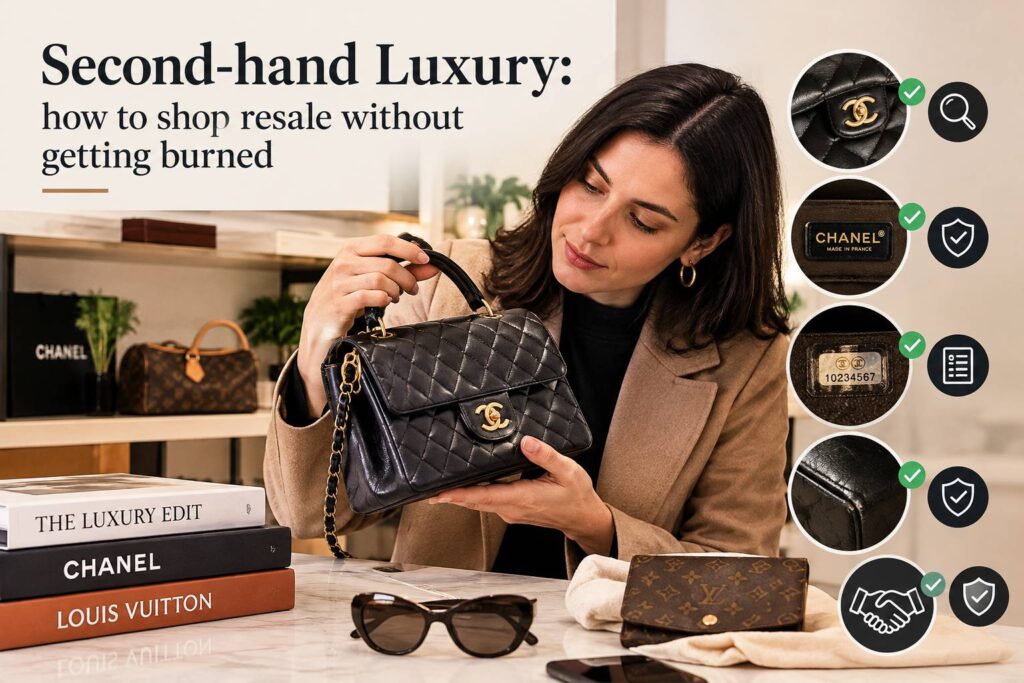
Beyond platform-level authentication, experienced resale shoppers described a consistent personal checklist applied to listing photos before purchasing, regardless of platform. Stitching consistency was mentioned most often — genuine luxury items typically show remarkably even, consistent stitch length and spacing, while counterfeits, even sophisticated ones, frequently show subtle irregularities under close inspection that photos taken specifically for this purpose can reveal.
Hardware weight and engraving quality was the second most commonly cited check. Genuine luxury hardware — zippers, clasps, buckles — is typically noticeably heavier than counterfeit equivalents, and engraved logos or serial numbers on genuine hardware tend to show crisp, precise detail that’s difficult for counterfeiters to fully replicate at scale, even as counterfeiting sophistication has generally improved. Buyers specifically recommended requesting close-up photos of any hardware before committing to a purchase on platforms without independent authentication.
Red flags experienced buyers won’t ignore
A price significantly below the typical resale range for a given item was the most universally cited red flag among experienced buyers, described consistently as the single strongest warning sign across every conversation. While genuine bargains do occasionally surface, buyers noted that a price dramatically below comparable listings is far more often an indicator of a counterfeit, a stolen item, or a significant undisclosed condition issue than a genuine buying opportunity.
Sellers unwilling to provide additional photos beyond a standard listing set was the second consistently cited red flag, along with listings using only stock manufacturer photography rather than photos of the actual specific item being sold — a pattern several buyers specifically associated with counterfeit listings attempting to avoid the closer scrutiny that genuine photos of the actual item would invite from an experienced buyer checking stitching and hardware details.
For anyone new to resale luxury shopping specifically, the consistent advice across every experienced buyer we spoke with was to start with platforms offering independent authentication and buyer protection, even if it means paying a modest premium over an unverified peer-to-peer listing, until enough item-specific knowledge has been built up through genuine, verified purchases to shop more confidently and independently across a wider range of platforms and price points.
Payment methods and buyer protection worth insisting on
Beyond platform and item-level checks, experienced buyers were consistent about payment method as its own layer of protection, specifically recommending payment methods that offer independent purchase protection or chargeback rights rather than direct bank transfers, which several buyers noted are common requests from sellers specifically attempting to avoid the recourse that credit card or verified payment-platform protection would otherwise offer a buyer if an item turned out to be counterfeit or significantly misrepresented.
A seller’s insistence on an unusual or protection-free payment method, several buyers noted, functions as its own kind of red flag worth taking seriously even when every other aspect of a listing looks legitimate, since it removes a buyer’s main recourse if a problem does emerge after purchase, regardless of how careful the pre-purchase inspection process was.
Building expertise over time, one category at a time
Several experienced buyers noted that authentication expertise doesn’t transfer evenly across every brand and category — someone with genuine expertise spotting counterfeit handbags may have considerably less confidence evaluating watches or jewellery, since the specific construction details worth checking vary significantly by category and even by specific brand within a category. Buyers recommended focusing on genuinely learning one or two specific categories deeply, through platforms with authentication guarantees initially, rather than assuming broad expertise transfers automatically across the full range of luxury resale categories.
This kind of category-specific expertise, built gradually through verified purchases and close attention to authentication details over time, was what ultimately let the most experienced buyers we spoke with shop confidently across a wider range of platforms, including some peer-to-peer options they’d have avoided entirely earlier in their resale-shopping experience. The overarching lesson across every conversation was patience — genuine expertise in this space is built purchase by purchase, not overnight, and the buyers with the best track records were consistently the ones who’d accepted a slower, more deliberate learning curve rather than rushing toward the biggest possible resale bargain early on. That patience, more than any single authentication trick, was what actually kept them from getting burned. Building that kind of patience early, several buyers agreed, is worth considerably more than any single piece of authentication advice on its own. It is a slower path than chasing the first tempting bargain, but consistently the one that leaves buyers with genuine confidence rather than lingering doubt. In a market this easy to get burned in, that confidence is arguably the real prize. It is a small shift in mindset, but one that consistently separates satisfied buyers from cautionary tales. Every experienced buyer we spoke with had learned it the hard way at least once, which is exactly why they were so insistent on passing it along.